
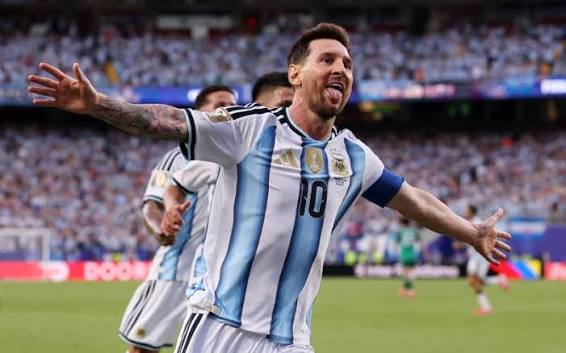
Lionel Messi has written his name deep into FIFA World Cup history after scoring twice in Argentina’s 2-0 victory over Austria, a performance that saw him surpass Miroslav Klose as the all-time leading scorer in World Cup history.
The Argentina captain produced a decisive display in a tightly contested match, where his goals proved the difference and secured all three points for the defending champions in their second group game at the ongoing FIFA World Cup.
The milestone moment arrived in the 38th minute when Messi netted his first goal of the night, moving beyond Miroslav Klose, the German legend who had held the record since the 2014 World Cup.

Klose’s tally had been widely regarded as one of the most difficult records to break, set after years of consistent scoring across multiple tournaments, with his memorable goal against Brazil in 2014 taking him clear of Brazil’s Ronaldo da Lima Nasario.
Messi’s achievement now places him at the summit of World Cup goalscorers, rewriting a benchmark that stood for over a decade.
Record Breaker on the Biggest Stage
Messi’s brace took his overall World Cup tally to 18 goals in 28 appearances across six editions of the tournament, a journey that began when he made his debut as a teenager in Germany in 2006.
His longevity at the highest level of international football has been a defining feature of his career, with his ability to remain decisive across nearly two decades of World Cup football setting him apart from his contemporaries.
The latest goals also reinforce his role as Argentina’s central attacking force, even as new generations emerge around him.
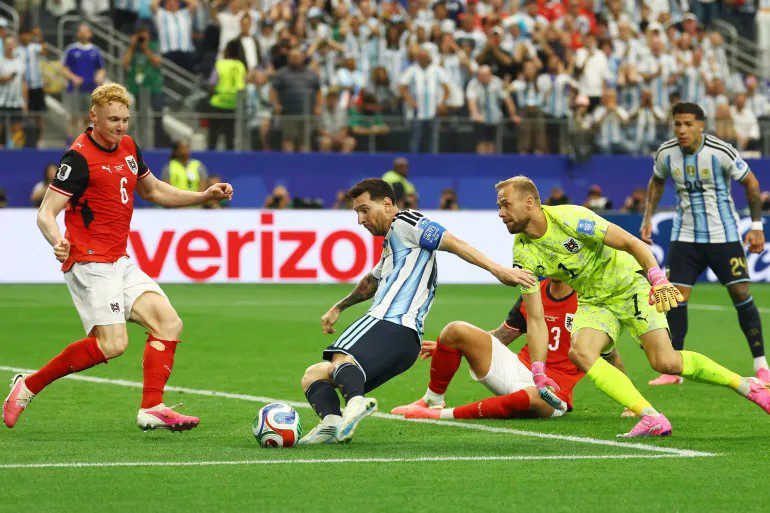
Earlier in the match, Messi had missed from the penalty spot, briefly delaying what seemed inevitable as Argentina controlled large portions of the game. His opener eventually came after a well-timed pass from Facundo Medina, allowing him to finish clinically and move onto 17 World Cup goals, surpassing Klose’s long-standing mark.
He later added a second deep into stoppage time, sealing both the win and his place alone at the top of the all-time scoring chart.
Messi’s rise to the top of the World Cup scoring list has been built on consistency across multiple tournaments rather than a single standout edition. His breakthrough campaign as a teenager in 2006 marked the beginning of a long international journey, but it is his sustained excellence that has defined his legacy.

From group stage matches to knockout pressure moments, he has repeatedly delivered goals that carry historical weight. The significance of overtaking Klose extends beyond numbers, as it places Messi at the centre of one of football’s most enduring statistical benchmarks.
Klose’s record had stood as a symbol of efficiency and longevity in World Cup football, and surpassing it required not just talent but sustained performance at the highest level. Messi’s achievement reflects both durability and adaptability across evolving tactical eras of international football.
A Tournament Shaped by Familiar Rivalries
The ongoing tournament has also highlighted the continued presence of elite forwards competing for the same historical milestones. Kylian Mbappé, who currently sits on 14 World Cup goals, is set to feature later in the competition against Iraq and remains one of the closest challengers to Messi’s record.
His performances have kept the conversation about generational scoring records alive, especially as he continues to produce in high-pressure matches.

Erling Haaland also remains part of the wider discussion of modern goal scorers, although his international tournament opportunities differ. The contrast between these players show how rare sustained World Cup scoring dominance has become in the modern era.
Messi’s new record therefore stands not only as a personal milestone but as a benchmark that may shape future generations.
Argentina Built Around Its Leader
Messi’s influence in Argentina’s campaign has gone beyond scoring, as he has now been directly involved in a significant portion of the team’s goals at the tournament.
The 39-year-old has scored all of Argentina’s goals so far, placing him as outright leading scorer in the ongoing FIFA World Cup with five goals and underlining his continued centrality to their attacking structure. His leadership on the pitch remains critical as Argentina pursue another deep run in defence of their title.
The wider team dynamic has evolved around his presence, with younger players providing energy while Messi supplies decisive moments. His ability to dictate tempo and convert key chances remains unmatched within the squad.
Argentina Secure Knockout Berth
The win over Austria in their second group game ensured safe passage into the round of 32 and are guaranteed to finish top of their group if Jordan fail to beat Algeria in the other group game.

La Albiceleste have recorded two wins from two games and put them on six points and comfortably on top of their Group.
As Argentina progress further into the tournament, his form will remain the defining factor in their pursuit of another World Cup triumph.
READ ALSO: NSA Releases Postings for 18,617 Nurses and Midwives for 2026/27 National Service