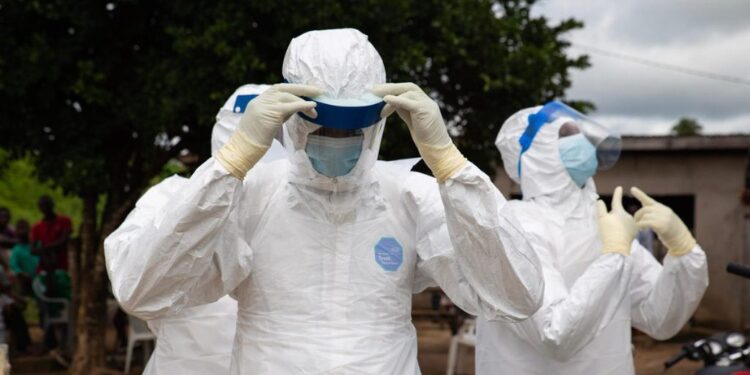
The Ebola outbreak in eastern Democratic Republic of the Congo (DRC) has recorded the highest number of confirmed cases within the first month of any known Ebola episode in Africa.
According to health professionals the outbreak, caused by the Bundibugyo strain of Ebola, has infected more than 1,000 people and killed at least 267, making it one of the most rapidly escalating Ebola crises in recent years.
Speaking at a briefing in Geneva, WHO’s Director of Health Emergency Alert and Response Operations, Dr Abdirahman Mahamud, noted that the outbreak’s unusual speed is largely linked to its early spread into urban centres.
“This is the largest number of confirmed cases in the first month of an Ebola disease outbreak in Africa.”
Dr Abdirahman Mahamud
Dr Abdirahman Mahamud indicated that that unlike previous outbreaks, which often begin in rural and relatively isolated communities before burning out, this outbreak has been driven by early transmission in densely populated areas such as Bunia and the mining town of Mongbwalu, where mobility is high and health systems are already under strain.
He added, “what is important is we need to scale up and this outbreak is moving faster than us.”
Urban transmission, increased population mobility, and delayed discovery have all contributed to a faster spread, according to health experts. Despite being less common than previous Ebola strains, the Bundibugyo virus is nonetheless extremely deadly and challenging to contain once it gets into crowded areas.
Overcrowded Camps and Cross-Border Movement Deepen Regional Risk
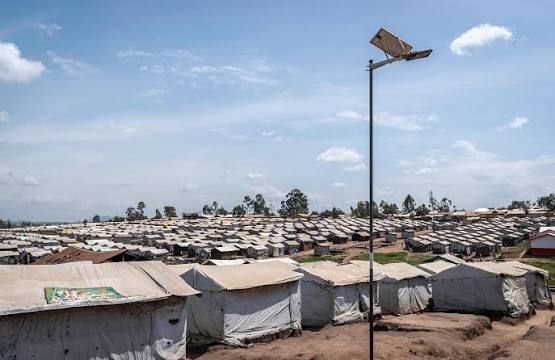
Moreover, the outbreak’s impact has been particularly severe in displacement camps across eastern Congo, where overcrowding, limited sanitation, and constant population movement have created ideal conditions for transmission.
Officials from the International Organization for Migration (IOM) confirmed that Ebola cases have now been recorded in at least three major displacement camps, with 25 confirmed infections and 14 deaths linked to those sites.
Abdoulaye Wone of the IOM stated that, “even in a normal situation before the outbreak, they were facing overcrowding,” pointing out that inhabitants regularly leave camps throughout the day to look for food or employment, raising the risk of exposure and subsequent transmission..
Humanitarian workers have also warn that these camps, already strained by conflict-driven displacement, are now functioning as both shelters and transmission corridors, with limited ability to isolate suspected cases or enforce infection prevention measures.
Concerns along regional boundaries have also increased as a result of the outbreak’s spread among migratory groups.
According to health agencies, the virus is spreading in regions where cross-border movement is common, both through official checkpoints and unofficial routes that local groups use.
IOM Deputy Director General Ugochi Daniels described the situation as one in which “everyday life has become fraught with risk,” adding “the journey to feed your family or earn a living can also become a journey into danger.”
WHO officials believe there are new indications that response operations are starting to ramp up despite the severity of the outbreak. In just a few weeks, the number of Ebola treatment beds increased from a few units at the beginning of the outbreak to over 500 beds spread throughout 19 health zones, demonstrating the rapid expansion of treatment capacity.
Additionally, laboratory capacity has been increased, going from about 30 tests per day in Kinshasa to over 2,000 tests per day via a decentralised network spanning the provinces of Ituri, North Kivu, and South Kivu.
Dr Abdirahman Mahamud further explained that these developments are critical, but warned that they remain insufficient compared to the pace of transmission.
Humanitarian organisations have also drawn attention to the difficulties in upholding respectable and safe funeral customs, which are crucial for stopping the spread of disease. Despite challenging terrain and insecurity, the International Federation of Red Cross and Red Crescent Societies (IFRC) has been providing burial kits and protective gear throughout affected areas.
However, due in part to mistrust and false information spreading throughout the community, IFRC personnel report increasing opposition and sporadic violence against response teams.
According to IFRC communications officer Paolo Cravero, “the tension tends to grow like in any crisis, any outbreak, like Ebola. And at safe and respectable burial sites, we have witnessed violence against our volunteers.”
Aid agencies stress that rebuilding trust is now as important as medical intervention, as misinformation continues to hinder contact tracing, safe burials, and community reporting of suspected cases.
With more than 20 Ebola outbreaks recorded across sub-Saharan Africa in past decades, health professionals warn that the current situation in eastern Congo represents one of the most complex emergencies to date, combining rapid urban spread, displacement pressures, and cross-border mobility into a single escalating crisis.
Without sustained international support and accelerated containment efforts, officials fear the outbreak could continue spreading for months, placing additional strain on already fragile health systems across the region.
READ ALSO: Merz Asserts Pension Reform Drive