President John Dramani Mahama has outlined a sweeping vision for Ghana’s development future, warning that democracies worldwide face mounting pressure from declining public trust, misinformation, social polarization, economic inequality, climate disruptions, and instability in the global system.
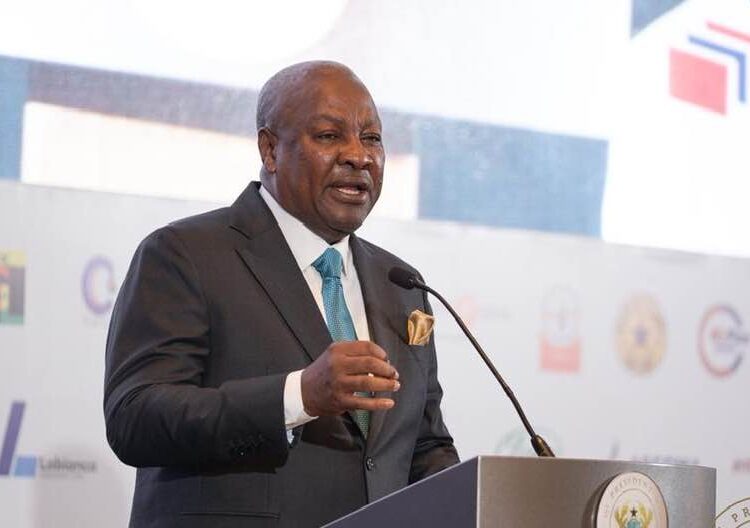
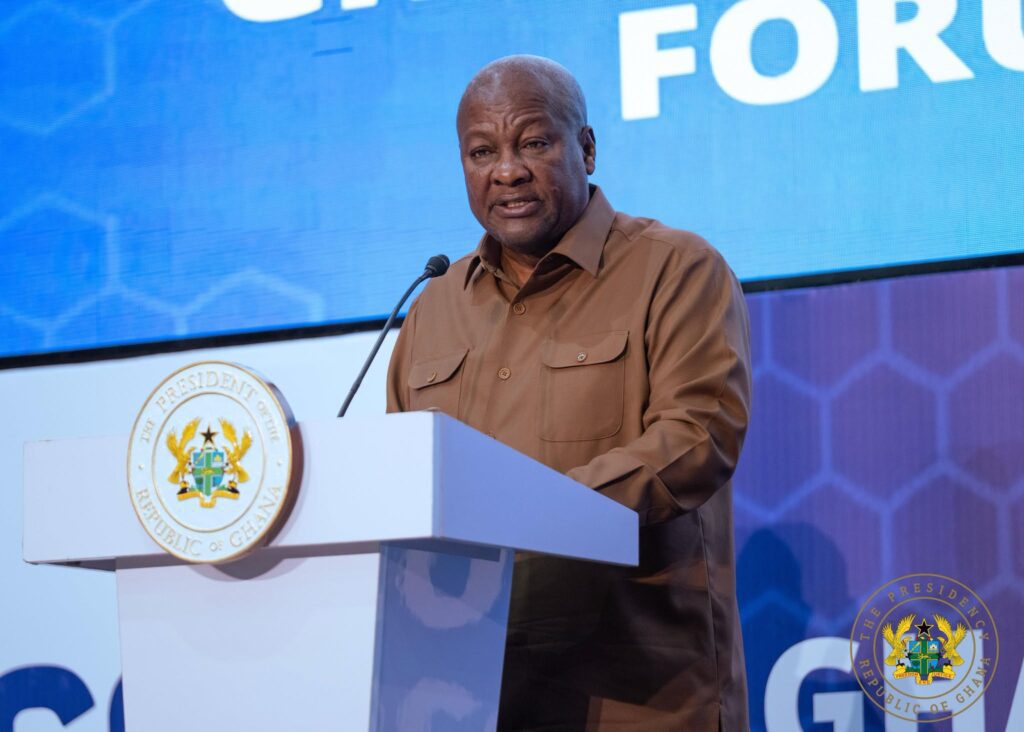
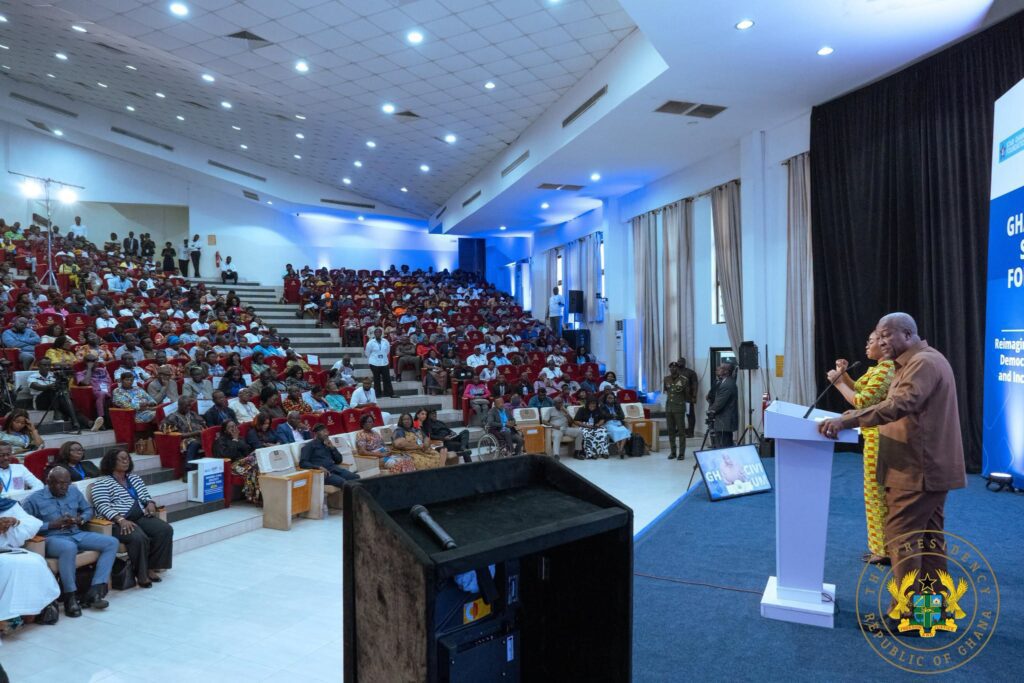
Speaking at the 4th Annual Convening of the Ghana Civil Society Forum, 2026, in Ghana, he said these challenges are reshaping governance systems at a pace not seen in decades. He stressed that Ghana is not insulated from these forces and must respond with deeper democratic commitment rather than withdrawal.
“The global environment is testing institutions as we have never seen before in decades,” he noted, adding that the appropriate response is to strengthen democracy, expand participation, and reinforce institutional partnerships between government and citizens.
His remarks placed Ghana’s domestic development debate within a broader global context where governance, finance, and trust in institutions are under sustained strain.
Shifting Global Development Financing Landscape
President Mahama drew attention to a significant transformation in global development financing. He observed that traditional aid flows are declining, donor priorities are shifting, and geopolitical tensions are reshaping cooperation frameworks across regions.
He said economic uncertainty is forcing governments and development partners to reassess spending commitments, creating significant implications for developing countries, including Ghana. Civil society organizations that have long depended on external funding are also feeling the pressure.
He cautioned that these changes signal a structural shift rather than a temporary disruption. “The development models of yesterday may not be sufficient for the future,” he said, urging a rethinking of long held assumptions about external dependency.
According to him, the central challenge is no longer simply how to replace shrinking donor resources, but how to construct sustainable national systems capable of financing development independently while strengthening democratic governance and improving livelihoods.
A Call for a New Development Compact
Against this backdrop, President Mahama proposed what he described as a new development compact grounded in shared responsibility among government, civil society, development partners, private sector actors, academia, faith-based organizations, and local communities.
He emphasized that Africa’s development discourse has too often focused on external assistance rather than internal capability. The emerging global reality, he argued, requires a fundamental shift in perspective.
“The question before us is not merely what our external partners can do for us, The more important question is what can we do for ourselves.”
President John Dramani Mahama
He stressed that Ghana’s future development must increasingly rely on domestic ingenuity, enterprise, innovation, and institutional strength. This, he clarified, does not diminish the value of development partners but reflects a strategic shift toward resilience and national ownership.

The President said this philosophy already underpins ongoing reforms and policy directions within his administration aimed at building a more self sustaining economic and governance framework.
Four Pillars for National Transformation
President Mahama structured his vision around four key pillars that he described as essential to Ghana’s development trajectory. The first pillar is greater domestic resource mobilization.
He argued that Ghana must strengthen its capacity to generate internal revenue to fund development priorities and reduce vulnerability to external shocks. The second pillar focuses on stronger state institutions.
He said robust institutions remain the backbone of democracy and are essential for delivering services, maintaining accountability, and sustaining public trust.
The third pillar is enhanced accountability for development outcomes. He emphasized that governance must be judged not only by policies designed but by measurable results achieved for citizens.
The fourth pillar calls for stronger partnerships and greater local ownership of development processes. He highlighted the importance of inclusive collaboration across sectors to ensure development reflects local needs and priorities.
Together, these pillars form what he described as a framework for a more resilient and self directed development model.
Financing Innovation and Economic Reform
President Mahama highlighted the need for innovation in development financing, noting that future progress cannot depend solely on grants and traditional aid flows.
He called for expanded local philanthropy, greater use of technology in resource mobilization, stronger social enterprise ecosystems, and increased impact investment. He also emphasized the untapped potential of the Ghanaian diaspora as a source of capital, knowledge, and innovation.
Private sector participation, he said, must be encouraged in a responsible and structured manner that aligns profit incentives with national development goals. He also advocated for innovative financing mechanisms that empower local institutions to design and implement solutions tailored to Ghana’s needs.
His remarks align with ongoing efforts by the government to enhance revenue mobilization, diversify the economy, promote exports, attract strategic investment, and improve macroeconomic stability.
He said these reforms are designed to lay a foundation for long term resilience, enabling the economy to support sustainable development even in periods of global uncertainty.
Building Resilience Beyond External Support
The President underscored that Ghana must develop institutions capable of sustaining progress beyond external assistance. He said the goal is not isolationism but resilience grounded in domestic capacity.
“We must build institutions capable of sustaining development long after external support has dried up,” he said, reinforcing the need for long term structural transformation.
He reaffirmed the government’s commitment to creating an enabling policy environment that promotes transparency, accountability, and sustainable financing systems.

President Mahama’s address at the Ghana Civil Society Forum placed Ghana’s development future within a broader global transition marked by uncertainty and reform. His message centred on adaptation, institutional strength, and shared responsibility.
By proposing a new development compact anchored in domestic resource mobilization, stronger institutions, accountability, and inclusive partnerships, he outlined a shift away from dependency toward self sustaining national systems.
His vision calls for a reorientation of development thinking in Ghana, where innovation, local ownership, and strategic reform define the path forward in an increasingly unpredictable global environment.
READ ALSO: GoldBod Targets LBMA Benchmarks to Tighten Market Discipline