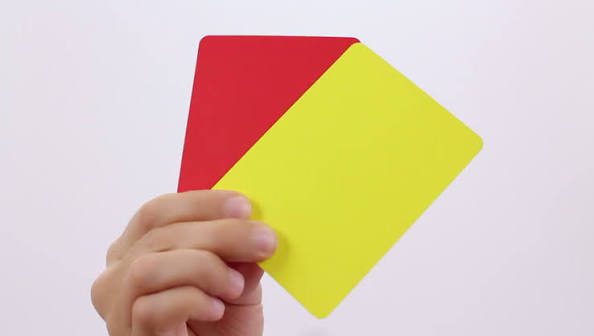
The Ghana Education Service (GES) has proposed the introduction of a Yellow Card and Red Card disciplinary system for Senior High Schools (SHSs) as part of efforts to promote discipline, accountability and responsible behaviour among students across the country.
The proposal, which draws inspiration from football’s well known cautionary system, seeks to establish a transparent and standardised disciplinary framework that clearly outlines sanctions for both minor and major offences committed by students.
“The system could provide a more consistent approach to discipline while helping to curb the rising cases of misconduct in second-cycle institutions.”
Ghana Education Service

Under the proposed framework, students who commit minor offences would receive a Yellow Card, serving as an official warning from a teacher, housemaster, housemistress or another designated school administrator.
However, the proposal also recognises that not every offence should automatically attract a formal caution, noting that some cases may warrant only a verbal warning depending on the circumstances.
The proposal comes at a time when concerns over student indiscipline continue to dominate discussions within Ghana’s education sector, with incidents involving bullying, violence, examination malpractice, possession of prohibited items and destruction of school property prompting renewed calls for more effective disciplinary measures.
Graduated Approach to Student Discipline
According to the proposal, the Yellow Card system is intended to address relatively minor breaches of school regulations while giving students an opportunity to correct their behaviour before more severe disciplinary action is taken.

Offences that could attract a Yellow Card include late reporting to class or assembly, improper wearing of school uniforms, making noise during lessons, failure to complete academic assignments, disrespectful language towards fellow students, loitering during instructional hours and possession of unauthorised items such as mobile phones.
“The approach would encourage early intervention by addressing misconduct before it escalates into more serious behavioural problems.”
Ghana Education Service Noted
The proposal also lists bullying, fighting and certain cases of examination malpractice among offences that may attract a Yellow Card, depending on the severity of the incident and the discretion of school authorities.
Repeat Offenders to Receive Red Card
A central feature of the proposal is the introduction of a cumulative disciplinary mechanism.
Under the proposed system, a student who receives a second Yellow Card within a four-month period, or repeatedly commits similar offences despite previous warnings, would automatically be issued a Red Card.
Ghana Education Service
“Introducing this progressive disciplinary process would encourage students to reflect on their conduct while creating greater consistency in how schools respond to repeated acts of indiscipline.”
The Red Card would signify a more serious breach of school regulations and trigger stricter disciplinary consequences.
Serious Offences to Attract Immediate Red Card
Beyond repeat offences, the proposal recommends that certain acts of gross misconduct should result in an immediate Red Card without the need for prior warnings.
These include theft, drug abuse, sexual misconduct, vandalism of school property, possession of weapons, repeated defiance of school authority and physical assault on either teachers or fellow students.

“Such offences undermine the safety and security of school communities and therefore require swift and decisive disciplinary action.”
Ghana Education Service
Ghana Education (GES) argue that introducing immediate sanctions for serious misconduct would reinforce the importance of maintaining safe and orderly learning environments across Senior High Schools.
Suspension and Academic Consequences
If implemented, students who receive a Red Card would face immediate suspension from school.
The proposal further recommends that affected students should repeat the academic year and pay the approved school fees applicable to that level before they are considered for readmission.
Proponents of the framework believe these measures would serve as a strong deterrent against persistent indiscipline while reinforcing personal responsibility among students.
They contend that clearly defined consequences would eliminate uncertainty in disciplinary processes and ensure that students fully understand the implications of violating school regulations.
Promoting Transparency and Fairness
The proposed disciplinary model is designed to provide schools with a uniform system for managing student behaviour while reducing inconsistencies in the application of sanctions.
By establishing clearly defined categories of offences and corresponding disciplinary measures, the proposal seeks to enhance transparency and fairness in school administration.

Education authorities believe a structured system would also make it easier for students, parents and guardians to understand disciplinary procedures and expectations, thereby promoting greater accountability within school communities.
The proposal notes that introducing a standardised disciplinary framework could also strengthen confidence in school management by ensuring that similar offences receive comparable sanctions regardless of the institution.
Supporting Positive Behaviour
Beyond punishment, the proposal emphasises the need to encourage positive behavioural change among students.
the Yellow Card mechanism would provide an opportunity for students to recognise and correct inappropriate conduct before facing more severe penalties.
At the same time, the Red Card system is expected to send a strong message that serious misconduct will not be tolerated within Ghana’s educational institutions.
According to the proposal, the ultimate objective is not merely to punish offending students but to cultivate a culture of discipline, respect and responsibility that supports effective teaching and learning.
Strengthening School Discipline
The proposal concludes that introducing a Yellow Card and Red Card disciplinary system would make disciplinary measures more transparent, easier to administer and readily understood by students.
It argues that adopting the framework would provide schools with a practical tool for addressing misconduct consistently while encouraging students to maintain good behaviour throughout their academic journey.
Although the proposal has yet to be adopted as official policy, it has already generated discussion on possible reforms aimed at strengthening discipline in Senior High Schools.
Should it receive the necessary approval, the proposed framework could represent one of the most significant changes to student disciplinary procedures in Ghana’s second-cycle education system in recent years.
READ ALSO: Ghana Intensifies Efforts to Tackle Sickle Cell Disease