

The Government of Ghana, through the statutory vehicle of the Ghana Gold Board (GoldBod), is set to publish the full, intricate details of a newly executed Memorandum of Understanding (MOU) on Monday, 29th July, 2026, outlining a historic shift in domestic mineral management.
Working under the joint-direction of the Minister of Finance and the Minister for Lands and Natural Resources, the state structure successfully secured a landmark agreement, 2026, with the Ghana Chamber of Mines.
This strategic covenant legally binds all large-scale mining companies operating within the sovereign borders of Ghana to surrender and sell exactly 30% of their total gold output directly to GoldBod, an operational mandate scheduled to take official effect from 1st July, 2026.
“Other details of the Memorandum of Understanding signed between the Ministry of Finance, Ministry of Lands and Natural Resources, Ghana Gold Board, the Bank of Ghana and the Ghana Chamber of mines will be published on Monday, 29th July, 2026”
Ghana Gold Board (GoldBod),
Expanding upon the operational mechanics of this national framework, the newly minted policy introduces structural modifications that diverge sharply from previous regulatory precedents.

Under the new agreement and unlike the previous 2022 arrangement between the Bank of Ghana and the Ghana Chamber of Mines, each large-scale mining company will sell 30% of their gold output to the GoldBod locally in Ghana, in doré (raw) form and at a discount of 0.55%.
In a bid to protect domestic monetary liquidity, eliminate parallel exchange distortions, and insulate the local financial market, all gold purchases under the new agreement will be in Ghana cedis and at the Bank of Ghana Reference Rate.
To anchor the policy in official state communications, the energy community draws direct context from the governing framework, which explicitly highlights the overarching national objectives:
National Reserve Accumulation and Value Retention
The strategic re-routing of Ghana’s premier mineral commodity marks a pivotal transition from historical export dependencies toward structural economic autonomy.
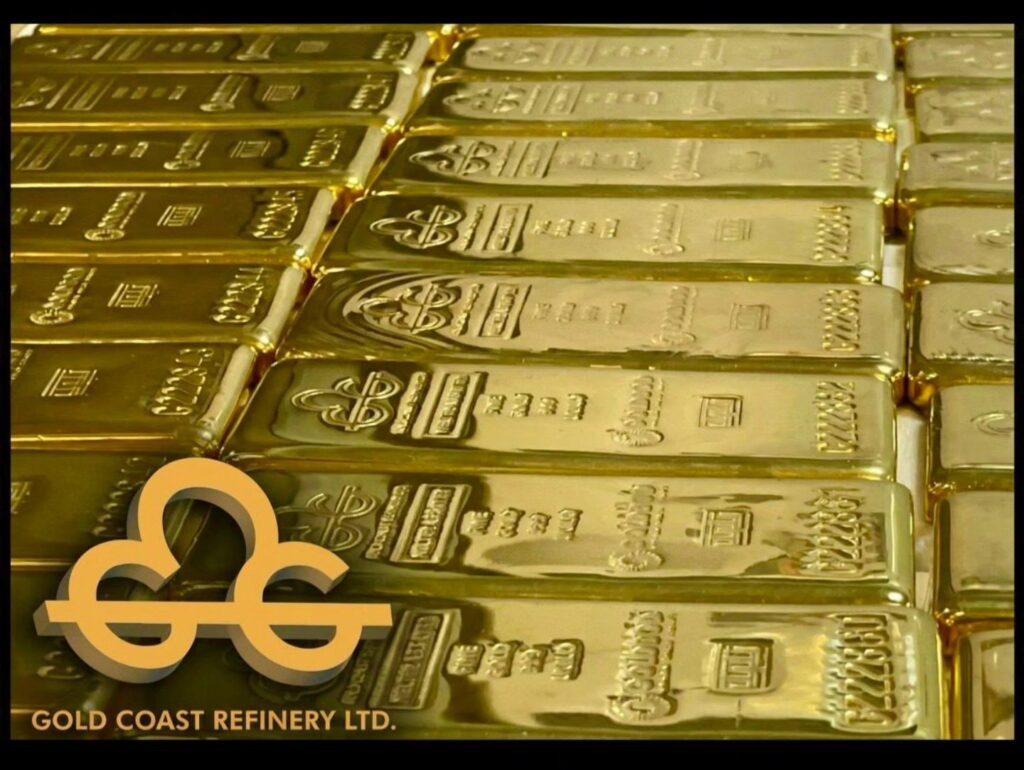
According to institutional guidelines, all doré gold bought by the GoldBod will be refined locally to ensure local value retention, shipped to a London Bullion Market Association (LBMA) refinery for melting and stamping, and delivered to the Bank of Ghana as part of the country’s gold reserves.
By compelling multi-national extraction firms to offload nearly a third of their inventory within the domestic market, the state establishes a continuous, predictable baseline of physical bullion.
This internal procurement model actively cushions the local economy against balance-of-payment shocks, as the central bank systematically amasses hard assets to solidify the national balance sheet.
Rather than relying solely on traditional, highly volatile foreign fiat allocations, the state leverages its indigenous geology to fulfill the strict fiscal target of a 15-month import cover buffer under the GANRAP timeline.
The Path to Global Refinement Accreditation
The new arrangement has been strategically curated by Government to ensure that Ghana achieves LBMA accreditation for at least one local gold refinery by the year 2030.

Historically, the absence of a certified, internationally recognized domestic refinery forced the state to lose crucial premiums during off-shore processing.
By guaranteeing an uninterrupted, high-volume flow of raw gold directly to home-grown processing infrastructure, the state generates the critical commercial scale needed to pass rigorous international auditing.
This systematic throughput ensures that local facilities can refine gold to a purity level of 99.5% or higher, proving their operational consistency and compliance with stringent global standards.
Achieving this coveted benchmark fundamentally upgrades the country’s position in global commodity trading, shifting its status from a mere extraction site to a fully accredited, high-value refining hub.
The Vital Role of Policy Publication in GoldBod’s Operations
The systematic public release of the signed Memorandum of Understanding on 29th July, 2026, remains an operational prerequisite for the sustained institutional efficacy of GoldBod.
In complex mineral concessions, absolute policy transparency functions as a critical mechanism to mitigate market speculation and anchor investor confidence among large-scale multinational producers.

Publishing the structural fine print ranging from the strict execution of the 0.55% discount pricing to the specific logistics of cedi-denominated payments allows GoldBod to establish a transparent, rule-based regime.
Furthermore, this formal publication provides a clear legal blueprint that mitigates the risk of compliance disputes, optimizes inter-agency coordination with the Bank of Ghana, and validates the state’s sovereign right to enforce domestic processing mandates under international mining laws.
Through this comprehensive disclosure, GoldBod reinforces its governance framework, ensuring total alignment as the country transitions toward its zero raw mineral export deadline.
READ ALSO: IOC’s Creative Strategy Earns Historic Cannes Recognition