Opposition party has blamed government’s flood management structure for worsening flooding across Accra, demanding immediate reforms, greater accountability and decisive leadership as communities reel from the devastating impact of Monday’s floods.
The New Patriotic Party (NPP) sharply criticised the government over what it describes as ineffective flood management, calling on President John Dramani Mahama to immediately overhaul the country’s anti-flood governance architecture following the widespread flooding that submerged several communities in Accra on monday.
“It is our considered view that the NDC is not showing leadership. Indeed the government is fiddling with public relations gimmicks while people suffer.”
New Patriotic Party (NPP)
In a strongly worded press release the opposition party expressed sympathy with thousands of Ghanaians affected by the floods but accused the National Democratic Congress (NDC) administration of failing to provide decisive leadership in addressing what it described as a recurring national emergency.

The party argued that while flooding has become an annual challenge, the government’s response has been characterised by administrative confusion, poor coordination and what it termed public relations exercises rather than meaningful interventions aimed at protecting lives and property.
“The New Patriotic Party joins in commiserations with the thousands of Ghanaians affected by the floods of June 29, 2026. Additionally the party urges the NDC government to stop paying lip service to the urgent flood control needs of the country and act with a sense of seriousness to deal with the situation.”
New Patriotic Party (NPP)
Recurring Flood Disaster Raises Fresh Questions
According to the NPP, the latest floods once again exposed the vulnerability of several communities that have repeatedly experienced similar disasters over the years.
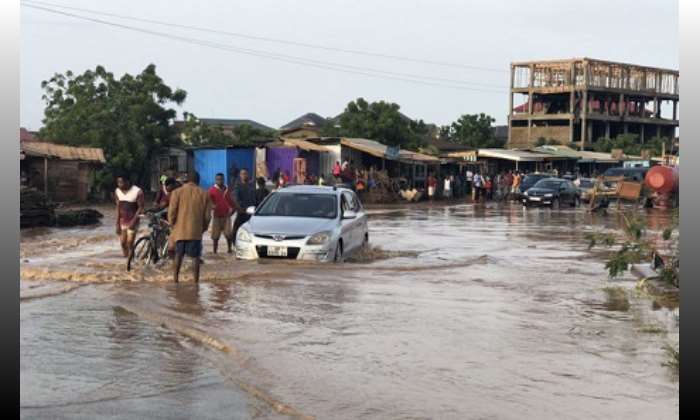
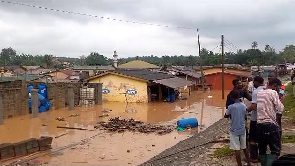
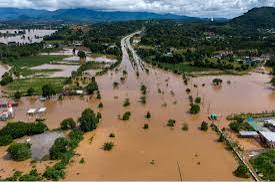
The party observed that the flooding affected the N1 Highway, Apenkwa, Achimota, Kaneshie, Weija, Spintex, Darkuman Junction and the Kwame Nkrumah Interchange, describing the situation as evidence that longstanding flood-prone areas remain largely unchanged despite successive government interventions.
Many residents were forced to wade through floodwaters while others watched their livelihoods disappear under rising waters.
“In what is fast becoming a recurring June 3rd moment, Ghanaians are wading through floodwaters on their way to work, watching their livelihoods wash away, and waiting for a government that seems more interested in looking busy than actually solving anything.”
New Patriotic Party (NPP)
The NPP maintained that the repeated flooding in the same communities demonstrates the need for structural reforms rather than temporary emergency responses.
Opposition Alleges Administrative Confusion
A central argument advanced by the party is that the current institutional arrangement for flood management has weakened national coordination.
According to them, responsibilities for flood management have been divided between the Ministry of Local Government and the Ministry of Works, Housing and Water Resources, creating uncertainty over leadership and accountability.
The opposition contended that this arrangement has hindered effective collaboration at a time when swift and coordinated decision-making is essential.
“Firstly the obvious confusion Under President Mahama’s governance architecture, is worrisome. Under this NDC Reset government, flood management has been split between two ministries: the Ministry of Local Government, and the Ministry of Works, Housing and Water Resources. The result is not collaboration. It is a turf war.”
New Patriotic Party (NPP)
The party further alleged that neither ministry is functioning at full capacity because of uncertainty regarding their respective mandates. According to the party, the situation represents more than an administrative challenge and reflects weaknesses within the government’s governance structure.
The NPP also questioned the decision to assign flood coordination responsibilities to Deputy Chief of Staff Stan Dogbe, arguing that the position lacks the ministerial authority required to direct multiple institutions during a national emergency.
They maintained that disaster management requires a clearly defined chain of command supported by statutory authority capable of ensuring compliance across government agencies.
Concerns Over Implementation Of Anti-Flood Measures
Beyond institutional concerns, the NPP argued that several anti-flood interventions announced by the government have either not been implemented or have been poorly executed.
The party claimed that funding intended for flood mitigation programmes has been slow to reach implementing agencies, affecting the pace of ongoing interventions.
“Thirdly in addition to the confusion and undermining of authority, the announced anti flood control measures have either not been implemented or poorly implemented. It is our understanding that the finance ministry has been slow in releasing the necessary funding for flood mitigation programs in their bid to keep national accounts looking good.”
New Patriotic Party (NPP)
The statement therefore concluded that existing flood management mechanisms require urgent review to ensure resources are deployed efficiently before future rainy seasons.
Party Rejects President’s Position On Shared Responsibility
The NPP also criticised recent comments by President Mahama during a town hall meeting in London, where, according to the statement, he indicated that flooding was partly attributable to citizens’ indiscipline and poor environmental practices.
While acknowledging that environmental responsibility remains important, the opposition rejected suggestions that citizens should bear significant responsibility for the recurring floods.
“We reject that framing entirely! Ghanaians are tired of being told the fight against flooding is a ‘shared responsibility’ every time the rains come. Shared responsibility is not an excuse to avoid accountability.”
New Patriotic Party (NPP)
The party argued that government ultimately carries primary responsibility for designing and implementing effective flood management systems capable of protecting communities during heavy rainfall.
NPP Outlines Four Key Demands
As part of its recommendations, the NPP called on President Mahama to immediately clarify and consolidate flood management under one accountable ministry, remove the Deputy Chief of Staff from the coordination role and appoint a single empowered minister to lead the national response.
The party also demanded a comprehensive public account of the anti-flood task force, including its activities, the outcomes of helicopter surveillance flights and expenditure of funds allocated to the initiative. They urged the President to accept responsibility for the governance framework established under his administration rather than attributing the flooding to citizens.
“Accra is drowning because the President set up a broken system, staffed it with people who cannot compel each other to act, and then flew to London to tell us it is our fault.”
New Patriotic Party (NPP)
The opposition further argued that unless the government’s approach changes, flooding is likely to intensify with future rains.
To achieve lasting solutions, the NPP called for stronger collaboration between central government, Metropolitan, Municipal and District Assemblies, engineers and environmental experts to address land use planning, sanitation management and the construction of robust drainage infrastructure.
Concluding its statement, the party reaffirmed its solidarity with affected families and pledged to continue scrutinising government’s performance on flood management.
“The NPP stands with every family displaced today. We will continue to hold this government and this President accountable. Not seasonally, but consistently.”
New Patriotic Party (NPP)
They added that the growing national debate over Ghana’s flood preparedness, institutional coordination and long-term urban planning, as repeated flooding continues to expose vulnerabilities in drainage infrastructure, settlement patterns and disaster response systems.
With the peak rainy season still ongoing, the calls for stronger coordination, timely funding and clear accountability are expected to remain central to public discussions on protecting lives and property from future flood disasters.
READ MORE: Mahama Leads Government’s Intensified Flood Response, Urges Cooperation