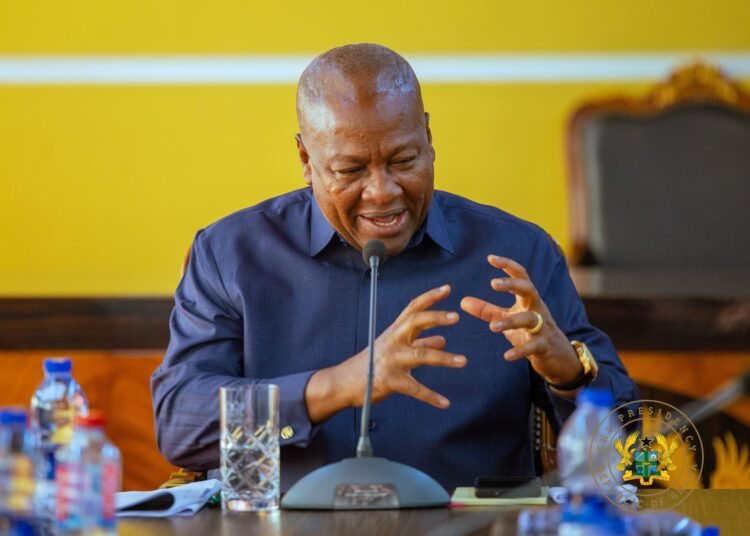
President John Dramani Mahama has announced five urgent directives aimed at addressing Accra’s recurring flood crisis after torrential rains triggered widespread flooding across the capital, leaving homes submerged, roads impassable, and thousands of residents affected.
The directives followed an aerial inspection of flood-hit communities on Monday, where the President, accompanied by members of the Anti Flood Task Force, assessed the extent of the destruction caused by heavy rainfall that began on Sunday night and continued into Monday.
According to Deputy Chief of Staff in charge of Operations and Chair of the Anti-Flood Task Force, Stan Xoese Dogbe, the President’s visit marked the beginning of immediate government action to strengthen flood prevention and accelerate relief efforts.
Five Immediate Directives Announced
Following the inspection, President Mahama directed the implementation of five key measures to address both the immediate humanitarian needs and the long term causes of flooding.
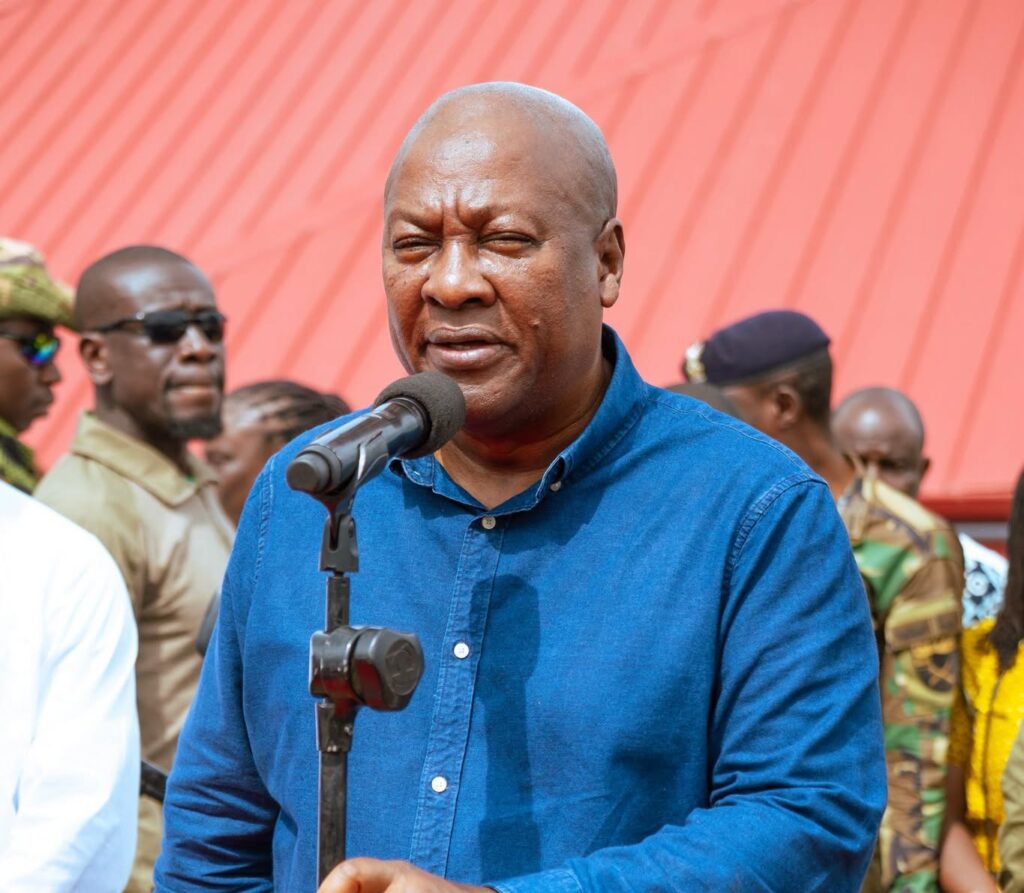
The first directive orders an emergency meeting of the National Security Council to coordinate a nationwide response to the disaster and improve interagency collaboration.
The second instructs all Metropolitan, Municipal, and District Assemblies to work closely with the Ministry of Works and Housing to identify every obstruction within drainage channels and waterways across their jurisdictions.
Under the third directive, government will immediately begin removing structures that block waterways and impede the natural flow of stormwater. The fourth measure tasks the National Disaster Management Organisation with providing urgent relief to families and communities affected by the flooding.
Finally, the President directed the Ministry of Finance to release funds from the contingency allocation to support emergency relief and post flood recovery efforts.
The package of interventions reflects what the government describes as a coordinated strategy to reduce future flood risks while supporting victims of the latest disaster.
Climate Change Intensifying Flood Risks
President Mahama said the latest flooding demonstrates the growing impact of climate change on Ghana’s weather patterns. According to preliminary figures, approximately 140 millimetres of rain fell over Accra during Monday’s storm, making it one of the heaviest rainfall events recorded in recent years.
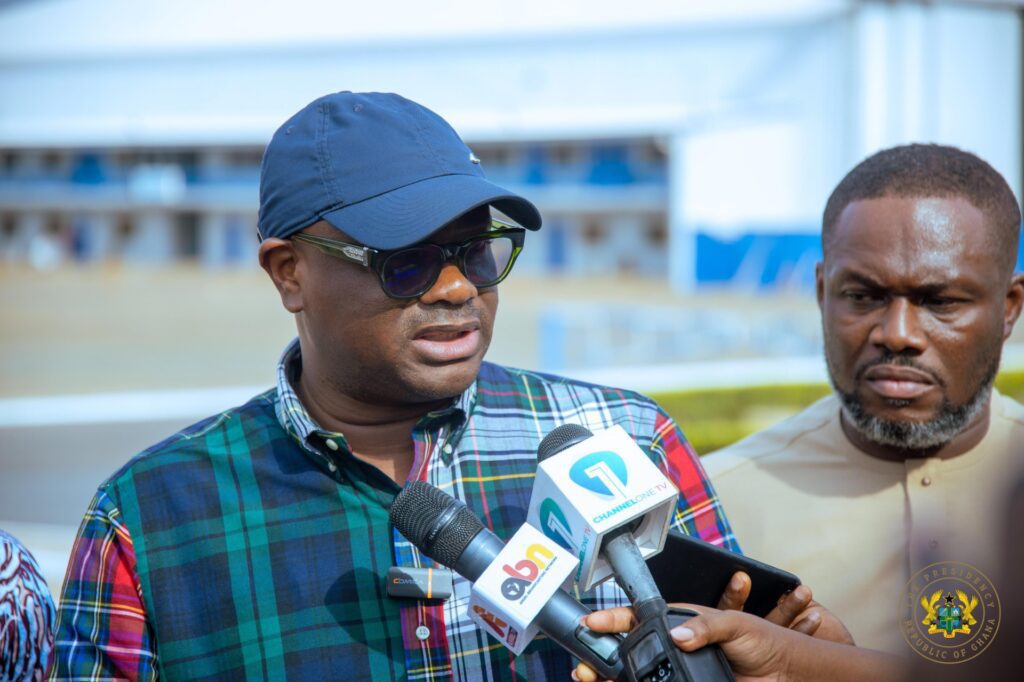
By comparison, the highest single day rainfall recorded in Accra last year measured about 56 millimetres. Government data also indicates that rainfall levels during June have risen sharply over the past three years, increasing from 85 millimetres in 2024 to 333 millimetres in 2026.
“Climate change is real, and our infrastructure must adapt,” Mr. Dogbe stated while outlining the findings from the presidential inspection.
President Mahama acknowledged that the intensity of rainfall itself cannot be controlled, stressing that changing climatic conditions continue to place increasing pressure on urban infrastructure.
“The amount of rainfall recorded today is among the highest experienced in several years. Preliminary data indicates that approximately 140 millimetres of rain fell on Accra. By comparison, the highest single-day rainfall recorded last year was about 56 millimetres.”
President John Dramani Mahama
Engineering and Enforcement Must Work Together
While climate change has intensified flooding, President Mahama said engineering failures and poor environmental practices have significantly worsened the situation.
“We must tackle this from both engineering and enforcement perspectives,” the President stated. He explained that blocked drainage channels, illegal construction on waterways, and other forms of environmental abuse continue to increase flood risks throughout the capital.
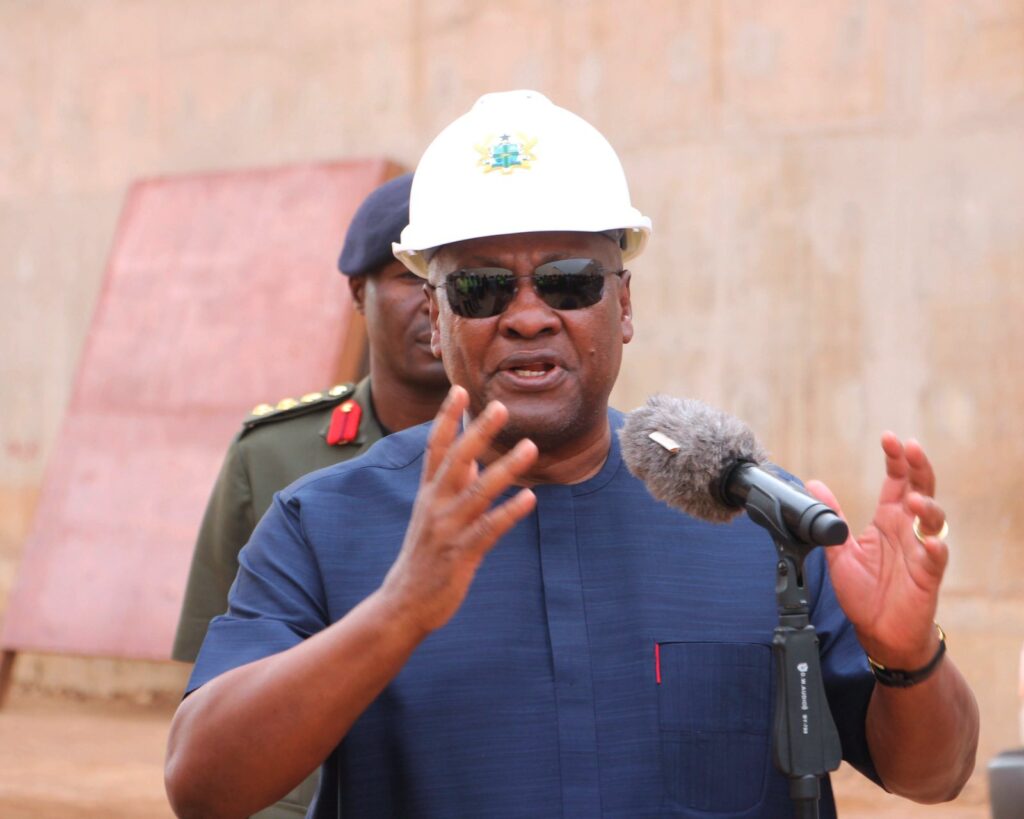
The President defended government’s decision to remove structures built within waterways, arguing that such actions are necessary to protect lives and property.
“Whenever the government begins removing structures built in waterways, some people accuse us of being inhumane. Yet when disasters such as today’s flooding occur, the consequences affect everyone. The irresponsible actions of a few individuals end up putting entire communities at risk.”
President John Dramani Mahama
The President maintained that stricter enforcement of planning regulations remains essential if Accra is to overcome its recurring flood challenges.
Relief for Affected Families
Alongside the enforcement measures, President Mahama expressed sympathy for residents who suffered losses during the floods. Mr. Dogbe said the President conveyed his deepest condolences to affected families and assured them that government remains committed to supporting recovery efforts.
The National Disaster Management Organisation has been instructed to coordinate emergency assistance, while the release of contingency funds is expected to accelerate the delivery of relief items and rehabilitation support.
Government officials say the financial allocation will help provide immediate assistance to displaced residents as assessments of damaged homes and infrastructure continue.
Government Pursues Long-Term Flood Solutions
The latest flooding has renewed calls for sustained investment in drainage infrastructure, stronger development controls, and greater public cooperation. President Mahama stressed that addressing Accra’s flood crisis requires more than emergency responses after each heavy rainfall.

He said engineering improvements must be matched by responsible public behaviour and consistent enforcement of planning laws to reduce the city’s vulnerability to increasingly severe weather events.
The government’s latest directives are expected to guide both immediate emergency operations and longer term flood mitigation measures aimed at protecting lives, safeguarding property, and improving climate resilience across the capital.
As recovery efforts continue, the administration has signalled that preventing future disasters will require decisive action against illegal developments, upgraded drainage systems, and stronger collaboration between government agencies and local communities.
READ ALSO: Serbia To Hold Early Elections Within Four Months