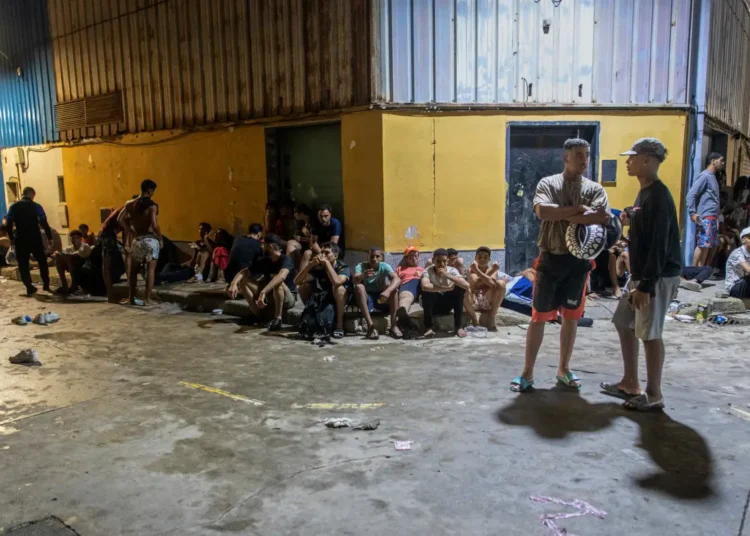
Spain has reversed its position on the relocation of unaccompanied migrant children in Ceuta, announcing plans to move around 500 minors to mainland Spain as authorities seek to address a growing humanitarian situation in the North African enclave.
The decision comes after tens of thousands of migrants crossed into Ceuta from neighbouring Morocco at the end of July. Although the vast majority have since returned to Morocco, hundreds of unaccompanied children remain in Ceuta under the protection of Spanish authorities.

Under Spanish law, the state has a duty to protect unaccompanied minors until they reach the age of 18, creating a legal obligation for authorities to provide accommodation, care and protection.
The announcement marks a shift from comments made last week by Spain’s Interior Minister Fernando Grande-Marlaska, who said migrants entering Ceuta and the neighbouring Spanish enclave of Melilla illegally would be returned to Morocco. “Anyone who illegally enters Ceuta or Melilla knows they will be sent back because Spain and Morocco work together to this end,” Grande-Marlaska said on 13 August, adding, “They will not reach the peninsula, nor the European continent and nor will they remain indefinitely in Ceuta or Melilla.”
Spain’s Youth Ministry, working with the Ceuta government, is preparing an emergency arrangement under which non-governmental organisations and child-protection agencies would assume responsibility for the most vulnerable children, particularly girls. The proposal is intended to avoid transferring guardianship of all the children to Spain’s regional governments, several of which are governed by coalitions involving the conservative People’s Party and the far-right Vox.
The situation in Ceuta has placed considerable pressure on local authorities, with hundreds of children reportedly living on the streets and relying on assistance from local residents. Rubén Pérez Correa, Spain’s Secretary of state for children, has been in Ceuta since Sunday attempting to find a solution to the situation.
The government says the planned relocation would help relieve pressure on the enclave while ensuring that vulnerable children receive appropriate care. Ceuta, a Spanish territory located on Morocco’s northern coast, has a population of roughly 83,000 people. The sudden arrival of tens of thousands of migrants at the end of July placed significant pressure on local accommodation, healthcare and social services.
The Spanish government’s decision has also highlighted tensions between national legislation and the European Union’s developing migration framework. The European Commission said earlier that, under EU law, irregular migrants remaining in Ceuta should be returned to Morocco, including unaccompanied minors.
Markus Lammert, the European Commission’s Spokesperson for internal affairs, said that the legal framework applied to all irregular migrants. The apparent difference between the European position and Spain’s approach is partly linked to the fact that the latest EU migration pact has not yet been fully incorporated into Spanish national law.
As a result, Spain’s existing legislation concerning the protection of unaccompanied minors remains applicable. The situation has created a complicated legal and political debate over how Spain should balance its responsibilities towards vulnerable children with its migration-control policies and its obligations under European law.
Opposition Rejects Relocation Plan
The government’s proposal has faced immediate opposition from the People’s Party, which argues that the children should instead be reunited with their families. Juan Bravo, the party’s Deputy Finance Spokesperson, questioned why the government would relocate the minors to mainland Spain if Morocco had requested their return and the European Commission had said irregular migrants should be sent back. “If Morocco has asked for the children to be returned and if Europe says the illegal immigrants should all be returned, whether children or not, what more does the government need?” Bravo said in a television interview.
The latest figures illustrate the scale of the challenge facing Spain’s child-protection system. According to Spain’s Ministry of Inclusion and Migration, 21,104 people aged between 16 and 23 were under state guardianship as of March, with approximately 3,500 of them under the age of 17.About half were from Morocco, while girls accounted for roughly 8% of the total.
The Ceuta crisis has therefore brought renewed attention to the broader issue of unaccompanied minors in Spain, as well as the pressure placed on local authorities and child-protection services.
As Madrid works on the emergency arrangement, the treatment of unaccompanied children is likely to remain a contentious issue in Spain’s wider debate over migration and the responsibilities of the central government, regional authorities and European institutions.
READ ALSO: Ablakwa Secures Visa Waiver, Doubled Scholarships, and Defence Ratification in Russia