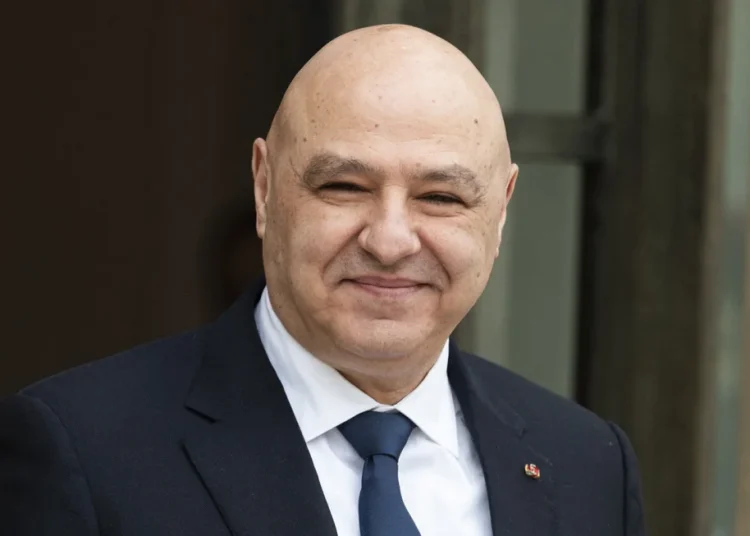
Lebanon’s President Joseph Aoun has defended the Lebanon-Israel framework agreement signed last week in Washington.
He pushed back against critics of the Lebanon-Israel framework emphasising that the text is “not an agreement.”
“Lebanon’s problem is with Israel, and it is a sovereign state that decided to negotiate on its own behalf. It has not relinquished its legal, political, or field principles in the framework agreement, as some are claiming.”
Joseph Aoun
Speaking to delegations from the Lebanese bar association and economic bodies, the Lebanese President warned that “discord is forbidden” and discouraged people from “[taking] to the streets.”
The framework does not force Israel to withdraw from the large area of southern Lebanon that it continues to occupy, instead referencing a “sequenced process” contingent on the disarmament of Hezbollah.
Details about the agreement remain scarce but in his remarks made last week during the announcement of the framework agreement, US Secretary of State, Marco Rubio made clear that the deal was only the “first step” in further negotiations. “It’s the beginning of the beginning,” Rubio said, surrounded by representatives from both Lebanon and Israel.
“There’s a lot of work ahead. We don’t in any way underestimate the difficulty of the task ahead, but we understand the importance of it, how vital it is.”
Marco Rubio
The two sides had gathered in Washington, DC, for four days of US-mediated talks. The Lebanese group Hezbollah has not been party to the talks.
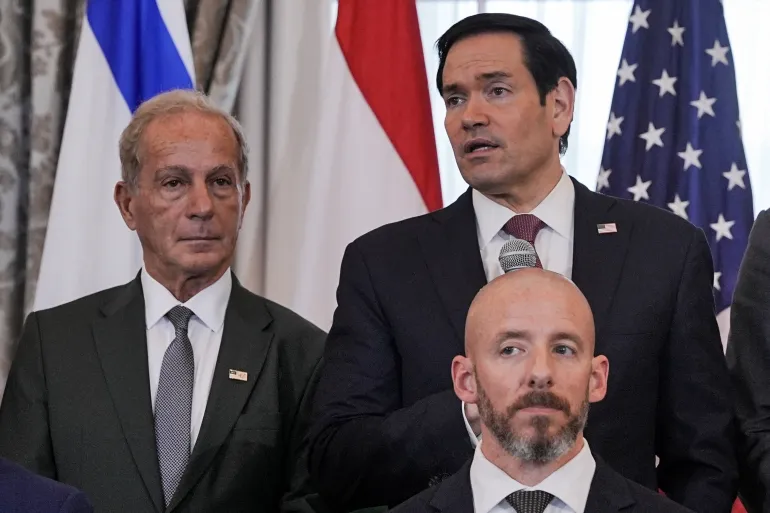
Lebanon has become central to Washington’s broader effort to calm tensions in the Middle East and bring the conflict with Iran to an end. Following the trilateral agreement signed by Israel, Lebanon and the US, the focus now is on commitments from all three sides.
The deal was not easy to reach. It took five rounds of negotiations, with the border, Hezbollah’s disarmament and Israel’s demand for security guarantees among the biggest sticking points.
Israel wants assurances that Hezbollah will not be able to re-establish any military presence along Lebanon’s border. For the US, the challenge is making sure the so-called “pilot zones” can be implemented, while ensuring Israel lives up to its commitments and prevents further escalation. Whether it’s US-Iran talks or Israel-Lebanon tensions, the issue now comes down to implementation, and whether these agreements can hold.
According to Lebanon’s Health Ministry, at least 4,297 people have been killed and 12,196 others wounded in Israeli attacks across Lebanon since March 2. Israeli attacks on southern Lebanon and the capital Beirut have persisted despite a ceasefire in place since April 16.
Meanwhile, Israel has been resolute in its decision to to remain in Southern Lebanon. Israeli Defence Minister Israel Katz iterated today that Israeli forces will remain in “security zones” established in Lebanon, Syria and Gaza “until further notice.”
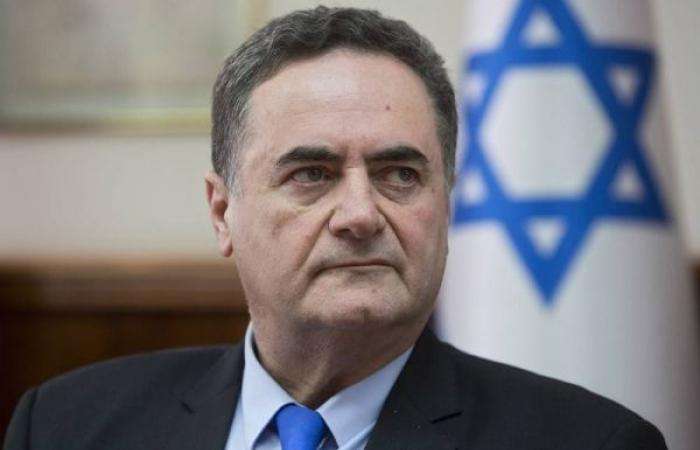
According to a Defence Ministry statement, Katz said that troops are occupying these areas “to protect Israel’s residents and communities from jihadist terrorists.” “We will not withdraw from the security zones,” Katz said at a function held in honour of Israeli soldiers killed during the 2006 war in Lebanon.
Katz also reiterated an earlier warning to Iran, saying it would be struck with “full force” if it attacks Israel over its ongoing invasion of southern Lebanon. Israeli officials, including Prime Minister Benjamin Netanyahu, have repeatedly ruled out withdrawing troops from Lebanon, where Israeli forces continue to clash with Hezbollah fighters. They maintain any troop withdrawal would happen only after Hezbollah is disarmed.
Israel has also carried out repeated incursions and bombings in Syria since the overthrow of longtime ruler Bashar al-Assad. In Gaza, Israeli forces occupy nearly 70 percent of the territory.
UNIFIL To Remain At Post Despite Challenges In Lebanon
Also today, the United Nations Interim Force in Lebanon (UNIFIL) said that its peacekeepers will remain at their posts to support efforts at maintaining stability in the country’s south.

UNIFIL said in a message on Telegram that its peacekeepers remain on the ground, monitoring the situation and reporting observed violations in line with its mandate under Security Council resolution 1701.
The resolution demands a full cessation of hostilities between Israel and the Lebanese armed group Hezbollah, establishes a demilitarised buffer zone between the Israel-Lebanon border and the Litani River, and requires the disarmament of all armed groups operating in Lebanon.
The UNIFIL statement asserted that the peacekeepers’ mission has been impeded by “restrictions to their freedom of movement, including blocked routes due to barriers, debris, and other obstacles temporarily [halting] essential patrols and safety operations.” “Despite these challenges, our peacekeepers stay in position and remain committed to supporting stability in southern Lebanon,” the statement added.