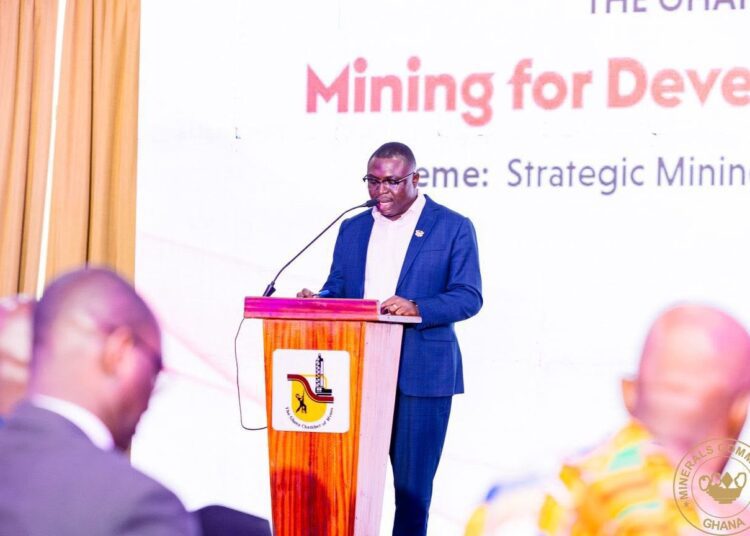
Deputy Chief Executive Officer of the Minerals Commission, Emmanuel Kwamena Anyimah, has strongly endorsed robust national frameworks aimed at maximizing the retention of economic value from Ghana’s rich mineral endowments.
This high-level backing underscores a pivotal shift in the regulatory environment, emphasizing that the extraction of precious underground wealth must yield tangible, long-term developmental dividends for the domestic populace.
By aligning institutional goals with localized economic frameworks, the commission aims to re-engineer the foundational pillars of the extractive sector to capture wealth that has historically been exported.
“The discussion gave us another opportunity to reflect on how Ghana can retain more value from its mineral resources through responsible mining, local value addition, stronger institutions and policies that create jobs, drive industrial growth and support sustainable national development. I remain committed to working with all stakeholders to build a mining sector that delivers lasting benefits for every Ghanaian.”
Emmanuel Kwamena Anyimah

Expanding on this paradigm, the regulatory chief asserted that the continuous exportation of raw ores without significant transformation severely limits the country’s economic potential.
To rectify this, the commission is actively championing a multifaceted approach that integrates comprehensive regulatory policies with strategic partnerships across the entire mining ecosystem.
This approach is intended to foster a secure investment environment while simultaneously mandating that multinational corporations integrate deeply into the local economic fabric, thereby safeguarding national wealth against capital flight.
Redefining Extractive Economics Through Industrialization
For decades, African mining economies have struggled with the paradox of being resource-rich yet economically constrained, a trend that Ghana is now aggressively trying to reverse.
True value retention requires a deliberate transition from raw extraction to aggressive down-stream processing, commonly referred to as beneficiation.
By establishing state-of-the-art domestic gold refineries and smelters for minerals like bauxite and manganese, the nation can command premium prices on the international market rather than remaining price-takers for unrefined commodities.

According to sector analysts, “localizing the refinery process is the ultimate game-changer for economic self-reliance.”
Furthermore, industrializing the mining value chain catalyzes a powerful multiplier effect across adjacent economic sectors.
The establishment of local processing plants demands substantial technical infrastructure, which in turn fosters technological transfer and upgrades local engineering capacities.
This industrial transformation ensures that heavy machinery components and structural consumables are manufactured within the borders of the country, thereby creating an integrated industrial ecosystem that sustains economic health independently of global market volatility that often disrupts national growth plans.
Strengthening Institutions and Currency Stability
A critical facet of capturing resource value lies in the institutional capability to monitor, regulate, and optimize revenue streams from large-scale operations.
Robust institutional policies ensure that royalty payments, corporate taxes, and dividends are accurately calculated and efficiently remitted to the state treasury.
This administrative oversight is vital for plugging financial loopholes and preventing illicit financial flows that frequently drain wealth from developing mineral jurisdictions.
Strengthening organizations like the Minerals Commission provides the state with the technical leverage required to negotiate equitable agreements with global mining conglomerates.

From a macroeconomic perspective, retaining mineral value acts as a potent buffer for the national currency and foreign exchange reserves.
When precious metals are refined and traded locally, it diminishes the central bank’s heavy reliance on external borrowing to maintain balance-of-payments stability.
Driving Sustainable Job Creation and Community Growth
Beyond the balance sheets and macroeconomic indicators, the ultimate measure of any mineral retention policy is its direct impact on human capital and host communities.
Traditional raw extraction is notoriously capital-intensive but labor-light, offering limited employment opportunities relative to its massive scale.
Conversely, local value addition facilities are highly labor-intensive, opening up diverse employment avenues ranging from metallurgy and chemical engineering to specialized logistics and administrative management for the youth.

Investing heavily in local human capital ensures that indigenous professionals occupy top-tier executive and technical positions within the industry, keeping high-wage earnings within the local economy.
Additionally, when value retention policies dictate that a fair portion of mining revenues is explicitly funneled back into host communities, it transforms historically marginalized rural enclaves into prosperous economic hubs.
This inclusive development model fosters peace, reduces friction between mining entities and local populations, and guarantees that the legacy of mining is measured by modern infrastructure and sustainable livelihoods long after the mineral deposits are exhausted.
READ ALSO: Mahama Leads Ghana in Prayer and Thanksgiving to God