Turkey has commenced a sweeping security measures for the upcoming NATO summit, deploying tens of thousands of police and placing air defenses on high alert, while banning public gatherings and imposing controversial restrictions on freedom of expression and assembly.
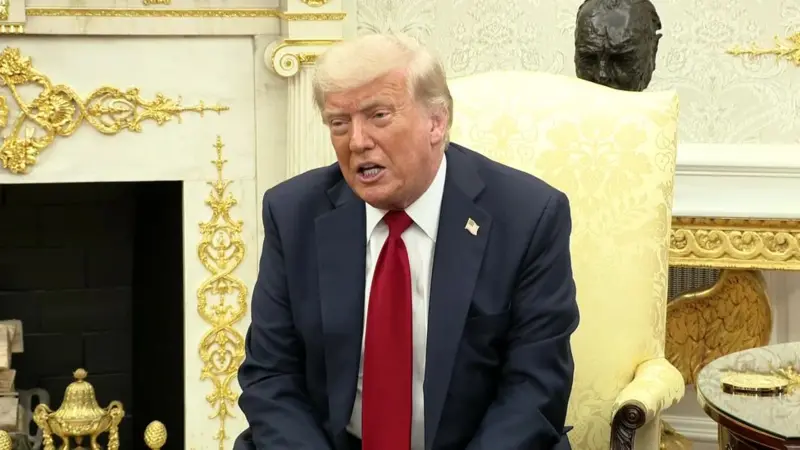
On July 7–8, leaders from all 32 member states are expected convene in the Turkish capital, including US President Donald Trump, whose threats to withdraw from NATO and reduce US troop levels have cast uncertainty over the alliance’s future.
In Ankara, strict access restrictions will be imposed on several of the city’s main arteries, around airports, the presidential complex where the summit will be held, and around hotels hosting the delegations, severely disrupting life in the city of nearly 6 million.
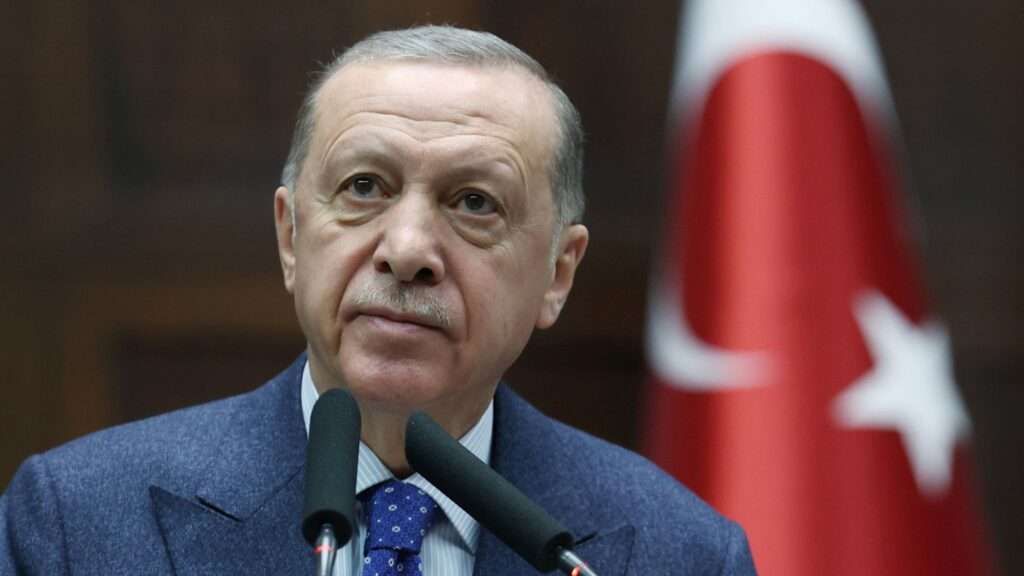
Turkey has also unveiled a new VIP airport, specifically to host NATO leaders. As the country prepares for the summit, Turkish President Recep Tayyip Erdogan unveiled the new airport which was transformed from a former military airfield into a modern facility with expanded runways. The new Ankara Airport is expected to remain a VIP airport after the summit and is not expected to serve the general public.
A newspaper reported that facades of houses along the route from the new airport have been painted over as part of city beautification efforts. With a history of terrorist attacks, Turkey’s capital is no stranger to tight security, but the measures being taken in connection with NATO appear to go beyond the usual.
Authorities have also banned demonstrations, concerts, and graduation ceremonies during the summit, while nonessential state employees have been placed on leave to ease congestion. Security units have detained more than 200 people suspected of links to extremist groups, including the Islamic State group, authorities said.
Media reports said that that several activists, lawyers and an academic were caught up in the sweep. A Turkish court, meanwhile, blocked access to websites critical of NATO and the summit on security and public order grounds, according to Engelli Web, a website that tracks websites banned in Turkey.
Several journalists from Turkish opposition-leaning media organizations were denied accreditation to cover the summit, sparking outrage from media rights groups. “In the history of the organization, we have never witnessed security measures as stringent and suffocating in a host city for a summit as we are seeing this time in Ankara,” Namik Tan, a former Turkish Ambassador and legislator from Turkey’s main opposition party, wrote.
NATO Countries Expected To Address Questions Over Defence Bending
At the Ankara summit, NATO members are expected to address questions over defense spending and the US’s evolving role in the alliance. The main agenda will center on unity after President Donald criticized allies for failing to support the US-led war on Iran and efforts to reopen the Strait of Hormuz.
Fatih Ceylan, a former Turkish Ambassador to NATO and Security Analyst at the Ankara Policy Center iterated this stance.
“The important aspect of the meeting is to what extent the rift between the United States and Europe can be healed or narrowed during the summit. We should not expect miracles, but nonetheless if there is a convergence of ideas emphasizing the importance of NATO, that should be seen as a success.”
Fatih Ceylan
Turkey’s role as host seems to have helped win an appearance by Trump, who has a close rapport with Turkish President Recep Tayyip Erdogan. “Well, except for the fact that it was being held in Turkey by President Erdogan, I don’t think I would have gone to it,” he told reporters following a meeting with NATO Secretary General Mark Rutte at the White House.
In the run-up to the summit, Erdogan described Turkey as a reliable ally that consistently shoulders responsibility on NATO’s southeastern flank and will continue to play a leading role in the alliance. He said that his country was working to ensure that the Ankara Summit “will stand as a reference point in NATO’s history.”
A NATO member since 1952, Turkey has the alliance’s second-largest army after the United States, a fast-growing defense industry, and a strategic location the crossroads of Europe, the Middle East, the Black Sea, and the Caucasus.
However, it has often acted independently, frustrating allies by refusing to participate in sanctions on Russia, engaging in disputes with Greece, and purchasing Russian missile defense systems — a move that led to its expulsion from the US-led F-35 program in 2019.
Turkey also delayed Finland and Sweden’s NATO membership until it secured concessions on counter-terrorism cooperation and the lifting of arms export restrictions, and blocked the appointments of NATO Chiefs Anders Fogh Rassmussen in 2009 and Mark Rutte in 2024 until other demands were met.
However, Turkey’s independent streak has also enabled it to play a mediating role, from brokering a deal to ship grain across the Black Sea between Ukraine and Russia in 2022 to supporting recent initiatives aimed at ending the war in Iran.