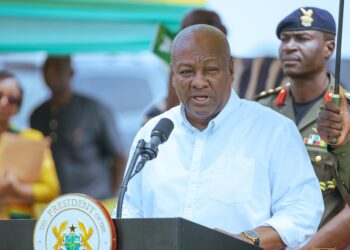
The Deputy Secretary of the NPP, Haruna Mohammed has criticised developments surrounding the re-arrest of the former Chief Executive of the National Buffer Stock Company, Abdul Wahab Hanan. He argued that recent actions by state authorities raise questions about judicial consistency and the treatment of accused persons.
He stated that the case involving Hanan follows earlier court approved arrangements, including permission for medical travel outside the country. He referenced proceedings at the High Court and a criminal court in Accra, where applications for travel clearance were reportedly granted.

From his view, the circumstances at the airport where the arrest occurred point to procedural contradictions within law enforcement operations. He questioned the basis of the arrest while highlighting claims that the accused was attempting to withdraw funds from a frozen account.
“How does one withdraw money from a frozen account. That is not possible. What is the motive of arresting someone when access to the account has already been blocked?”
Haruna Mohammed
The Deputy Secretary further argued that the explanation provided for the arrest does not align with practical banking processes. He suggested that if an account is frozen, access restrictions already eliminate any possibility of withdrawal activity.
Additionally, he indicated that the travel purpose of the accused was linked to medical attention and court approved arrangements. He said the intervention at the point of departure created what he considers unnecessary disruption to lawful processes.
The Deputy Secretary stated that such developments risk undermining public confidence in the justice system. He added that repeated actions of this nature could generate fear among accused persons who are still under judicial consideration.
Transitioning to broader concerns, he suggested that political accountability must be balanced with due process. He cautioned that enforcement actions perceived as excessive may weaken trust in legal institutions over time.

According to him, the situation reflects a pattern that requires national attention from legal stakeholders and civil society. He further noted that consistent application of court orders is essential for maintaining institutional credibility.
Mr Mohammed also warned that political transitions should not influence the application of justice. He stated that the legal system must operate independently regardless of which party is in government.
He expressed concern that disputes over arrests and court orders could promote divisions between political parties. He stressed that judicial processes must remain the primary guide in all enforcement decisions.
Opposition Claims Politically Driven Justice System Pattern
The Deputy Secretary of the NPP, Haruna Mohammed also linked the arrest controversy to what he describes as broader patterns of politically motivated legal actions. He argued that several ongoing cases reflect decisions shaped during earlier political planning phases rather than neutral enforcement.
He stated that some current prosecutions were anticipated during opposition periods and later implemented after assuming office. He referenced discussions around high profile governance issues such as the Agyapa transaction and other institutional investigations.
From his perspective, he suggested that cases involving former public officials including auditors and senior administrators form part of a wider prosecutorial pattern. He indicated that such developments raise questions about fairness in the treatment of individuals aligned to previous administrations.

“All the cases they are running today were cooked outside before they came to government. They told themselves what they would do and now they are implementing them one after the other.”
Haruna Mohammed
The Deputy Secretary further argued that political transitions often come with shifts in how legal institutions are directed. He claimed that the current approach reflects pre arranged intentions rather than independent legal evaluation.
Additionally, he expressed concern that repeated arrests and prosecutions may affect public trust in governance systems. He suggested that citizens are increasingly observing patterns that appear linked to political cycles.
The Deputy Secretary stressed that legal enforcement must remain free from political planning or influence. He added that justice should be seen as impartial in order to sustain confidence in national institutions.
He also warned that perceived politicisation of justice could weaken the credibility of law enforcement agencies. He noted that such perceptions often shape public interpretation of high profile legal actions.
He also stated that opposition parties are likely to continue challenging what they see as selective justice. He indicated that these disputes may intensify if similar arrests and prosecutions persist.
Mr Mohammed further called for a review of how politically sensitive cases are handled. He suggested that stronger safeguards are needed to prevent public suspicion about institutional neutrality.
READ ALSO: Discipline Key to Securing Ghana’s Borders — Comptroller-General Amadu