
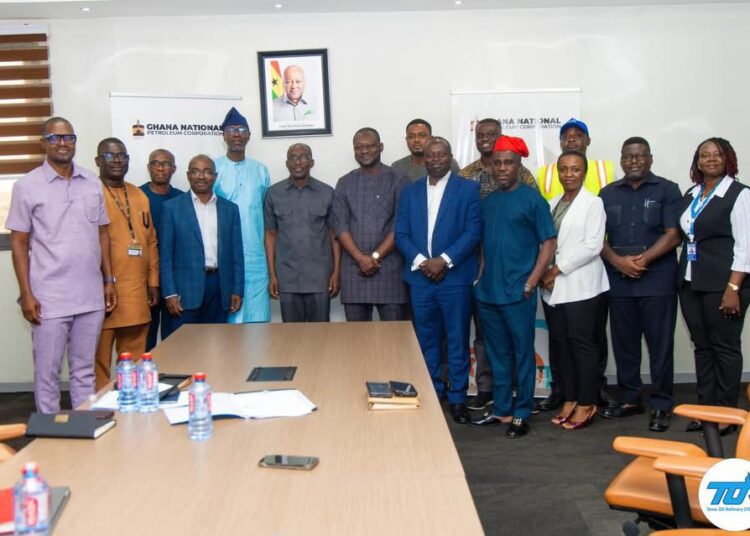
Government’s drive to refine more Ghanaian crude locally is beginning to take shape, with the Tema Oil Refinery (TOR) and the Ghana National Petroleum Corporation (GNPC) stepping up discussions on how both institutions can work together to support the refinery’s long-term operations and strengthen Ghana’s downstream petroleum sector.
The latest engagement comes as government pushes to revive TOR as the country’s premier refinery while reducing dependence on imported refined petroleum products through greater utilisation of domestically produced crude oil. Industry observers see closer cooperation between Ghana’s national oil company and its state-owned refinery as an important step towards achieving that objective.
Aligning around a common national objective

During a courtesy visit to the Chief Executive Officer of GNPC, TOR Managing Director Edmond Kombat said discussions centred on President John Dramani Mahama’s vision of allocating Ghanaian crude oil for domestic refining and the role both institutions can play in translating that vision into practical outcomes.
The engagement touched on matters of mutual interest including energy infrastructure, crude oil supply in keeping with the President’s vision and other strategic priorities to support the refinery’s long-term direction.
TOR statement after the meeting.
According to the refinery, the discussions also explored practical areas for closer collaboration as both institutions seek to support a more sustainable and competitive downstream petroleum industry.
Building on TOR’s recent recovery
The engagement follows several significant developments at the refinery over recent months.
At TOR’s 18th Annual General Meeting, management announced that the refinery had returned to profitability for the first time in nearly a decade, while also outlining plans to strengthen operations through improved governance, infrastructure rehabilitation and a more reliable crude oil supply.
The Board also disclosed that TOR has secured a two-year agreement for the supply of approximately one million barrels of crude oil each month to support sustained refining operations.
Alongside those imported volumes, officials indicated that the refinery is expected to receive locally produced Ghanaian crude as part of government’s broader strategy to increase domestic value addition within the petroleum sector.
The latest discussions with GNPC therefore reinforce efforts already underway to ensure that crude availability does not become a constraint to maintaining refinery operations.
Why local refining matters
Although Ghana is an oil-producing country, much of its crude has traditionally been exported while a substantial share of refined petroleum products consumed locally has been imported.
Successive governments have argued that expanding domestic refining could retain more value within the economy by supporting local industry, reducing foreign exchange pressures associated with fuel imports and strengthening national energy security.
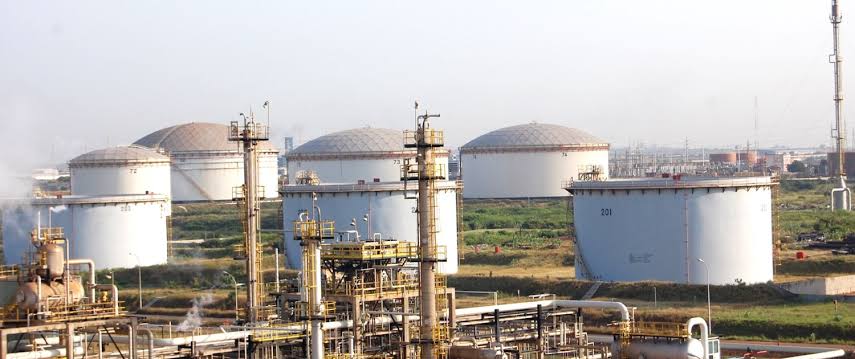
A stronger refining sector could also support employment, create additional industrial activity and improve resilience against disruptions in international fuel supply chains.
Realising those benefits, however, requires close coordination across the upstream and downstream segments of the petroleum industry, making collaboration between institutions such as GNPC and TOR increasingly important.
Collaboration becoming central to energy policy
The engagement also reflects government’s broader emphasis on greater coordination across the energy sector.
Only days earlier, the Ministry of Energy and Green Transition convened a high-level meeting bringing together agencies under the ministry and the Ministry of Finance to align priorities across the petroleum, electricity and renewable energy sectors.
That meeting underscored the view that closer institutional collaboration will be necessary to deliver government’s wider objectives of improving energy security, attracting investment and strengthening strategic state-owned enterprises.

Against that backdrop, cooperation between GNPC and TOR represents more than a routine institutional engagement. It signals continued efforts to align crude production, refining capacity and national energy policy around a common long-term objective.
While the discussions remain at the strategic level, their success will ultimately be measured by whether greater volumes of Ghanaian crude are refined locally and whether that translates into stronger energy security and increased value creation for the Ghanaian economy.
READ ALSO: Government Rejects Over GH¢1bn in T-Bill Bids as Yields Climb