Australia and India have signed an agreement to export Australian uranium to India for use in the nuclear energy industry.
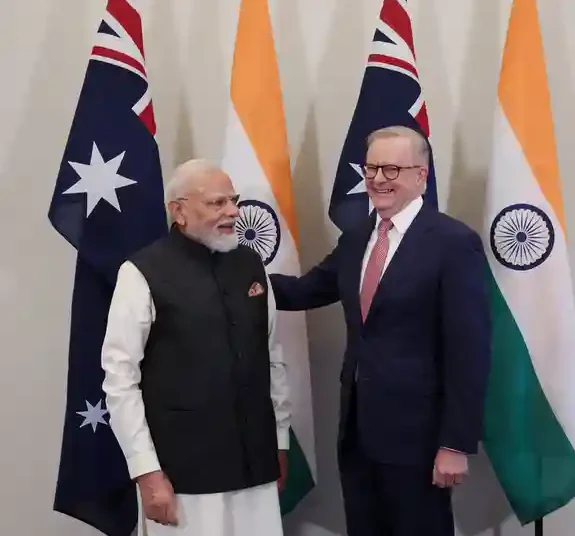
Indian Prime Minister Narendra Modi said after talks with his Australian counterpart, Anthony Albanese, in Melbourne, “We have signed an important agreement today on nuclear energy.” He added that the signed agreement will pave the way for uranium supplies from Australia to India and give “our clean energy objectives fresh momentum.”
Modi arrived in Australia after visiting Indonesia, where he signed a series of deals on agriculture and defence.
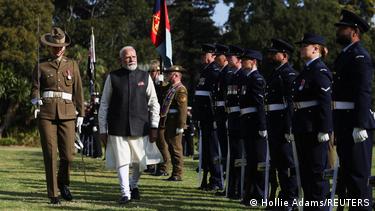
A joint statement said that the arrangement allowed long-term uranium exports for “exclusively peaceful purposes.”
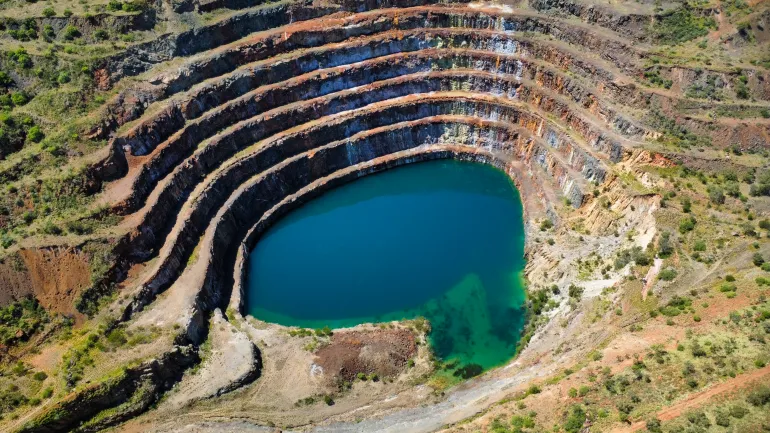
The joint statement said, “Both Prime Ministers welcomed finalization and signature of the Administrative Arrangement, which will enable long-term Australian uranium exports to India for exclusively peaceful purposes,” adding that the exports would come under International Atomic Energy Agency (IAEA) safeguards. The statement added that Australia expressed “strong support” for India’s membership of the Nuclear Suppliers’ Group.
India has long eyed Australia’s uranium reserves, which make up around 28 percent of the world’s supply, to help meet a target of 100 gigawatts of nuclear energy capacity by 2047 while Australia is looking to diversify trade beyond its reliance on China, its top partner.
The exports would fall under safeguards established by the International Atomic Energy Agency, the global nuclear watchdog. “The arrangement facilitates Australian uranium exports to India to help increase the share of non-fossil-fuel power capacity,” Albanese told reporters.
India and Australia entered a nuclear cooperation agreement in 2014. However, Australia has exported limited supplies of uranium to India over concerns that the material could be used to make weapons.
India is Australia’s fifth largest trading partner. Two-way trade in goods and services was valued at 54.4 billion Australian dollars (US$37.7bn) during the 2024-2025 financial year, according to Australian government figures.
Meanwhile, Australia’s largest pension fund, AustralianSuper, said that it would invest an additional 500 million Australian dollars ($347 million, €303 million in India’s National Investment and Infrastructure Fund.
Australia, India Boost Defence Ties
Moreover, Modi and Albanese also agreed to strengthen defence cooperation and bolster supply chains for critical minerals.
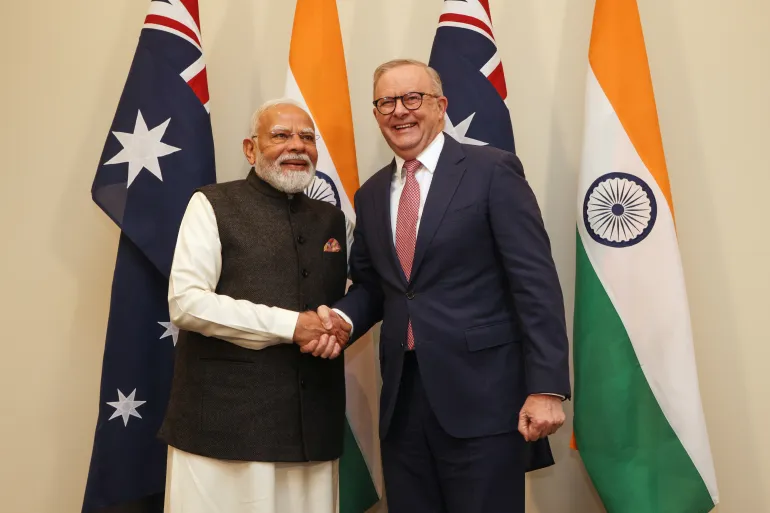
The leaders of India and Australia vowed greater defense and security cooperation in the Indo-Pacific, releasing a joint declaration during Indian Prime Minister Modi’s ongoing visit to Melbourne. “We recognise that our partnership must evolve to meet changing strategic circumstances, and commit to an acceleration in our advanced, integrated, and top-tier defense and security partnership,” the text of the declaration by Modi and Australian Prime Minister Anthony Albanese read.
It added that the two countries recognized a long-term vision of defense and security collaboration to enhance collective strength. “This collaboration will contribute to both countries’ security and make an important contribution to regional peace and security,” the joint statement said.
The two nations also plan to build a “temporary space tracking terminal” on Australia’s Cocos Keeling Islands in the Indian Ocean, which will support Indian space flight projects, according to a joint statement.
Albanese praised Modi’s leadership for helping foster stronger ties between the two nations. “Prime Minister Modi, your leadership and your personal engagement with Australia has been absolutely central to this change,” Albanese said.
Modi will leave for New Zealand on Friday before returning to India. “The outcomes during this visit reflect the confidence with which India and Australia are looking towards the future. Together, we will continue to unlock new opportunities for growth, innovation and shared prosperity,” Modi wrote on X about his Australia trip.
READ ALSO: Debate Emerges Over Ownership of Ghana Gas Expansion as ASEC Urges State Control