For a country seeking to expand electricity generation, strengthen domestic gas utilisation and reduce the cost of power production, the ownership of new energy infrastructure is becoming almost as important as the infrastructure itself.
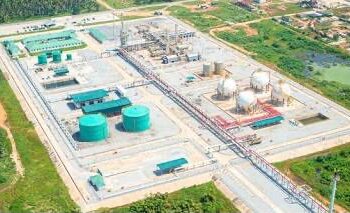
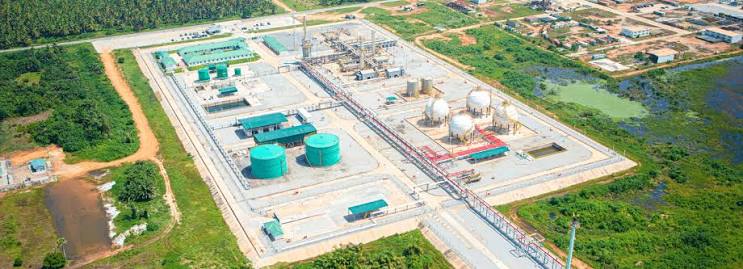
That debate has gained renewed attention after the Africa Sustainable Energy Centre (ASEC) cautioned government against transferring the planned second gas processing plant at Atuabo, commonly referred to as GPP Train 2, to private ownership, arguing that the facility should remain under the Ghana National Gas Company as part of the country’s long-term energy strategy.
State ownership at the centre of the debate
ASEC’s position comes at a time when Ghana is pursuing major reforms across the petroleum and electricity sectors while also seeking new investments to improve energy security and industrial growth.
The think tank argues that the proposed second gas processing train is more than another infrastructure project. In its view, it represents a strategic national asset that should remain under public ownership because of the role natural gas plays in electricity generation and industrial development.
According to ASEC, Ghana established the Ghana National Gas Company to process and transport domestic natural gas partly because government assumed responsibility for supplying fuel to several thermal power plants under existing Power Purchase Agreements (PPAs).
The organisation contends that introducing a private operator into that chain could fundamentally alter how the country’s gas supply system currently functions.
The state must maintain absolute ownership of GPP Train 2.
Africa Sustainable Energy Centre [ASEC ]
Why natural gas matters beyond the petroleum sector
Although gas processing facilities are often viewed as upstream petroleum infrastructure, their importance extends well beyond oil and gas production.
Natural gas supplies fuel for a significant share of Ghana’s thermal power plants, making reliable gas processing essential for electricity generation.
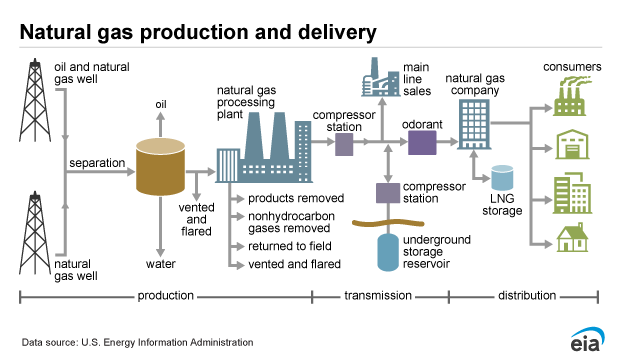
Additional processing capacity could also improve the availability of domestically processed gas for power generation and industrial users while reducing reliance on more expensive imported fuels.
Government has repeatedly identified natural gas as a transition fuel within Ghana’s broader energy transition agenda, a position reiterated by both the Minister and Deputy Minister for Energy and Green Transition at recent international energy forums.
During the 2026 Africa Energy Forum in Cape Town, Energy Minister Dr. John Abdulai Jinapor said Ghana would pursue its energy transition in a manner that reflects the country’s own development priorities, including continued utilisation of domestic natural gas alongside renewable energy expansion.

Similarly, Deputy Minister Richard Gyan-Mensah told participants at the International Energy Agency’s Global Conference on Energy Efficiency in Montreal that Ghana continues to regard natural gas as an important transition fuel while expanding renewable energy and improving energy efficiency.
ASEC argues that retaining state ownership of additional gas processing infrastructure would be consistent with that broader policy direction.
Questions over commercial efficiency
ASEC also challenged suggestions that private participation is necessary because of operational efficiency.
The organisation maintained that Ghana Gas has established itself as one of the country’s stronger-performing state-owned enterprises since beginning operations at the Atuabo Gas Processing Plant.
Rather than restructuring Ghana Gas, ASEC argues that reforms requiring greater private-sector participation should instead focus on institutions facing more persistent commercial and financial challenges.

The think tank therefore maintains that transferring ownership of a commercially viable gas processing expansion to private investors would represent a different policy objective from restructuring underperforming public utilities.
Whether government ultimately pursues public financing, private investment or some form of partnership arrangement for the project remains unclear.
Implications for consumers and the wider economy
For most consumers, ownership of a gas processing plant may appear far removed from everyday concerns.
However, energy analysts have long noted that the availability and cost of domestic natural gas influence electricity generation costs, industrial production and, ultimately, the prices businesses and households pay for goods and services.
A stable domestic gas supply can also reduce dependence on imported liquid fuels used by thermal power plants during periods of gas shortages, helping to strengthen energy security and improve reliability across the electricity sector.

As Ghana continues to pursue industrialisation while expanding electricity access, decisions surrounding strategic gas infrastructure are increasingly viewed not only as commercial investments but also as long-term policy choices with implications for economic competitiveness and energy resilience.
ASEC’s intervention therefore adds another perspective to an ongoing national conversation about how Ghana should finance, own and manage the infrastructure underpinning its energy future.
READ ALSO: Ghana Has Only 200 Physician Anaesthesiologists ‘Grossly Inadequate’ -Dr. Akoriyea