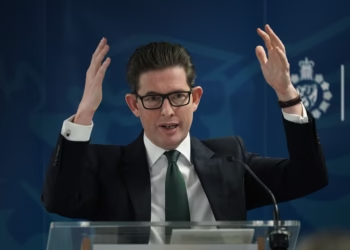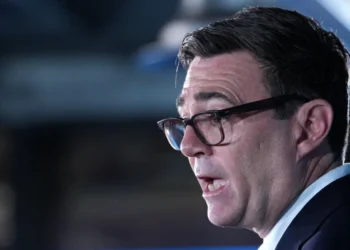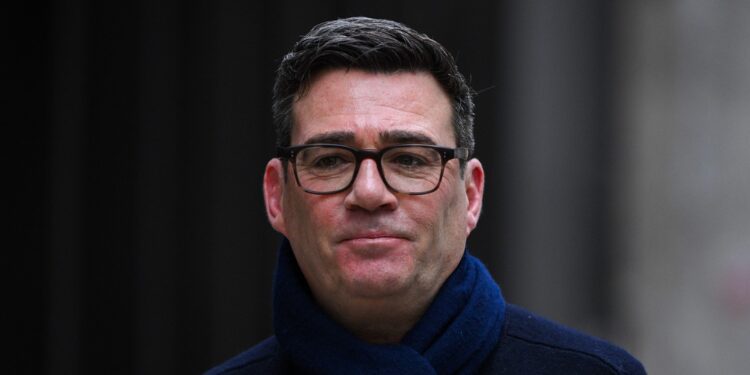
Andy Burnham is on the verge of becoming the next leader of the Labour Party and the United Kingdom’s next Prime Minister after emerging as the sole candidate in the contest to replace Keir Starmer, following a series of high-profile decisions by potential rivals not to enter the race.
Burnham looks to have an uncontested route to the party’s top position as nominations for the Labour leadership formally open. The last significant barrier to the former Greater Manchester mayor’s leadership bid was removed when former defence minister Al Carns announced he would not run.
The move comes after prominent Labour heavyweights, like as Health Secretary Wes Streeting and other powerful party members, have officially supported Burnham’s candidature in recent days. Expectations that Burnham will seize control of the governing party without encountering an internal struggle have increased as a result of their support.
If no other candidate enters the race before nominations close next week, Burnham is expected to be formally declared Labour leader at a party event before assuming office as Prime Minister on 20 July, only weeks after returning to Parliament through a by-election in the constituency of Makerfield following a decade away from Westminster.
The leadership transition marks a remarkable political comeback for Burnham, who left Parliament in 2015 after becoming Mayor of Greater Manchester. During his time in local government, he built a national profile by championing greater regional autonomy, transport reform, public health initiatives and increased powers for local authorities.
His return to frontline national politics now places him at the centre of Britain’s government during a period marked by economic challenges, pressures on public services and continuing debates over defence spending, regional inequality and constitutional reform.
Under Labour Party rules, leadership candidates must secure nominations from 81 Labour Members of Parliament, alongside support from either 32 of Labour’s 634 local constituency branches or three affiliated socialist societies or trade unions, including support from at least two trade unions.
Although the nomination process remains open until July 16, political observers believes Burnham’s overwhelming parliamentary backing could effectively end the contest long before the deadline.
Labour is anticipated to release an initial count of MP nominations later, providing the first indication of the degree of parliamentary support for Burnham’s campaign.
It would be theoretically impossible for any opponent to obtain the 81 nominations needed to enter the race if he were to win the support of 323 Labour MPs. In such case, Burnham would take over as Labour’s leader without a vote from the party’s members or related unions.
In light of the party’s desire for stability in the wake of Keir Starmer’s retirement, this result would make the transfer one of the quickest leadership changes in recent Labour history.
Burnham Unveils Vision for a Stronger, More Decentralised Britain
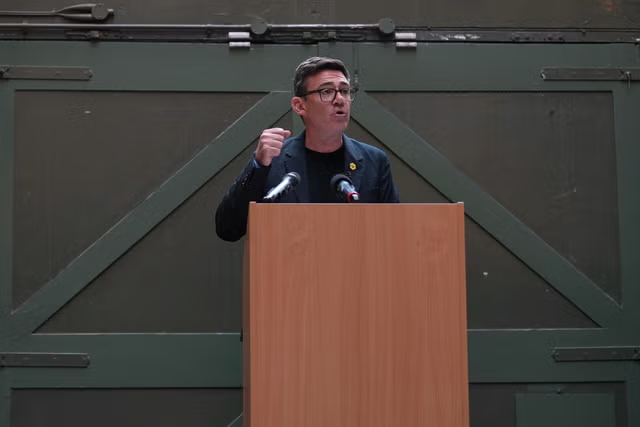
Although his leadership has yet to be formally confirmed, Burnham has already begun outlining the direction he wants a future Labour government to take.
Speaking in Manchester, he unveiled plans aimed at reshaping the relationship between central government and local authorities, arguing that more decision-making powers should be transferred away from Westminster.
A central feature of his proposal is the creation of a new No. 10 government unit based in Manchester, designed to strengthen coordination between central government and regional administrations while accelerating the devolution of powers.
Burnham argued that the proposed unit would focus on giving local authorities greater control over areas including housing, transport and other public services, building on the devolution model he has championed throughout his tenure as Greater Manchester mayor.
Alongside constitutional reform, Burnham has signalled continuity in Britain’s national security strategy.
Burnham has also called for a “sustained increase” in defence spending, acknowledging the growing importance of national security amid an increasingly uncertain international environment.
However, he stopped short of committing to a specific spending target, instead emphasising the need for greater transparency over military procurement.
He argued that governments should be more open with the public”about delays and cost overruns affecting defence projects, suggesting that improved accountability would strengthen public confidence while ensuring better value for taxpayers.
In the event that Burnham is elected prime minister, the balance of regional change, defence investment, and administrative transparency provides a preview of the priorities that will likely characterise his rule.