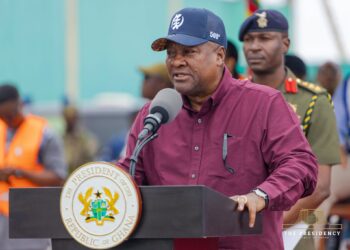
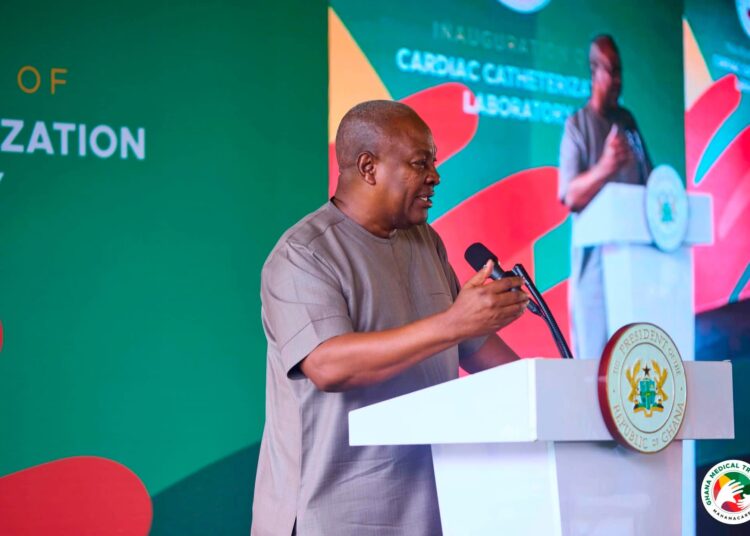
President John Dramani Mahama used the commissioning of Korle-Bu Teaching Hospital’s new Cardiac Catheterisation Laboratory to announce a separate, significant health infrastructure project, revealing that the government is going through the procurement process to build a new maternity block for the hospital.
The announcement came near the close of his remarks, delivered as what he described as one final piece of news before formally declaring the cardiac facility open. President Mahama said the new maternity block will replace the hospital’s existing maternity building, a structure he did not hold back in criticizing.
“We will pull down the old Gordon Guggisberg building that has today become a death trap,” he said, referring to the colonial era structure that has served as the hospital’s maternity facility for generations.
President Mahama did not mince words in describing the condition of the current building. He said mothers give birth in the facility every other day despite its dangerous state, warning that it represents a structure capable of causing devastation if left standing.
“It is a death trap that can cause devastation,” he said, framing the planned demolition and replacement as an urgent safety matter rather than a routine infrastructure upgrade.
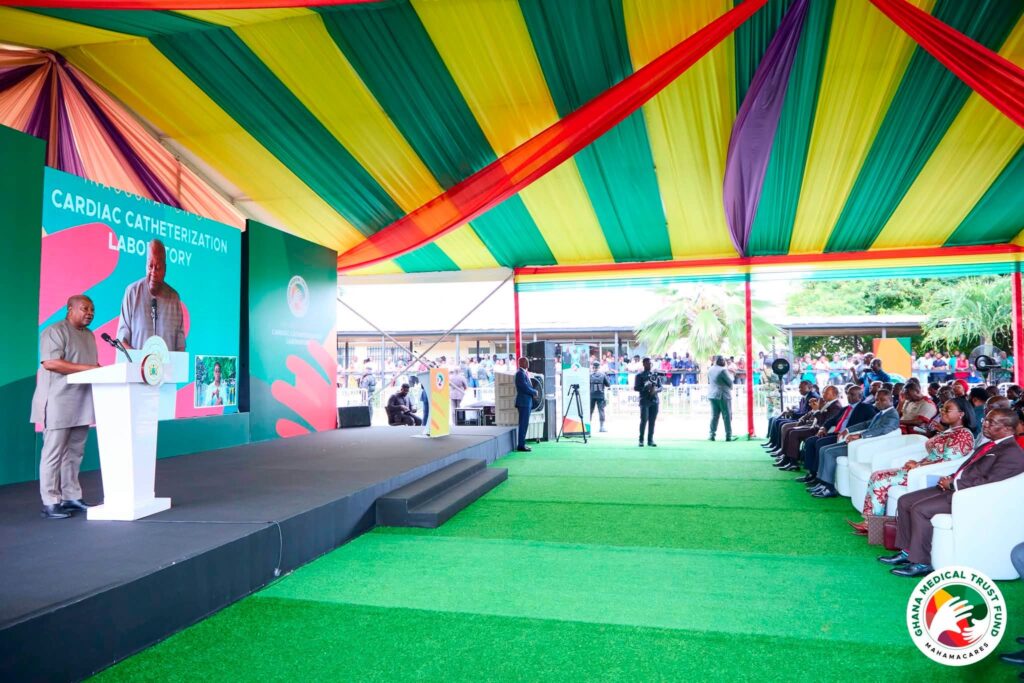
The Guggisberg building, named after a former colonial governor, has long stood as one of the older structures within the Korle-Bu Teaching Hospital complex, and President Mahama’s remarks suggest its age and condition have reached a point where continued use poses a direct risk to both mothers and newborns passing through its wards.
Part of a Broader Health Infrastructure Push
Although Mahama’s announcement on the maternity block came separately from his detailed remarks on the cardiac catheterisation laboratory, it fits within the same broader theme that ran through his speech, government’s stated commitment to strengthening healthcare infrastructure across Ghana.
Throughout his address, President Mahama had emphasized that healthcare investment forms a central part of his administration’s vision for national development, arguing that a healthy population underpins productivity, education, and economic growth.
The maternity block announcement extends that vision beyond specialised cardiac care into maternal health, an area where safe and modern facilities carry direct consequences for both mother and child survival rates.
By linking the announcement to the failures of an aging colonial structure, President Mahama positioned the project as addressing a long overdue gap in the hospital’s infrastructure.
No Timeline Given, But Process Underway
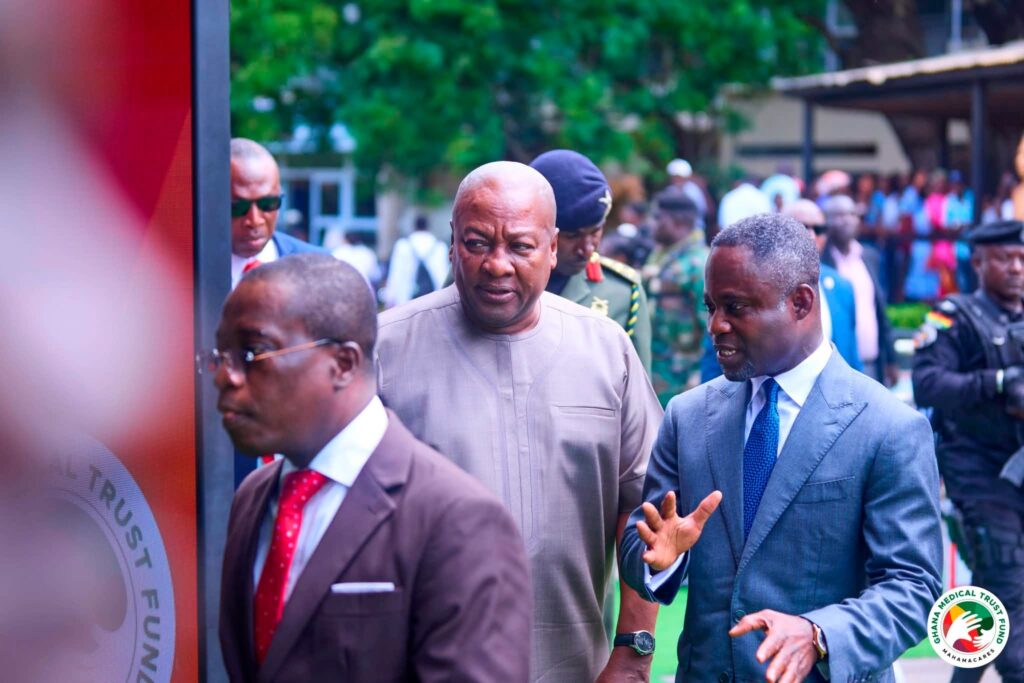
President Mahama’s remarks indicate that the project has not yet reached the construction phase, with the government currently working through the procurement process required before building can begin.
He did not provide a specific timeline for when construction might start or when the new maternity block would be completed, nor did he detail the block’s planned capacity or design features.
The announcement nonetheless signals a clear commitment from government to address the issue, following what Mahama described as ongoing use of a building he now considers unsafe for the mothers who continue to rely on it for childbirth.
President Mahama’s decision to announce the maternity block project during the cardiac lab commissioning suggests he views both initiatives as part of the same broader narrative, one in which his administration is systematically addressing gaps and failures across Korle-Bu’s aging infrastructure.
Just as the new cardiac catheterisation laboratory replaced a facility lost to fire with what Mahama described as an improved version, the planned maternity block appears intended to replace a structure he considers to have outlived its safe usable life.
A Commitment Still to Be Delivered
With procurement underway but construction yet to begin, the maternity block remains a commitment rather than a completed project.
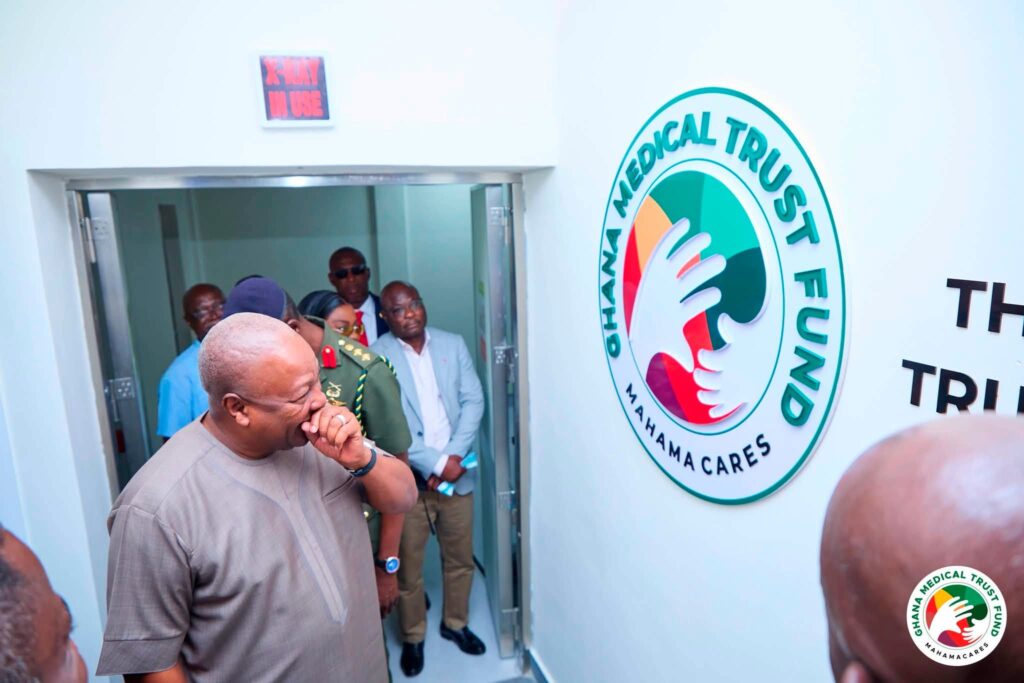
For the mothers currently giving birth within the Guggisberg building, the announcement offers the prospect of a safer facility in the future, though the timeline for that transition remains unclear.
How quickly the government moves from procurement to actual construction will likely determine how soon this particular promise translates into a building capable of replacing what President Mahama has now publicly labelled a death trap.
READ ALSO: BoG Signals Fresh Confidence in Ghana’s Currency Outlook