Ghana’s drive to modernise its energy infrastructure is increasingly placing local manufacturing at the centre of the country’s energy transition agenda, with renewed attention on the role domestic industries can play in supplying the equipment needed to expand electricity access, improve public lighting and accelerate renewable energy deployment.
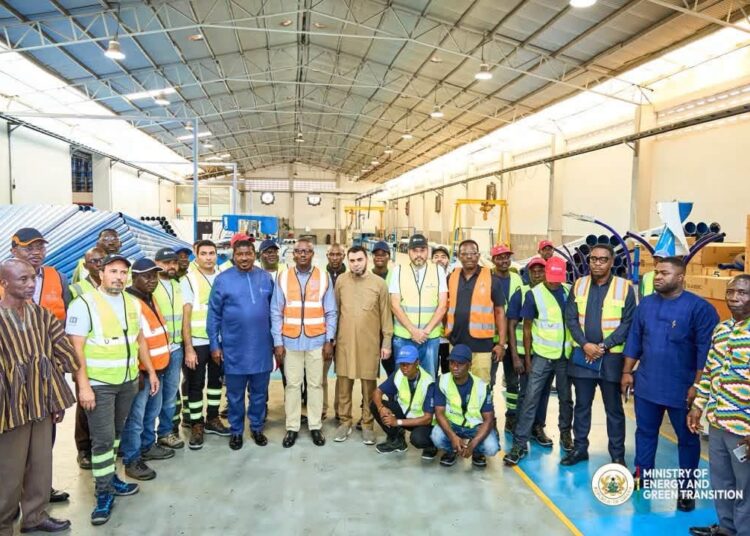
The latest signal came after the Minister for Energy and Green Transition, Dr John Abdulai Jinapor, visited Glassic Fibreglass Innovation Ltd. as part of his ongoing tour of key institutions and stakeholders within Ghana’s energy sector.

According to the Minister, the visit formed part of efforts to familiarise himself with the company’s operations and assess how local manufacturing can contribute to the country’s broader energy and industrial development objectives.
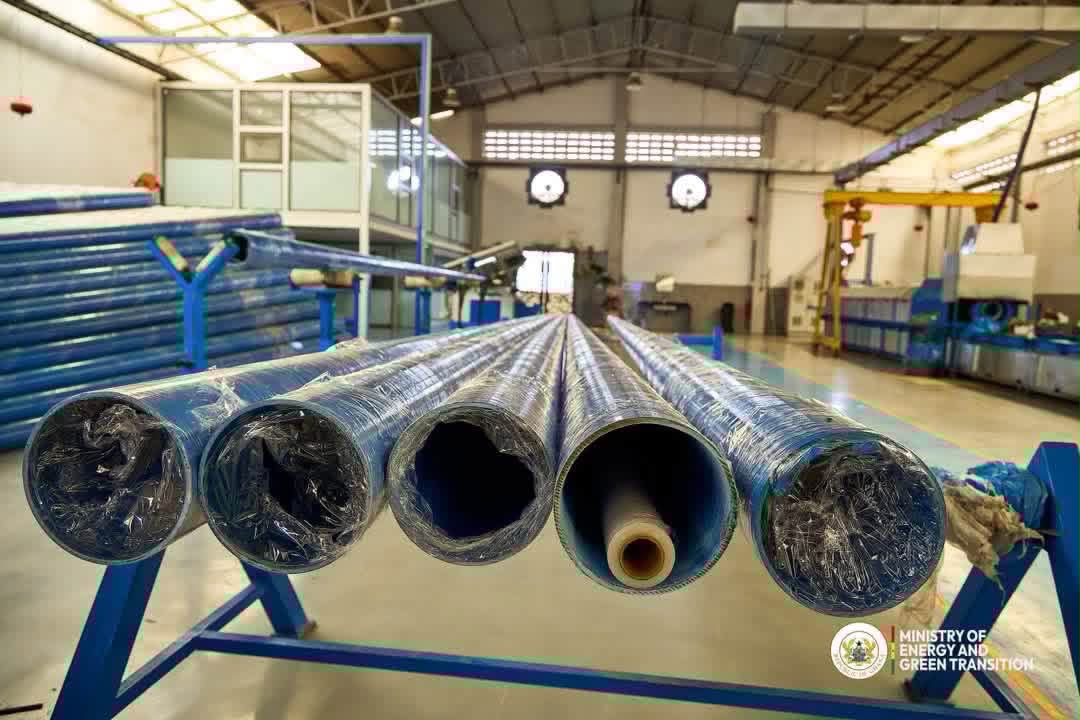
During the engagement, Dr Jinapor expressed satisfaction with the company’s production of locally manufactured fibreglass electricity poles and streetlight infrastructure, describing them as durable, corrosion-resistant alternatives capable of supporting Ghana’s expanding electricity network.

I was impressed by the company’s production of locally manufactured fibreglass poles and streetlight infrastructure, which offer durable, corrosion-resistant, and high-quality alternatives for our electricity and public lighting systems. I was particularly encouraged by the company’s contribution to deploying solar-powered streetlights. This is a clear demonstration of the capacity of Ghanaian industry to drive innovation, create jobs, and add value to our economy.
Dr John Abdulai Jinapor, Minister for Energy and Green Transition
The Minister’s remarks suggest that Ghana’s energy transition is increasingly being viewed not only as an electricity generation challenge but also as an opportunity to expand domestic industrial capacity and reduce dependence on imported energy infrastructure.
Energy transition increasingly linked to industrialisation
For many years, discussions around Ghana’s energy sector have focused primarily on power generation, fuel supply and electricity tariffs. However, recent policy discussions indicate a growing emphasis on developing local value chains capable of manufacturing some of the equipment required for the transition.
Fibreglass utility poles, solar-powered streetlight systems and other locally assembled energy products represent areas where domestic companies could potentially capture greater economic value while supporting infrastructure expansion.

Unlike traditional wooden poles, fibreglass poles are generally designed to resist corrosion, termites and weather-related deterioration, potentially reducing maintenance costs and extending infrastructure lifespan over time.
Their application becomes increasingly relevant as Ghana expands electricity access into new communities while simultaneously investing in public lighting and renewable energy projects.
The Minister’s visit therefore highlights a broader policy question: whether Ghana’s energy transition can become a catalyst for industrial development rather than relying predominantly on imported technologies.
Supporting previous efforts to localise the energy transition
The emphasis on domestic manufacturing also complements several recent developments across Ghana’s energy sector.
In recent weeks, government announced plans to develop 1.5 gigawatts of solar-hydropower generation capacity with battery energy storage systems to support the 24-Hour Economy programme, underscoring the growing importance of renewable energy infrastructure.
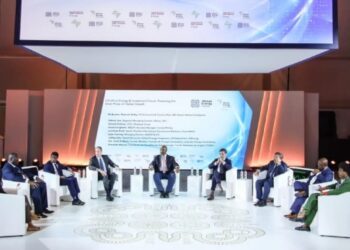
Similarly, the Energy Commission recently signed a Memorandum of Understanding with Global South Utilities (GSU) of the United Arab Emirates to explore technical cooperation and investment opportunities aimed at supporting Ghana’s energy transition.
While those initiatives focus largely on investment, generation capacity and international collaboration, the Minister’s latest visit shifts attention to another equally important component: ensuring that Ghanaian companies participate directly in supplying equipment and infrastructure needed to implement those projects.
Industry analysts have long argued that the economic benefits of the energy transition extend beyond electricity production to include manufacturing, engineering services, installation, maintenance and technology development.
If more energy infrastructure can be produced locally, Ghana could retain a greater share of investment within the domestic economy while creating skilled employment opportunities.
Solar street lighting gaining attention
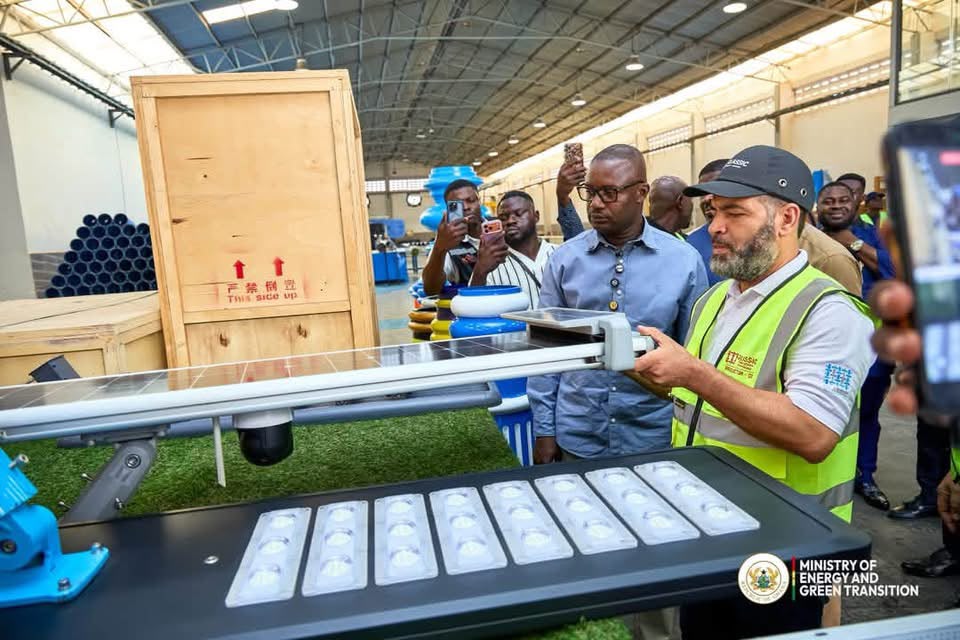
One aspect of the visit that attracted particular attention was the company’s work on solar-powered street lighting.
Solar streetlights have increasingly become part of public infrastructure projects because they operate independently of the national electricity grid and can reduce electricity consumption by municipalities.
For communities where extending conventional grid-powered lighting may be expensive, standalone solar systems can provide an alternative solution while lowering long-term operational costs.

The Minister indicated he was particularly encouraged by Glassic Fibreglass Innovation’s contribution to deploying such systems, suggesting that renewable-powered public lighting could become a more prominent feature of future infrastructure projects.
The development also aligns with Ghana’s broader ambition to increase renewable energy adoption while improving energy efficiency across public institutions.
Local industry and job creation
Beyond infrastructure, the Minister framed local manufacturing as an economic development strategy.
By producing components domestically rather than importing finished products, local manufacturers have the potential to create employment across engineering, fabrication, logistics, installation and maintenance.
This objective mirrors wider government efforts to ensure that investments in the energy sector generate stronger linkages with local industries.

It also reflects growing recognition that the energy transition should deliver broader economic benefits beyond increasing electricity generation alone.
Countries pursuing cleaner energy systems are increasingly seeking to build domestic industrial ecosystems around renewable energy technologies rather than remaining solely import markets for foreign manufacturers.
For Ghana, encouraging companies capable of producing energy infrastructure locally could strengthen industrial competitiveness while supporting national localisation objectives.
Infrastructure resilience becoming part of energy planning
The visit also comes at a time when resilience has become an increasingly important consideration in energy infrastructure planning.
As electricity networks expand, the durability and reliability of transmission and distribution infrastructure become essential for maintaining service quality and reducing maintenance costs.
Materials capable of withstanding harsh weather conditions, corrosion and environmental degradation can contribute to longer asset life and improved system reliability.
Although the Minister did not announce any procurement decisions during the visit, his engagement with the company signals continued government interest in understanding how locally manufactured technologies can support future infrastructure investments.
For Ghana, the significance extends beyond one manufacturer.
The broader policy challenge will be creating conditions that enable more domestic firms to compete in supplying equipment for renewable energy projects, electricity distribution networks and other strategic infrastructure.
If that objective is achieved, Ghana’s energy transition could become not only a pathway towards cleaner electricity, but also an engine for industrial growth, technological capability and sustainable employment.
READ ALSO: Andy Burnham Secures Overwhelming MP Support in Labour Leadership Race