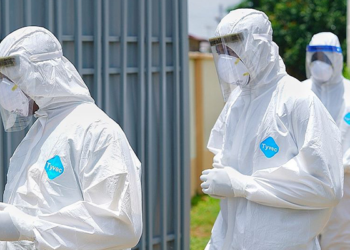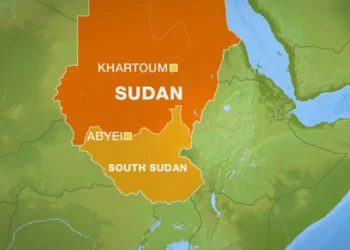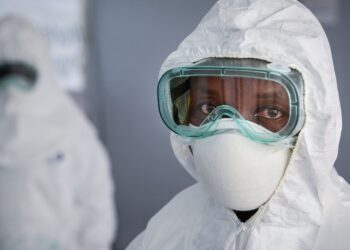
World Health Organization (WHO) has warned that Sudan’s latest cholera outbreak could rapidly deteriorate into a far more devastating public health emergency as ongoing armed conflict, mass displacement and the onset of the rainy season combine to accelerate the spread of the waterborne disease across the country.
According to the health professionals, since the outbreak was formally announced on June 27, at least 114 individuals have died and another 1,300 have contracted the sickness, which is now spreading throughout many Sudanese states. Particular hotspots have been identified in Darfur and Kordofan, where ongoing conflict and insecurity severely hinder humanitarian access and the provision of life-saving medical aid.
The warning comes as Sudan remains engulfed in one of the world’s worst humanitarian crises, with millions of civilians caught in a conflict that has devastated hospitals, displaced entire communities and pushed basic public services to the brink of collapse. Humanitarian agencies fear that worsening weather conditions could create ideal conditions for cholera transmission, particularly in overcrowded displacement camps where access to clean water and sanitation remains critically inadequate.
Shible Sahbani, WHO Representative in Sudan, declared that “cholera is back.”
“There is a case fatality rate of 13.7%, which is extremely high, and of course, the rainy season is expected to worsen the situation.”
Shible Sahbani
Cholera is a severe diarrhoeal illness caused by eating food or water contaminated with the bacteria Vibrio cholerae. Although the sickness is preventable and treatable, it can be lethal within hours if victims do not receive immediate care. Outbreaks are common in areas where access to safe drinking water, sanitation facilities, and healthcare services is limited, as is the case in much of war-torn Sudan.
The conflict between the Sudanese Armed Forces (SAF) and the paramilitary Rapid Support Forces (RSF), which erupted in April 2023, has left much of the country’s health infrastructure either damaged or non-functional. Hundreds of health facilities have been forced to close because of insecurity, shortages of medicines and repeated attacks on healthcare infrastructure, leaving millions of people without access to essential medical services.
According to the WHO, Sudan is currently facing the largest humanitarian emergency in the world. More than 33 million people require humanitarian assistance, while approximately 21 million are in urgent need of healthcare services.
Those figures reflect not only the direct impact of the conflict but also worsening food insecurity, disease outbreaks, displacement and the collapse of public services across much of the country.
The recent cholera outbreak threatens to exacerbate these issues. Seasonal rains, according to aid organisations, might taint already fragile water supplies, increase floods in displacement camps, and make it even more difficult for humanitarian services to reach isolated areas. Floodwaters frequently overrun sanitary infrastructure, causing contaminated water to spread quickly across densely populated towns where displaced families have taken safety from the war.
Health professionals are also concerned that continuing insecurity may delay disease surveillance, case detection, and treatment, increasing the chance of illnesses spreading undetected into new populations.
Conflict and Aid Shortages Hamper Disease Response in Sudan
Among the regions of greatest concern is the besieged city of al-Obeid, the capital of North Kordofan State, where severe fighting between the Sudanese army and the RSF has put huge strain on already overburdened health facilities.
According to Sahbani, humanitarian organisations are unable to access vulnerable populations as the fighting spreads throughout the city, leaving medical professionals with insufficient resources to contain the outbreak.
“There is the risk that it will become the second al-Fashir, or even worse,” Sahbani warned.
His views underscore rising concerns among United Nations officials that al-Obeid could see a humanitarian catastrophe comparable to that witnessed in al-Fashir, the capital of North Darfur.
Earlier this month, a top UN official warned that conditions in al-Obeid were worsening swiftly amid growing violence, raising fears that civilians could endure lengthy siege conditions and widespread human rights abuses.
The RSF took al-Fashir last year following months of intensive warfare that left thousands of residents besieged without proper food, water or healthcare.
Humanitarian agencies fear that a similar scenario in al-Obeid will significantly complicate attempts to respond not only to the cholera outbreak but also to Sudan’s broader humanitarian catastrophe.
Aid agencies continue to emphasise that eliminating cholera involves far more than just medical treatment. Effective response tactics require on secure humanitarian access, operational hospital systems, adequate water supplies, sanitary facilities, and public health awareness campaigns, all of which are badly interrupted by the fighting.
READ ALSO: Mahama, Opoku-Agyemang Lead National Cleanup Exercise in Flood Areas