The Energy Commission of Ghana has hosted a high-level delegation from the Energy Sector Regulatory Authority (ARSE) of the Republic of Niger, as the two institutions deepened regulatory cooperation through a benchmarking mission aimed at strengthening energy governance, technical regulation and institutional capacity across West Africa.
The five-member delegation from Niger visited the Commission to study Ghana’s regulatory framework and exchange knowledge on key aspects of electricity regulation, licensing, quality assurance and system reliability.
The engagement forms part of broader efforts by African energy regulators to strengthen institutions through peer learning as countries pursue more resilient, efficient and sustainable energy systems.
The visit reflects the growing recognition that strong regulatory institutions are central to attracting investment, safeguarding consumers, improving electricity reliability and supporting regional energy integration under the Economic Community of West African States (ECOWAS).

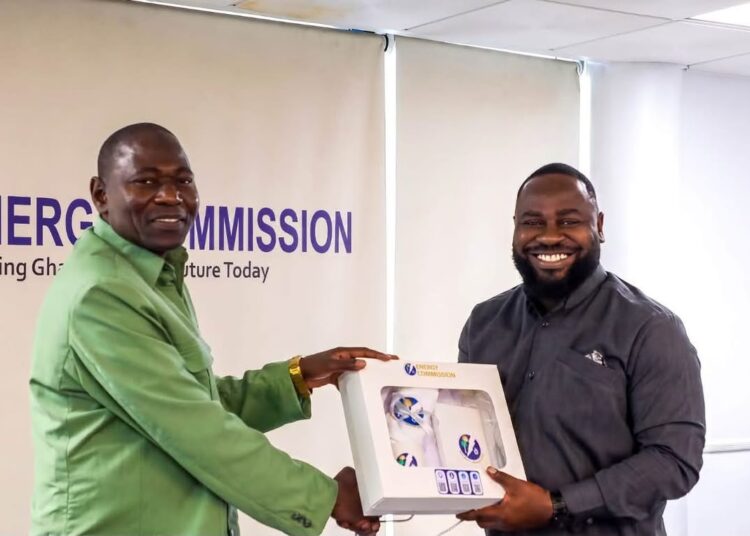
Welcoming the delegation on behalf of the Energy Commission, Deputy Executive Secretary Mr. Chris Nanabiyan Yalley described the engagement as an important opportunity for both institutions to learn from each other’s experiences while strengthening regulatory cooperation within the region.
The occasion is an opportunity to engage with a sister regulatory authority on the shared work of building energy sectors that are safe, reliable, and responsive to citizens’ needs.
Mr. Chris Nanabiyan Yalley
He noted that although regulatory institutions often operate behind the scenes, their work forms the backbone of the entire energy value chain by ensuring that technical standards are upheld, licences are properly administered and electricity services remain reliable for consumers.
Regulation at the heart of energy sector development
As West African countries continue to expand electricity access while integrating larger shares of renewable energy into their power systems, the role of regulators has become increasingly critical.
Beyond issuing licences, regulatory institutions establish technical standards, enforce safety requirements, monitor utility performance and create predictable investment environments that encourage both public and private sector participation.
The Energy Commission’s engagement with ARSE therefore focused not only on sharing Ghana’s regulatory practices but also on discussing practical tools that can strengthen institutional effectiveness across the region.
Officials examined regulatory approaches covering the full spectrum of technical oversight, from electricity production and distribution to service quality monitoring and licensing procedures.

During the engagement, both institutions exchanged perspectives on several core areas of energy regulation, including technical quality and safety standards, the monitoring of electricity reliability through SAIDI and SAIFI indicators, oversight of electricity generation and sales, licensing methodologies, and the regulatory tools required to strengthen technical governance across the sector.
Together, these areas form the foundation of modern electricity regulation, helping ensure that power systems remain safe, efficient and capable of meeting growing consumer demand.
Knowledge exchange strengthens regional institutions
The benchmarking mission underscores a wider trend among African regulators to rely increasingly on peer-to-peer learning rather than developing regulatory systems in isolation.
Countries across the continent are facing similar challenges, including expanding electricity access, integrating renewable energy, strengthening grid reliability and attracting investment into generation, transmission and distribution infrastructure.
Sharing regulatory experiences allows institutions to adopt tested approaches while adapting them to their own national contexts.
Mr. Yalley emphasised that while Ghana was pleased to share its experience, the Commission equally recognised the value of learning from Niger’s own regulatory journey.
The Energy Commission expressed hope that the exchange would be of practical value as ARSE shapes the next chapter of its strategic direction, while welcoming the opportunity to learn from Niger’s own regulatory experience.
Mr. Chris Nanabiyan Yalley
The emphasis on mutual learning reflects a growing understanding that regulatory excellence is built through continuous improvement rather than one-way knowledge transfer.
Reliable electricity depends on strong regulation
One of the key areas discussed during the visit was the monitoring of SAIDI and SAIFI, two internationally recognised indicators used to measure electricity supply reliability.
SAIDI measures the average duration of power interruptions experienced by consumers over a given period, while SAIFI tracks the average frequency of outages.
Monitoring these indicators enables regulators to evaluate utility performance objectively, identify operational weaknesses and require improvements where necessary.

Similarly, discussions on technical standards and safety controls highlighted the importance of maintaining rigorous oversight as electricity networks expand and become increasingly complex.
Strong technical regulation helps minimise operational risks, improve service delivery and enhance consumer confidence in the energy sector.
The delegation also explored Ghana’s methodology for assessing licence applications, an area that plays a critical role in ensuring only technically and financially capable operators participate in the electricity market.
Transparent licensing frameworks are widely regarded as essential for promoting competition, protecting consumers and maintaining confidence among investors.
Regional cooperation gains momentum

The visit comes at a time when regional collaboration is becoming increasingly important for West Africa’s energy future.
Cross-border electricity trade under the West African Power Pool, growing renewable energy investments and shared ambitions to improve electricity access all require stronger regulatory coordination among member states.
Benchmarking missions such as the one undertaken by ARSE provide practical opportunities for regulators to harmonise approaches, exchange operational experiences and strengthen institutional capacity without duplicating effort.
For Ghana, hosting fellow African regulators also reinforces the country’s growing role as a regional centre for regulatory expertise and energy governance.

As governments across West Africa pursue energy transition objectives alongside expanding electricity access, stronger institutions will remain essential for delivering reliable, affordable and sustainable energy systems.
The discussions between the Energy Commission of Ghana and Niger’s Energy Sector Regulatory Authority therefore represent more than a technical exchange.
They reflect a shared continental commitment to building regulatory institutions capable of supporting Africa’s evolving energy landscape through cooperation, knowledge sharing and continuous institutional development.
READ ALSO: Ato Forson Orders Urgent GDP, CPI Rebasing