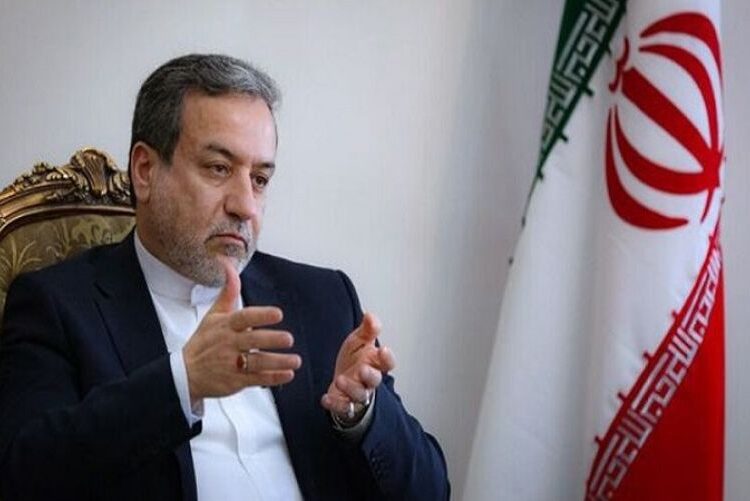
Iran’s Foreign Minister, Abbas Araghchi has accused the United States of committing war crimes, saying strikes on “vital infrastructure” and threats to attack bridges and power plants show “the criminal intent of the US ruling body to commit heinous crimes.”
In a statement on Telegram, Araghchi said that the US attacks are “undoubtedly a flagrant violation of the United Nations Charter and the fundamental principles of international law.”
He stated that they amount to “serious international crimes” under the fundamental principles of international criminal law, including the four Geneva Conventions of 1949, adding that “all governments are obligated to prosecute and punish those who commit such crimes.”
Araghchi also accused American officials of “absurd rhetoric and diabolical threats”, saying the hostility is aimed at the Iranian people “for insisting on their independence, legitimate rights and human dignity.”
He warned that those responsible “cannot evade legal responsibility… by claiming to be acting on the orders of their superiors.”
Separately, Iran’s top negotiator, Parliament Speaker Mohammad Bagher Ghalibaf, said that Iran has “no choice but to rely on our own strength and become stronger”, adding that the US “seeks to hit Iran and advance its interests whenever it can.”
“This is not limited to war, negotiations, or just this current US President. So our view of war or negotiations must be based on national interests and security, realistic and long-term; therefore, we have no choice but to rely on our own strength and become stronger.”
Mohammad Bagher Ghalibaf
The latest round of fighting is focused on the Strait of Hormuz, as Iran attacks ships using a U.S.-controlled route through the vital waterway.
Days of back-and-forth strikes by the U.S. and Iran across the Middle East and renewed threats to the Strait of Hormuz have shredded the interim deal to end the Iran war and could tip the region back into all-out war. Iranian officials say U.S. strikes have killed more than 35 people and wounded over 300 others.
Mediators have sought to calm the tensions, but so far have been unsuccessful. Pakistan’s Foreign Ministry stated today that it was still trying to bring the U.S. and Tehran to the table, while acknowledging that mediation was becoming increasingly difficult. “Whenever the parties exhaust the logic of escalation, the formula for peace is there,” Ministry Spokesperson Tahir Andrabi told a news conference.
US Expands Strikes Into Northern Iran
Meanwhile, the United States intensified its strikes on Iran early today, hitting targets farther north and firing into a ship the U.S. accused of trying to break its naval blockade on the Islamic Republic. Iran retaliated by launching missiles and drones at U.S. allies in the region, and warned its attacks may escalate.
The U.S. strikes hit around Tehran, state media reported. It also reported that American attacks targeted Semnan province, home to Iran’s ballistic missile production and space program.Iranian media also reported strikes around the provinces of Hamedan, Hormozgan, Khuzestan, Lorestan, Markazi, and Sistan and Baluchestan.
Yesterday, the U.S. resumed striking Iran during daylight, further showing the increasing tempo of the attacks. An attack on Greater Tunb Island targeted Iranian defense and missile sites, Central Command said.
The U.S. military said it opened fire on the Curacao-flagged oil tanker Belma sailing toward Kharg Island, Iran’s main oil export terminal in the Persian Gulf. After the ship “ignored multiple warnings,” a U.S. aircraft disabled the merchant vessel by firing a missile into the ship’s smokestack.
Iran retaliated this morning with missile and drone attacks on Bahrain, Jordan and Kuwait, authorities in those countries home to U.S. forces said.
Col. Ebrahim Zolfaghari, a spokesperson for the Iranian military’s Khatam al-Anbiya Central Headquarters, threatened that Iran could launch widespread attacks on regional infrastructure if the U.S. acts on President Donald Trump ‘s repeated warnings that America could hit Iranian bridges and power plants.
“All the infrastructure in the region will be crushed under the steel blows of the powerful armed forces of the Islamic Republic of Iran.
“Under no circumstances and in no way will we allow America, as a foreign and extraregional country, to interfere in the Strait of Hormuz. This is Iran’s invincible red line.”
Col. Ebrahim Zolfaghari