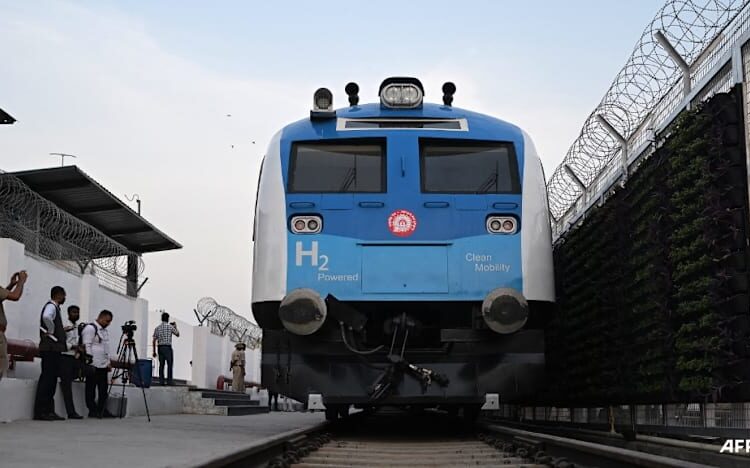
India has launched its first Indigenously built hydrogen-powered train named the “NaMo Green Rail,” a move aimed at expanding the use of clean energy in its vast rail network.
The train made up of two hydrogen-powered driving cars and eight passenger coaches will operate in the northern state of Haryana. It can run at speeds of up to 75 kph (47 mph) and carry a maximum of about 2,600 passengers.
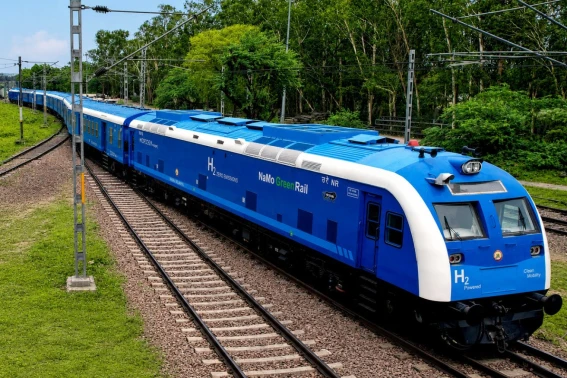
The 10-coach train runs along an 89-kilometre (55-mile) route between Jind and Sonipat in India’s northern state of Haryana, powered by a 1,200-kilowatt hydrogen fuel cell propulsion system. Officials described the system as the world’s most powerful for a train.
Prime Minister Narendra Modi inaugurated the “NaMo Green Rail” at Haryana’s Jind railway station. “NaMo” is a common abbreviation of Modi’s first and last names.
The launch is part of India’s broader efforts to develop green hydrogen and reduce carbon emissions. India has set a target of reaching net-zero emissions by 2070, with Indian Railways exploring hydrogen as an alternative to diesel on some routes.
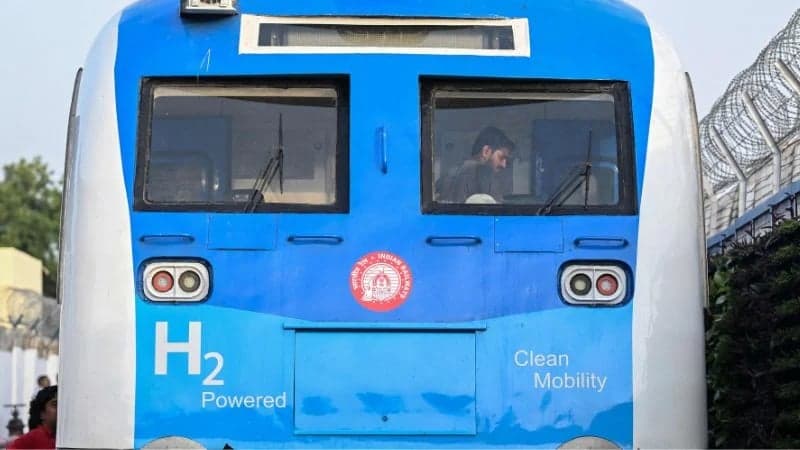
Developed as a pilot project, the train will help test hydrogen technology and support future plans for eco-friendly rail travel in India.
The pilot project includes hydrogen storage and refueling infrastructure to test the use of the technology in India’s rail network, according to officials. Hydrogen fuel cells generate electricity by combining hydrogen and oxygen, producing water vapor as the only direct emission.
The project is part of a broader push to modernise one of the world’s largest rail networks while reducing carbon emissions.
The railway ministry also inaugurated what it described as the country’s largest railway hydrogen storage and refuelling facility in Jind, with a capacity of some 3,000 kilograms, to “support hydrogen-powered train operations.” According to a senior railway official who acknowledged it was significantly more expensive than a comparable conventional service, the pilot project cost around $12 million. However, he said costs were expected to fall as the technology matures.
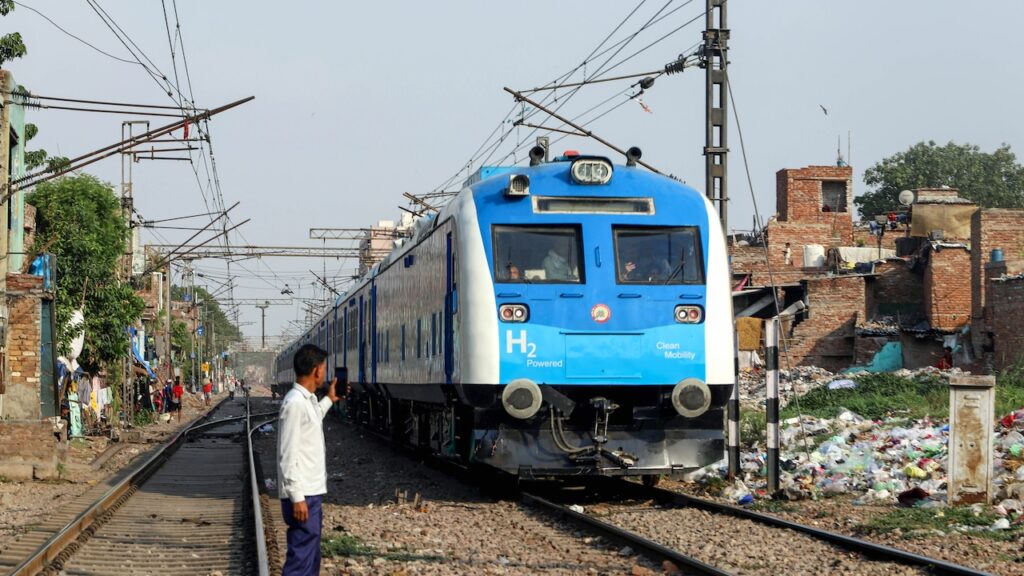
Several other countries have introduced hydrogen-powered trains as an alternative to diesel on routes that are not fully electrified. With the launch, India joins countries such as Germany, Japan, China and the United States that are testing or operating hydrogen-powered trains.
Germany was the pioneer in deploying the world’s first hydrogen-powered passenger train, the Alstom Coradia iLint. In 2022, the train completed a record 1,175 km journey without refuelling. Meant to operate on the Bremervorde route in Lower Saxony, it was launched with cleaner zero-emission technology as an alternative to the diesel-powered trains.
Additionally, Germany is also expected to deploy three hydrogen-powered trains in the Sudostbayernbahn network this year. These trains will operate on the 32.2-km Muhldorf-Tubling-Burghausen route, using roof-mounted fuel cells and lithium-ion batteries for zero-emission travel, as per the Hydrogen Europe website.
Japan will reportedly have its first-ever hydrogen hybrid train by the end of fiscal 2027. The train will run on the Tsurumi and Nambu lines in Kanagawa Prefecture near Tokyo and will be known as the “Hybari” train. In 2024, California introduced the US’ first hydrogen-powered passenger train, known as Zemu, in San Bernardino.
Modi Hails Launch Of First Hydrogen-powered Train
Indian Prime Minister Narendra Modi hailed the launch of the train, saying in a post on X, “This is a very significant day in the direction of self-reliant India and sustainable development.”
Modi posted on X ahead of the launch, that India has become one of the select group of nations that have such trains. “This will go a long way in ensuring that India adopts clean technology in the railway sector,” he added.
The railway ministry said that the train was “developed entirely in India”, although senior officials told reporters that some key components, including the fuel cells, were imported.
India’s railways have undergone a major transformation since the first passenger steam train puffed out in 1853 from Mumbai. In recent years, New Delhi has pumped billions of dollars in investment aimed at upgrading infrastructure, improving safety and expanding capacity. Official data shows that the vast network carried 7.41 billion passengers and 1.67 billion tonnes of freight last year.
India has also introduced its domestically designed Vande Bharat trains, which can reach speeds of up to 180 kilometres (112 miles) per hour. At the same time, the country is building its first high-speed rail line using Japanese Shinkansen technology. Officials expect the bullet train, designed to operate at up to 320 kph, to begin service on its first section in 2027.