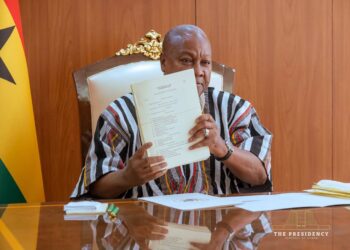
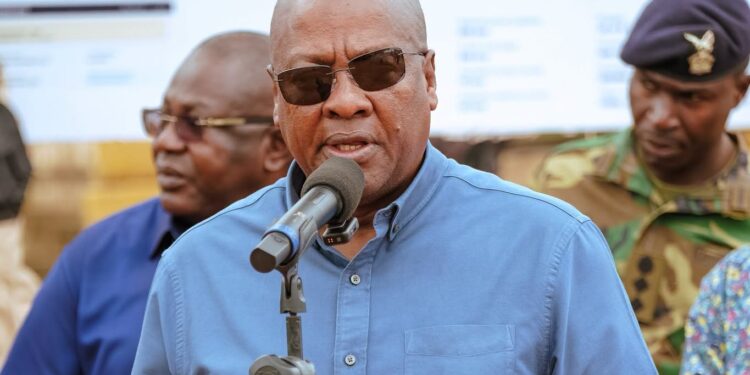
President John Dramani Mahama has announced that construction of the long-awaited Volivo Bridge will begin before the end of 2026, following a fresh procurement process to select a new contractor for the project. He made the announcement during his ResettingGhana Tour stop at Juapong in the North Tongu District.
Addressing residents who have waited years for progress on the bridge, the President acknowledged its deep significance to communities in the area, describing it as a project close to their hearts. “I know the Volivo Bridge is also very dear to your hearts,” he said.
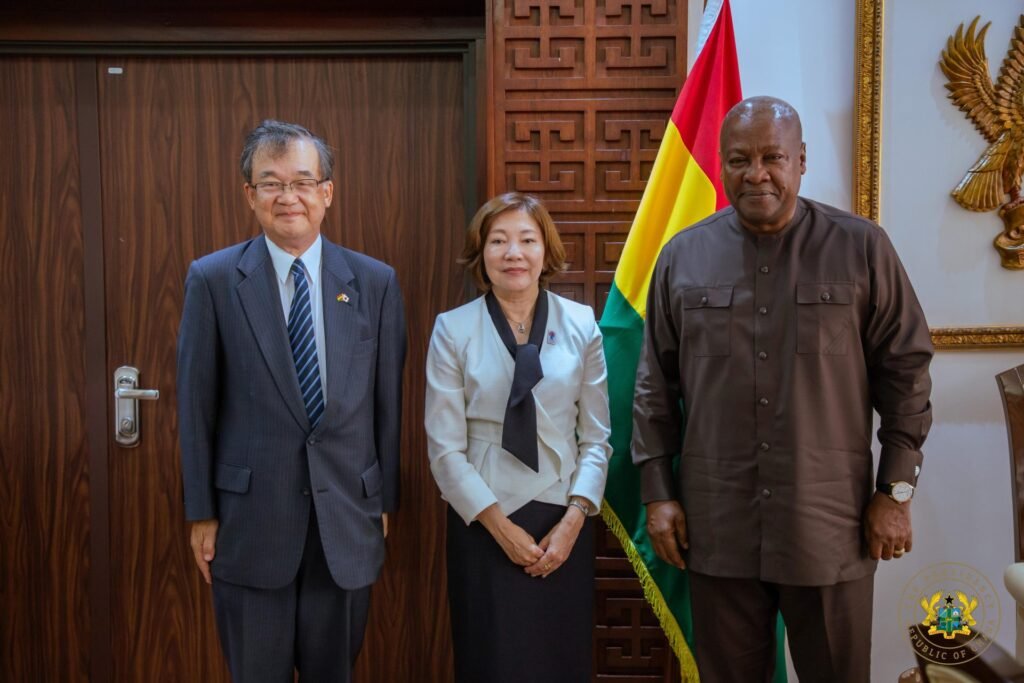
President Mahama revealed that a delegation led by the Roads Minister recently travelled to Japan to conclude arrangements for the bridge’s construction.
He noted that Torgbe Manklalo Agbohla VI, who had earlier addressed the gathering, was among the members of that delegation, underscoring the level of community involvement in pushing the project forward.
Why a New Contractor Is Needed
The President explained that government now faces the task of selecting a new contractor to execute the bridge’s construction, a requirement that emerged after years of delay frustrated the original contractor into withdrawing from the project entirely.

“We have to choose a new contractor because, unfortunately, over the last eight years, the delay in activating the bridge, the contractor who had been chosen to carry out the works got fed up and pulled out,
“So now we have to go through a new process to select a new contractor. And I’m assured that before the end of the year that process will be completed, and the contractor will come and will cut the sod for the start of work”.
President John Dramani Mahama
The Volivo Bridge represents one of Ghana’s most anticipated infrastructure projects, designed as a 540 metre cable-stayed structure spanning the Volta River to connect Asutsuare in the Greater Accra Region with Dofor Adidome, near Juapong, in the Volta Region.
Once completed, it is expected to become Ghana’s tallest road bridge, surpassing the well-known Adomi Bridge by 200 metres. The project is backed heavily by the Japan International Cooperation Agency and forms a critical component of Ghana’s Eastern Corridor road project.
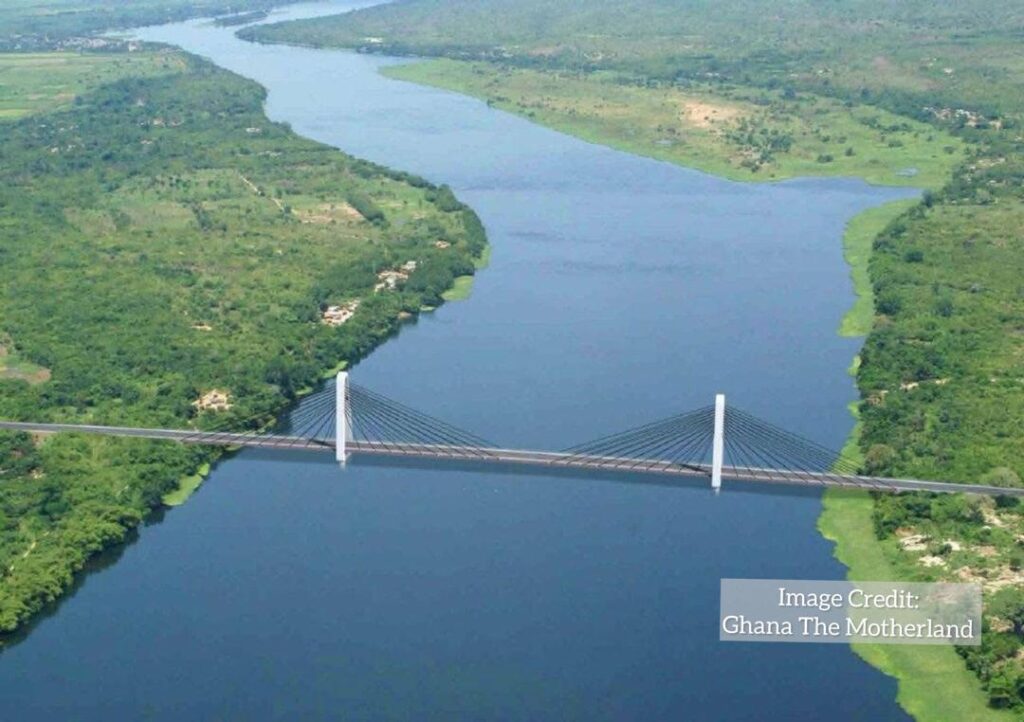
Its design includes a main span of 280 metres, supported by twin towers standing 51 metres tall, along with a dual-lane asphalted carriageway, pedestrian sidewalks, bicycle lanes, rest stops and a toll plaza.
Financing Rooted in a Longstanding Partnership With Japan
The bridge project traces back to a 100 million dollar loan agreement signed with Japan in 2016, marking the beginning of a partnership that has evolved over the years to accommodate changing economic conditions.
According to background details on the project, JICA has since finalised adjustments to mobilise fresh funding buffers, accounting for macroeconomic recovery and updated project requirements.
The Volivo Bridge has also been integrated into government’s broader infrastructure agenda under the Big Push initiative, positioning it as part of a wider national effort to accelerate the delivery of critical infrastructure projects across the country.
Solving a Longstanding Transport Bottleneck
Beyond its engineering significance, the bridge carries substantial socio-economic weight for communities across the Volta and Oti regions. Once completed, it will bypass the slow ferry crossings and transport bottlenecks that have historically hindered movement between Greater Accra, the Volta Region, the Oti Region and northern Ghana.
The bridge is expected to provide the shortest direct route linking these areas, a development particularly anticipated by farmers and agricultural traders who rely on efficient transport routes to move fresh produce to major urban markets before it spoils.
For communities along the Volta River who have long depended on slower crossing methods, the bridge promises a significant improvement in how goods and people move across the region.
For residents of Juapong and surrounding communities, the President’s announcement offers a renewed sense of progress after years of uncertainty surrounding the project’s timeline.
With procurement expected to conclude before the end of 2026 and construction set to follow shortly after, the bridge’s long-anticipated groundbreaking appears closer than it has been in nearly a decade, offering communities across the Eastern Corridor a tangible marker of progress on one of the region’s most significant infrastructure commitments.
READ ALSO: Ato Forson Orders Urgent GDP, CPI Rebasing