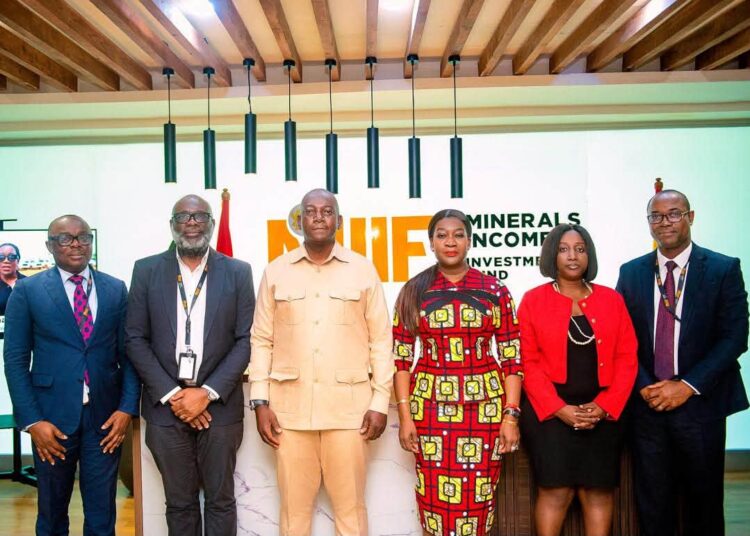
The Minerals Income Investment Fund (MIIF) has hosted a delegation from Zijin Golden Ridge Limited to formalize a strategic partnership supporting a major reforestation project in the Subri Forest Reserve in the Western Region.
This collaborative initiative aligns directly with the sovereign fund’s Environmental, Social, and Governance (ESG) agenda, executed in partnership with the Forest Services Division of the Forestry Commission of Ghana.
By channeling mining capital into public ecological restoration, the alliance establishes a structured framework to rehabilitate degraded landscapes, counter environmental decline, and strengthen resource stewardship within one of the nation’s prime mining belts.
“Beyond restoring degraded forests, the project seeks to protect ecosystems, safeguard livelihoods and create socio-economic benefits for communities within forest zones. We are doing this since we know that together, we can restore our forests and build a more sustainable future.”
Minerals Income Investment Fund (MIIF)
The multi-stakeholder model combines sovereign royalty management, commercial extraction expertise, and public forestry oversight to guarantee measurable ecological outcomes.
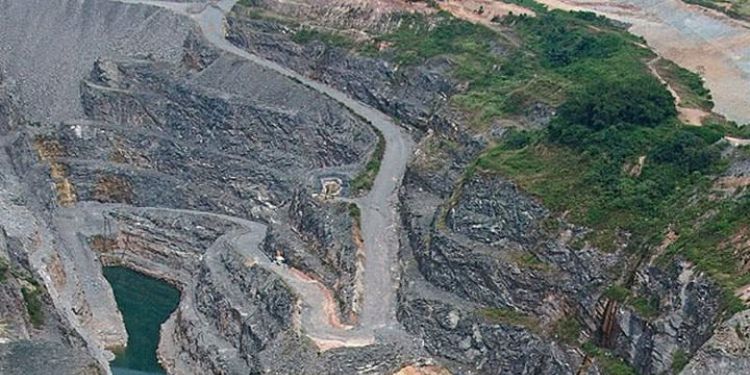
Under the agreement, Zijin Golden Ridge Limited commits financial support and technical synergy to MIIF’s environmental initiative, ensuring that mining activity is offset by targeted land rehabilitation.
The Forest Services Division will supply technical direction, native seedlings, site mapping, and field monitoring to maximize tree survival across reserve compartments.
This alignment reflects a progressive shift across Ghana’s extractive sector, transitioning from passive regulatory compliance toward active, co-funded ecosystem restoration models.
Ecological Imperatives and the Need for Partnership
The urgent need for this public-private partnership stems from severe degradation within the Subri Forest Reserve, Ghana’s largest single forest reserve spanning over 580 square kilometers.
Located in the hyper-moist evergreen zone of the Western Region, Subri is a critical biodiversity hotspot, regulating regional watersheds and serving as an essential carbon sink.
However, decades of pervasive illegal small-scale mining, unlawful farming, and aggressive timber extraction have destroyed vast swathes of canopy cover. This loss has accelerated soil erosion, polluted vital water bodies like the Bonsa River, and disrupted local agricultural livelihoods.
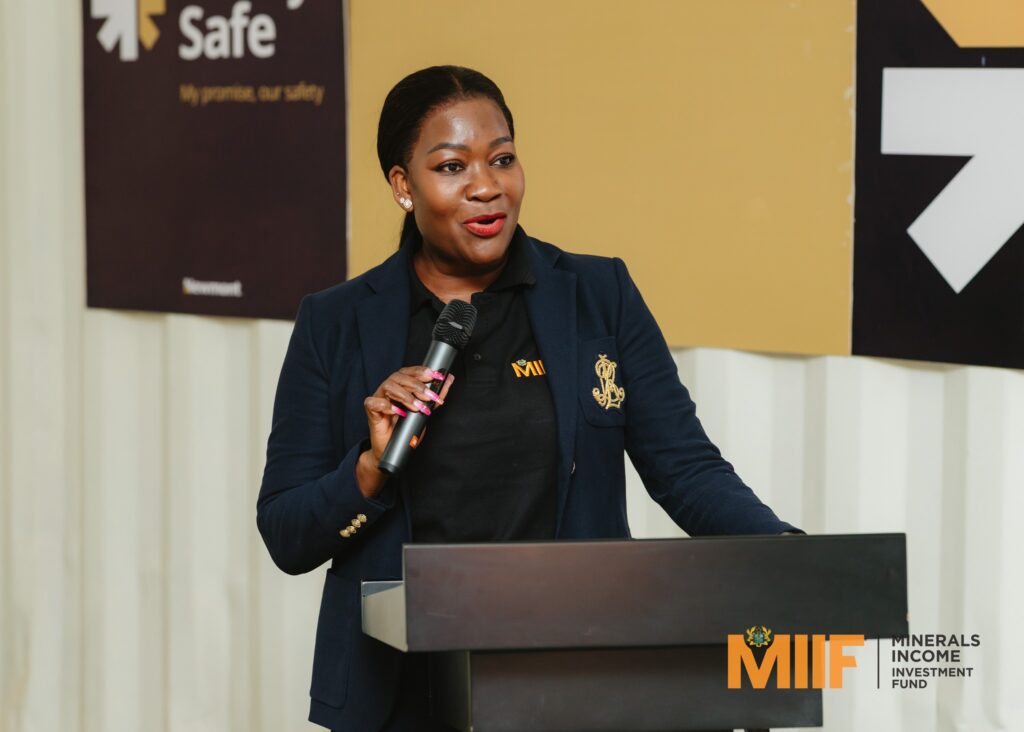
Without direct, capital-intensive intervention, ongoing ecological destruction in Subri threatens both regional biodiversity and the socio-economic stability of fringe communities.
Traditional state-funded re-afforestation initiatives often confront budget constraints and logistical hurdles in policing expansive forest boundaries.
Integrating Zijin Golden Ridge Limited into MIIF’s ESG framework delivers sustainable funding and private-sector operational discipline.
This financial injection enables the Forest Services Division to expand land preparation, nursery establishment, native tree planting, and routine surveillance, effectively reversing forest loss and restoring soil health.
Aligning ESG Mandates with Mining Capital
For the Minerals Income Investment Fund, establishing robust ESG integration represents a key step in managing Ghana’s mineral wealth for generational benefit. Established under the Minerals Income Investment Fund Act of 2018 (Act 978), MIIF is mandated to maximize the value of mineral royalties received by the Republic.
International investors and capital markets increasingly require sovereign funds to enforce strict environmental standards. By partnering with operating concessionaires like Zijin Golden Ridge, MIIF ensures that mineral revenues directly support the restoration of natural assets impacted by resource extraction.
Zijin Golden Ridge Limited similarly strengthens its corporate standing and social license to operate through this intervention. Modern mineral governance demands that commercial operators move beyond isolated corporate social responsibility projects.
Incorporating structured re-afforestation into core operational strategy reduces environmental liabilities and builds trust with host communities and traditional authorities.
As MIIF official communications emphasized during the delegation’s visit, “the initiative forms part of MIIF’s Environmental, Social and Governance agenda,” illustrating how public policy can successfully mobilize private sector capital toward ecological remediation.
Socio-Economic Impact and Sustainable Future
Beyond environmental remediation, this strategic partnership creates socio-economic opportunities for forest-fringe communities across the Western Region.
Deforestation destabilizes rural economies by destroying non-timber forest products, degrading water sources, and reducing arable land quality.
By directly involving local residents in nursery management, land clearing, tree planting, and forest protection, the project provides alternative green jobs. This economic engagement offers young people viable livelihoods, reducing economic dependence on illegal mining.

Ultimately, this joint initiative between MIIF, Zijin Golden Ridge, and the Forestry Commission sets a transformative precedent for Ghana’s extractive sector.
By linking mineral royalty management with private capital and public technical capabilities, the partnership demonstrates that resource extraction and environmental sustainability can co-exist.
As field restoration begins in the Subri Forest Reserve, industry observers regard this framework as a practical model for achieving long-term environmental resilience and community development across Ghana’s mining enclaves.
READ ALSO: AUABC Chair Proposes Five-Question Test to Measure AU Performance