• About
  • Advertise
  • Privacy Policy
  • Contact
Thursday, August 27, 2026
  • Login
The Vaultz News
  • Top Stories
  • News
    • General News
    • Education
    • Health
    • Opinions
  • Economics
    • Economy
    • Finance
      • Banking
      • Insurance
      • Pension
    • Securities/Markets
  • Business
    • Agribusiness
    • Vaultz Business
    • Extractives/Energy
    • Real Estate
  • World
    • Africa
    • America
    • Europe
    • UK
    • USA
    • Asia
    • Around the Globe
  • Innovation
    • Technology
    • Wheels
  • Entertainment
  • 20MOBPL2DNew
  • Jobs & Scholarships
    • Job Vacancies
    • Scholarships
No Result
View All Result
The Vaultz News
  • Top Stories
  • News
    • General News
    • Education
    • Health
    • Opinions
  • Economics
    • Economy
    • Finance
      • Banking
      • Insurance
      • Pension
    • Securities/Markets
  • Business
    • Agribusiness
    • Vaultz Business
    • Extractives/Energy
    • Real Estate
  • World
    • Africa
    • America
    • Europe
    • UK
    • USA
    • Asia
    • Around the Globe
  • Innovation
    • Technology
    • Wheels
  • Entertainment
  • 20MOBPL2DNew
  • Jobs & Scholarships
    • Job Vacancies
    • Scholarships
No Result
View All Result
The Vaultz News
No Result
View All Result
in Extractives/Energy

Reported DGPP Loss, Misconstrued Valuation Entry – Prof Darku Clarifies

Bless Banir Yarayeby Bless Banir Yaraye
August 27, 2026
Reading Time: 5 mins read
Add as Preferred on Google
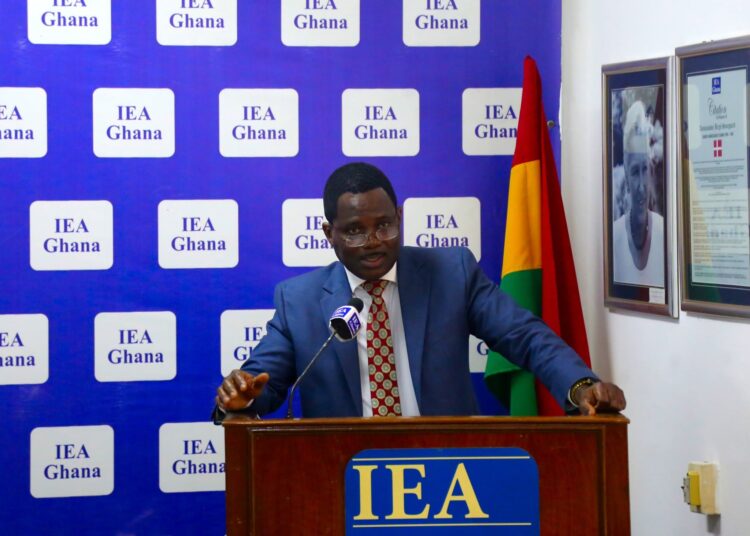
Prof. Alexander Bilson Darku, Director of Research at the Institute of Economic Affairs (IEA)

Prof. Alexander Bilson Darku, Director of Research at the Institute of Economic Affairs (IEA)

Prof. Alexander Bilson Darku, Director of Research at the Institute of Economic Affairs (IEA), has clarified that the widely reported $1.7 billion (GHS 22 billion) financial loss attributed to the Domestic Gold Purchase Programme (DGPP) is not an actual operational dissipation of state funds, but rather a misconstrued accounting and valuation entry resulting from central bank exchange rate dynamics.

Speaking in an interview with The Vaultz News, Prof. Darku explained that the financial figure being cited across public discussion stems from standard accounting methodologies rather than real cash leakages.

He noted that key components of the purported losses, specifically service and assignment fees paid by the Bank of Ghana (BoG) to the Gold Board, actually represent legitimate corporate revenue for the exporting entity, thereby invalidating claims that these disbursements constitute wasted public funds.

“The first two sources of the loss were money that the Central Bank paid to Gold Board on behalf of buying and exporting the gold on its behalf. So, they actually constitute revenue to the Gold Board. I don’t understand why somebody will call revenue as a loss.”

Prof. Alexander Bilson Darku

Goldbod CEO, Sammy Gyamfi with BoG Governor, Johnson Asiama

While expanding on the mechanics of the transaction, Prof. Darku outlined how the structural design of central bank forex accounting accounts for the vast majority of the reported shortfall.

ADVERTISEMENT

He highlighted that the third element of the calculation the variance between foreign exchange rates used during gold acquisition and those applied upon revenue repatriation constitutes approximately 90 percent of the total $1.7 billion figure.

Because central banks are legally mandated to utilize official reference exchange rates, which inherently trail commercial forex bureau rates, converting repatriated export earnings back into local currency automatically generates a paper disparity on the balance sheet.

Consequently, when the Gold Board purchases gold from artisanal and small-scale miners using prevailing market rates, the BoG’s subsequent conversion of foreign proceeds at its official reference rate creates a ledger mismatch that does not reflect a loss of physical assets or capital.


Deconstructing the Three Loss Components

To fully evaluate the reported GHS 22 billion figure, it is essential to dissect the individual operational lines that critics have aggregated as total losses.

According to Prof. Darku’s structural breakdown, the overall figure is comprised of three distinct items: service fees paid to facilitators, assignment fees remitted to executing agencies, and the accounting differential generated by foreign exchange conversion.
ADVERTISEMENT
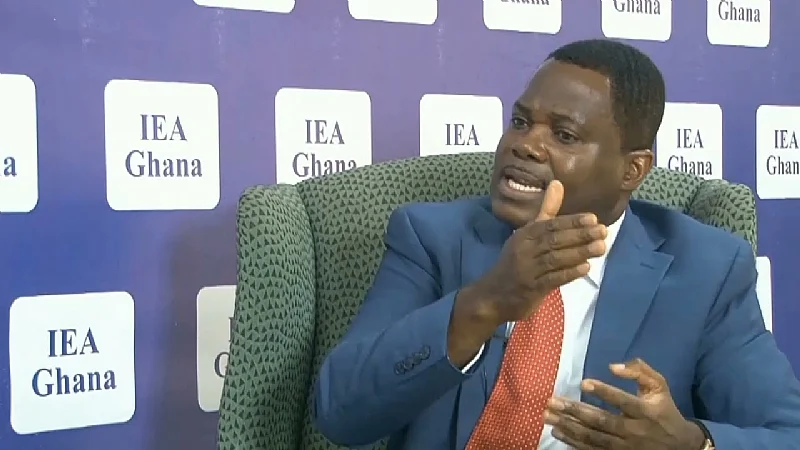
Prof. Alexander Bilson Darku, Director of Research at the Institute of Economic Affairs (IEA)

While external observer i.e IMF have lumped these figures together under a single umbrella of institutional deficit, an economic evaluation reveals two entirely opposing balance sheet realities for the state institutions involved.

“It’s about time we understand them very carefully. The losses according to reports are that they are made up of services fees paid, assigning fee paid, and the exchange rate used in valuing inflows of forex being lower than the forex used in buying the gold in the first place, okay? The first two sources of the loss were money that the Central Bank paid to Gold Board on behalf of buying and exporting the gold on its behalf.”

Prof. Alexander Bilson Darku

From an institutional accounting standpoint, the service and assignment fees represent standard operational expenses incurred by the central bank to secure and handle physical bullion.

Governor of Bank of Ghana, Johnson Pandit Asiama

However, because these funds are paid directly to the Gold Board for executing the purchase and export mandates on behalf of the state, “those two components of the loss are revenue” to the receiving entity.

ADVERTISEMENT

Prof. Darku emphasized that classifying inter-agency service payments as a net economic loss reflects a fundamental misunderstanding of public sector accounting.

While the disbursement registers as a operational cost on the Bank of Ghana’s books, it simultaneously registers as earned income for the Gold Board, resulting in a neutral transfer of value within the broader public sector framework.

Forex Reference Rates and Accounting Realities

The primary driver of the controversy lies in the statutory mechanics governing central bank currency conversions. Under Ghanaian financial regulations and general international central banking standards, the BoG must account for foreign currency inflows using official reference exchange rates.

These benchmark rates are systematically lower than the commercial forex bureau rates that reflect real-time market trading for gold procurement.

Prof. Alexander Bilson Darku, Director of Research at the Institute of Economic Affairs (IEA)

When the Gold Board acquires gold locally purchasing bullion from domestic miners at rates aligned with prevailing commercial valuations it operates under market conditions.

When export revenues are repatriated and surrendered to the BoG, the statutory conversion to cedis at the lower reference rate creates an immediate technical deficit on paper.

This valuation gap, which accounts for nearly 90 percent of the total $1.7 billion figure, represents an accounting adjustment rather than a cash loss.

Sammy Gyamfi, Chief Executive Officer of the Ghana Gold Board (GoldBod)

Prof. Darku’s research perspective underscores that applying standard commercial accounting logic to central bank statutory mandates creates an accurate ledger mismatch, but an inaccurate narrative of financial mismanagement.

The physical gold is acquired, exported, and liquidated into foreign exchange reserves as intended by the DGPP framework.

The resulting balance sheet entry is a direct consequence of mandatory central bank valuation techniques, confirming that the perceived losses are an artifact of financial reporting rules rather than an actual depletion of national gold assets.


READ ALSO: Mbappé Hat-trick Against Sociedad Propels Real Madrid to First Home Win

ADVERTISEMENT

Sign Up to Our Newsletter

Fresh updates, Straight to your inbox

Tags: attributed to the Domestic Gold Purchase Programme (DGPP)central bank exchange rate dynamicsclarified that the widely reported $1.7 billion (GHS 22 billion) financial lossDirector of Researchnot an actual operational dissipation of state fundsProf. Alexander Bilson Darkurather a misconstrued accountingThe Institute of Economic Affairs (IEA)valuation entry resulting
Please login to join discussion
Previous Post

Mbappé Hat-trick Against Sociedad Propels Real Madrid to First Home Win

Next Post

Mining Sector Partnership Drives Environmental Restoration in Western Region Reserve

Related Posts

Bright Simons, Honorary Vice President of IMANI Centre for Policy and Education
Extractives/Energy

IMANI VP: Africa Must Build Regional Mineral Supply Chains, not Just Refining

August 27, 2026
Bright Simons, Honorary Vice President of IMANI Centre for Policy and Education
Extractives/Energy

Bright Simons: Africa Lacks Key Minerals Needed for Industrialisation

August 27, 2026
Bright Simons, Honorary Vice President of IMANI Centre for Policy and Education
Extractives/Energy

Africa’s Mineral Share Is 1.8%, Not 30%, Bright Simons

August 27, 2026
MIIF with a delegation from Zijin Golden Ridge Limited
Extractives/Energy

Mining Sector Partnership Drives Environmental Restoration in Western Region Reserve

August 27, 2026
ADVERTISEMENT

Sign Up to Our Newsletter

Fresh updates, Straight to your inbox

ADVERTISEMENT

Recent News

Bright Simons, Honorary Vice President of IMANI Centre for Policy and Education

IMANI VP: Africa Must Build Regional Mineral Supply Chains, not Just Refining

August 27, 2026
former President Olusegun Obasanjo

Atiku Challenges Nigerian Government to Investigate Him Over $16bn Power Spending

August 27, 2026
Bright Simons, Honorary Vice President of IMANI Centre for Policy and Education

Bright Simons: Africa Lacks Key Minerals Needed for Industrialisation

August 27, 2026
Moderator of the Presbyterian Church of Ghana Rt. Rev. Dr Abraham Nana Opare Kwakye

Most Hospital Projects in The Country Are Stalled – Rev. Opare Kwakye

August 27, 2026
Bright Simons, Honorary Vice President of IMANI Centre for Policy and Education

Africa’s Mineral Share Is 1.8%, Not 30%, Bright Simons

August 27, 2026
ADVERTISEMENT
Next Post
MIIF with a delegation from Zijin Golden Ridge Limited

Mining Sector Partnership Drives Environmental Restoration in Western Region Reserve

The Vaultz News

Copyright © 2025 The Vaultz News. All rights reserved.

Navigate Site

  • About
  • Advertise
  • Privacy Policy
  • Contact

Follow Us

Welcome Back!

Login to your account below

Forgotten Password?

Retrieve your password

Please enter your username or email address to reset your password.

Log In
No Result
View All Result
  • Top Stories
  • News
    • General News
    • Education
    • Health
    • Opinions
  • Economics
    • Economy
    • Finance
      • Banking
      • Insurance
      • Pension
    • Securities/Markets
  • Business
    • Agribusiness
    • Vaultz Business
    • Extractives/Energy
    • Real Estate
  • World
    • Africa
    • America
    • Europe
    • UK
    • USA
    • Asia
    • Around the Globe
  • Innovation
    • Technology
    • Wheels
  • Entertainment
  • 20MOBPL2D
  • Jobs & Scholarships
    • Job Vacancies
    • Scholarships

Copyright © 2025 The Vaultz News. All rights reserved.

This website uses cookies. By continuing to use this website you are giving consent to cookies being used. Visit our Privacy and Cookie Policy.