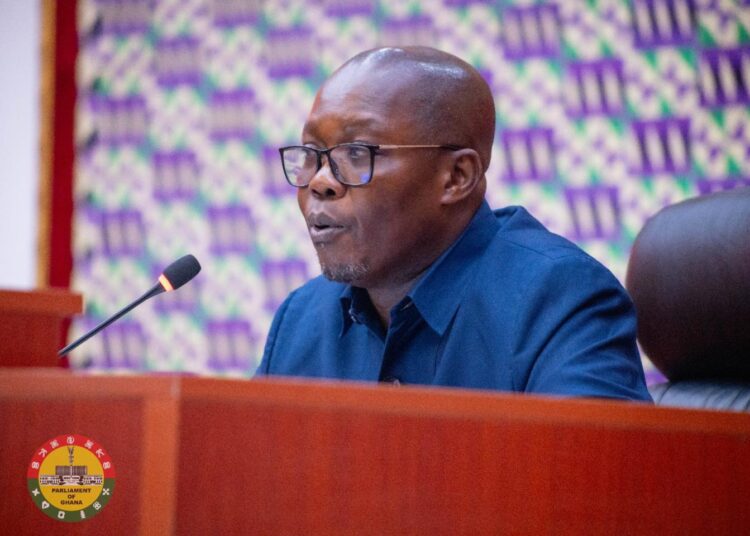
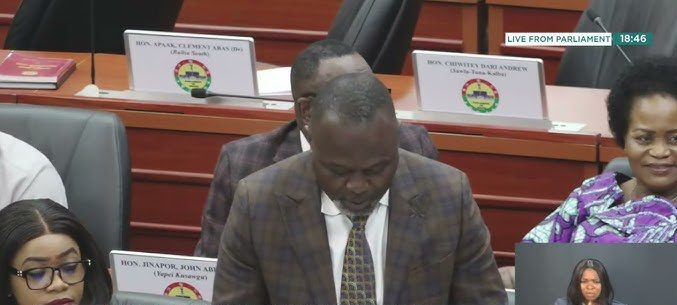
Parliament has passed the Tribunals Bill, 2026, following its third reading and approval in accordance with the House’s Standing Orders, under the speakership of First Deputy Speaker Hon. Bernard Ahiafor.
The bill’s passage marks a significant step toward reintroducing public tribunals into Ghana’s justice delivery system, despite sustained opposition from the parliamentary minority and organised labour.
The legislation, formally laid before Parliament by Attorney General and Minister for Justice Dr Dominic Ayine on July 6, 2026, received Cabinet approval before its introduction and passed its first reading on the same day, setting in motion a legislative process that has since drawn considerable public and political scrutiny.
Attorney General Defends Constitutional Basis
Ahead of the bill’s third reading, Dr Ayine directly addressed criticism raised by Minority Leader Alexander Kwamena Afenyo-Markin, rejecting claims that the legislation would create a parallel justice system operating outside Ghana’s constitutional framework.

“These things are textually incorrect as far as the constitution is concerned because as you yourself drew his attention to the provision in article 126 of the constitution. And 142, but let’s start with 126”.
Attorney General and Minister for Justice Dr Dominic Ayine
Dr Ayine explained that Article 126 of the Constitution already provides for an integrated judicial system that includes regional tribunals, along with such lower courts or tribunals as Parliament may establish by law. He argued that the bill simply gives effect to these existing constitutional provisions rather than introducing something entirely new.
Turning to the specific structure of the bill, Dr Ayine explained that the regional tribunals amplify provisions already outlined in Articles 126 and 124 of the Constitution, while the district tribunals implement Article 126 by creating a lower tribunal to handle specified criminal matters, including cases relating to illegal mining.
“In terms of the regional tribunals, what we are doing is just simply amplifying the provisions of the constitution in 126 and 124.
“In terms of the district tribunal, what we are simply doing is implementing 126 by creating a lower tribunal that will deal with criminal matters that have been specified in the bill, including those of illegal mining. So, Mr Speaker, we are not creating a parallel justice system. We are simply amplifying what is provided for in the constitution”.
Attorney General and Minister for Justice Dr Dominic Ayine
A Two-Tier Tribunal Structure
The Tribunals Bill establishes a formal two-tier system comprising Regional Tribunals and District Tribunals, each granted specialised jurisdiction to handle specific categories of case backlogs.
These tribunals will focus primarily on mining, tax, customs, economic loss and fraud cases, areas that have historically contributed to case congestion within Ghana’s traditional court system.
District Tribunals will operate with concurrent jurisdiction alongside existing Circuit Courts for designated criminal cases, though the bill explicitly excludes capital offences, treason and cases triable on indictment from their authority.
The legislation also bars tribunals from ruling on constitutional interpretations, human rights violations or any matters legally reserved for superior courts, preserving the existing hierarchy of judicial authority for the most serious legal matters.
Oversight Mechanism Built Into the Framework
To safeguard due process, the bill creates a new Tribunal Oversight Committee, with the Judicial Council tasked with issuing administrative guidelines in consultation with this committee. This oversight structure appears designed to address concerns about accountability and procedural fairness within the newly established tribunal system.
The legislation fulfils a commitment made by the National Democratic Congress and President John Dramani Mahama during the 2024 general election campaign, when the party pledged to strengthen the fight against corruption and improve the efficiency of Ghana’s justice system.
Supporters of the bill argue that specialised tribunals will help reduce growing case backlogs and accelerate prosecution of specific offence categories that have long strained the traditional court system.
Minority Boycott and Public Pushback
The bill’s passage followed intense parliamentary resistance, with members of the Minority staging a boycott in opposition to the legislation.
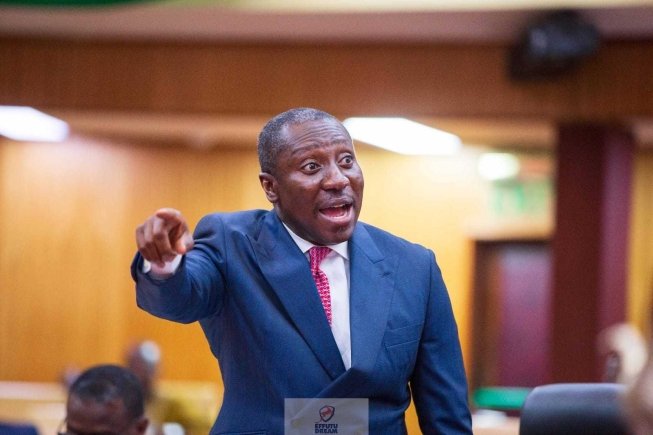
Minority Leader Alexander Afenyo-Markin argued that establishing parallel courts risks creating what he described as a populist justice delivery system vulnerable to political weaponisation, warning that the arrangement could undermine the integrity of Ghana’s existing court architecture.
Opposition to the bill extended beyond Parliament, with the Trades Union Congress formally rejecting the legislation. The union cautioned against the potential politicisation of the tribunal system and urged the government to pause the process until broader constitutional reforms could be completed, arguing that piecemeal changes to the justice system risked creating unintended consequences.
Bill Now Awaits Presidential Assent
With Parliament’s approval secured, the Tribunals Bill now moves to the desk of President John Dramani Mahama, who must assent to the legislation in accordance with the 1992 Constitution before it can take effect as law.
Under Ghana’s constitutional framework, a bill passed by Parliament requires presidential assent to complete the legislative process and become binding law, a step that formally concludes the journey the bill began when it was first laid before the House on July 6, 2026.
Once assented to, attention will shift to how the new tribunal system is implemented in practice, particularly regarding the appointment of tribunal members and the operational guidelines expected from the Judicial Council in consultation with the Tribunal Oversight Committee.
Whether the concerns raised by the Minority and organised labour prove justified will likely become clearer as the tribunals begin handling their first cases involving mining, tax, customs and fraud matters across the country.