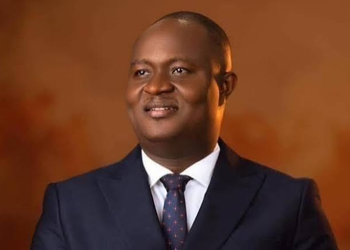
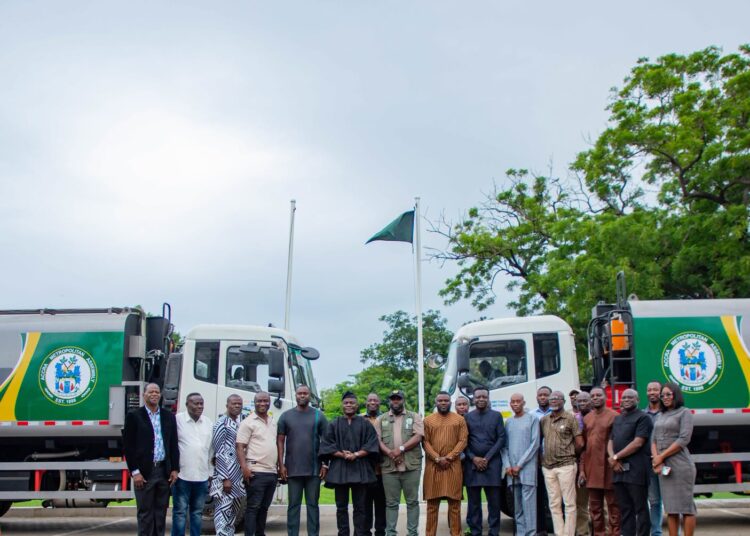
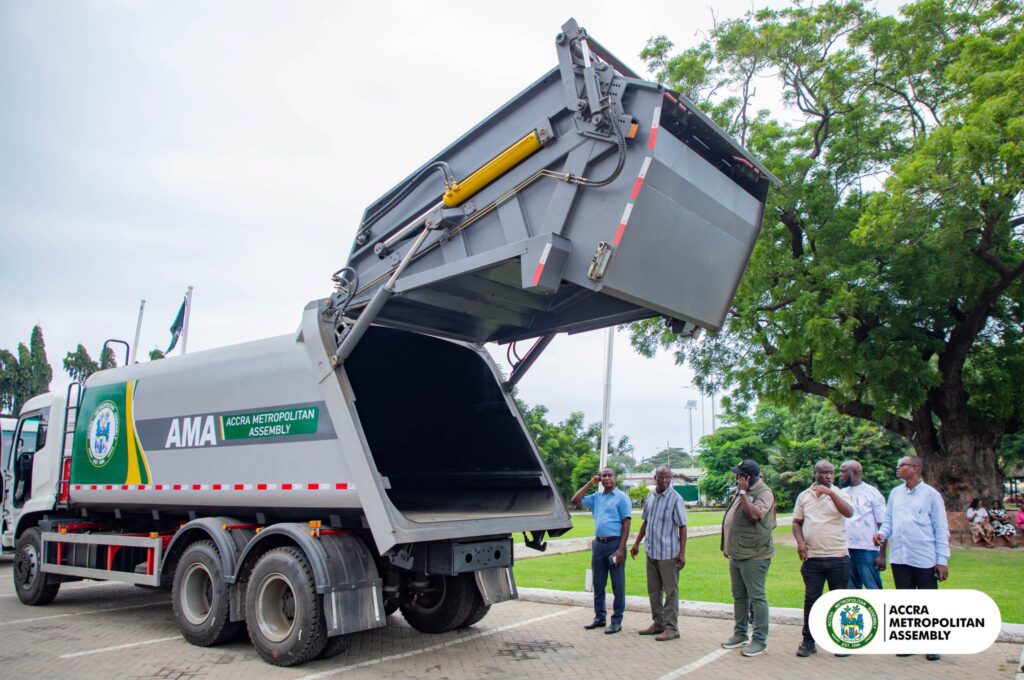
Chief Executive of the Accra Metropolitan Assembly, Hon. Michael Kpakpo Allotey, together with the Minister for Local Government, Chieftaincy and Religious Affairs, Hon. Ahmed Ibrahim, officially commissioned two brand-new refuse compactor trucks for the Assembly, marking a significant step in efforts to strengthen sanitation services across Accra.
The commissioning took place at the Accra Metropolitan Assembly premises as part of ongoing measures to address the city’s persistent waste management challenges, with the trucks acquired at a total cost of approximately GH¢2.4 million.
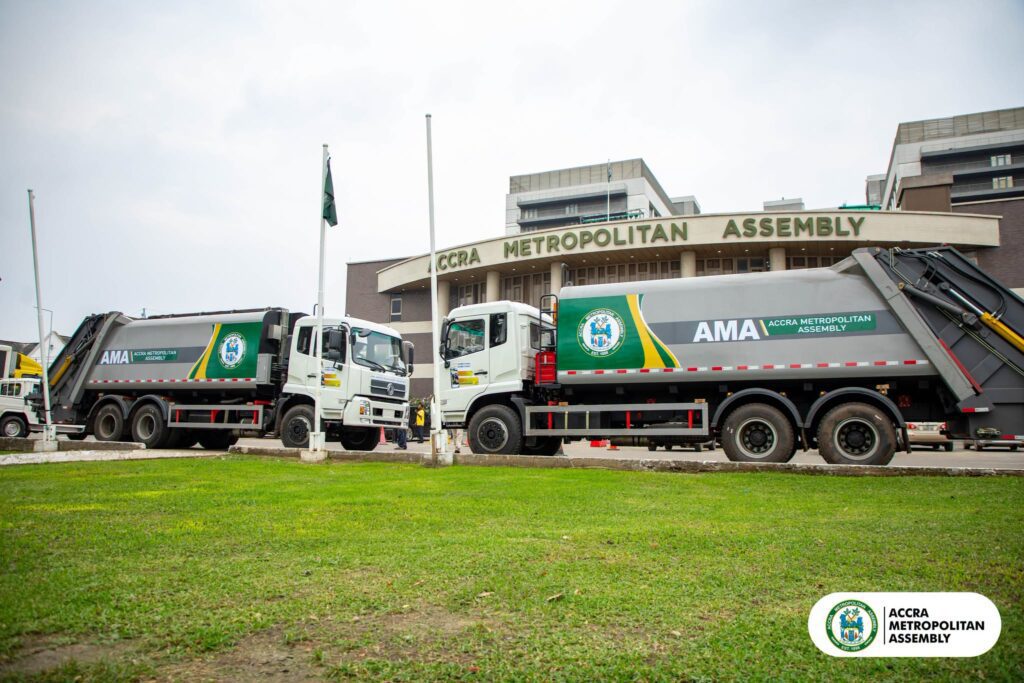
According to Allotey, the two six-wheel-drive, rear-loading refuse compactors each carry a capacity of about 20 cubic metres, with a compaction ratio ranging between 3:1 and 4:1.
Each truck carries an estimated payload capacity of between 9,500 and 10,000 kilogrammes, giving the Assembly significantly expanded capacity for waste removal across the metropolis.
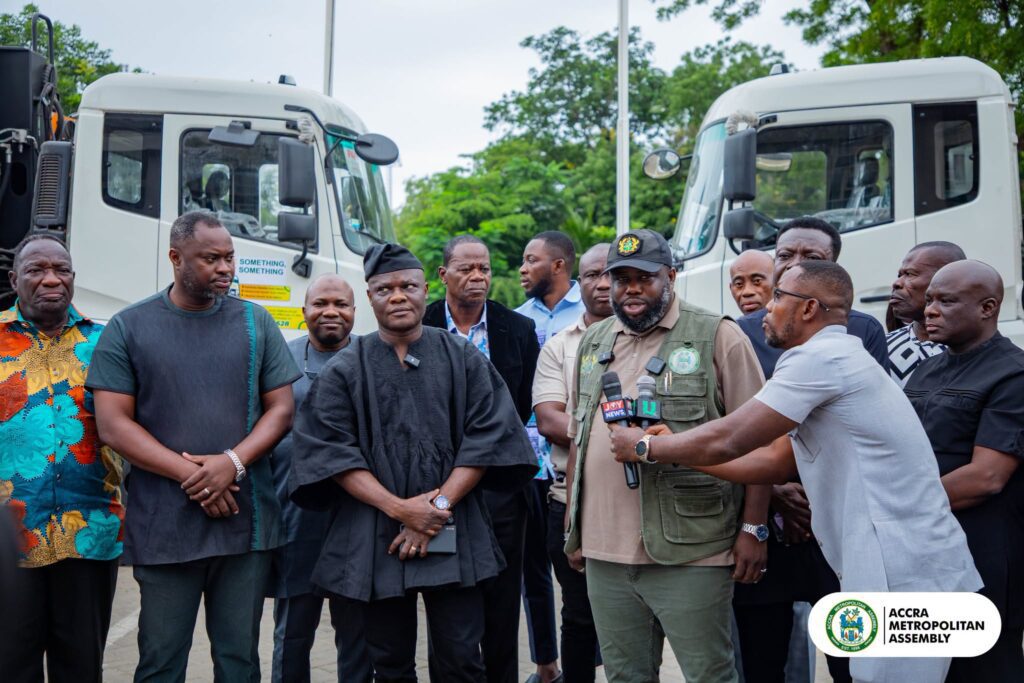
The vehicles come equipped with manual, electric and wireless remote-control operating systems, features designed to enhance efficiency, reliability and safety during waste collection operations.
“These new additions to the AMA fleet will significantly improve waste collection, reduce the accumulation of refuse across the metropolis, and strengthen our sanitation services”.
Chief Executive of the Accra Metropolitan Assembly, Hon. Michael Kpakpo Allotey
A Shift Away From Rented Equipment
Allotey used the occasion to reflect on the state of the Assembly’s sanitation capacity when he assumed office, revealing that AMA previously did not own a single refuse compactor and relied almost entirely on rented equipment and private waste management companies to handle collection duties.
He described the commissioning of the new trucks as part of a deliberate effort to reverse this dependency by building out the Assembly’s own sanitation fleet over time. “Today, we are changing that narrative by steadily building the Assembly’s own sanitation fleet to improve operational efficiency and reduce long-term costs,” he said.
Allotey expressed appreciation to President John Dramani Mahama for making funds available to support the Assembly’s sanitation and development commitments, crediting government backing as central to the acquisition.
Beyond the equipment itself, Allotey stressed that effective sanitation management cannot be confined within the administrative boundaries of any single Assembly, calling for coordinated effort across the wider metropolitan area.
“Effective sanitation management cannot be confined by administrative boundaries. Every Metropolitan, Municipal and District Assembly has a collective responsibility to work together under one government to keep our capital city clean, healthy and environmentally sustainable”.
Chief Executive of the Accra Metropolitan Assembly, Hon. Michael Kpakpo Allotey
Minister Commends AMA Staff for Resilience
Speaking at the same event, Minister Ahmed Ibrahim commended the dedication of Assembly Members, management and staff of the AMA, acknowledging their commitment to improving service delivery despite financial and legal challenges inherited by the current administration.
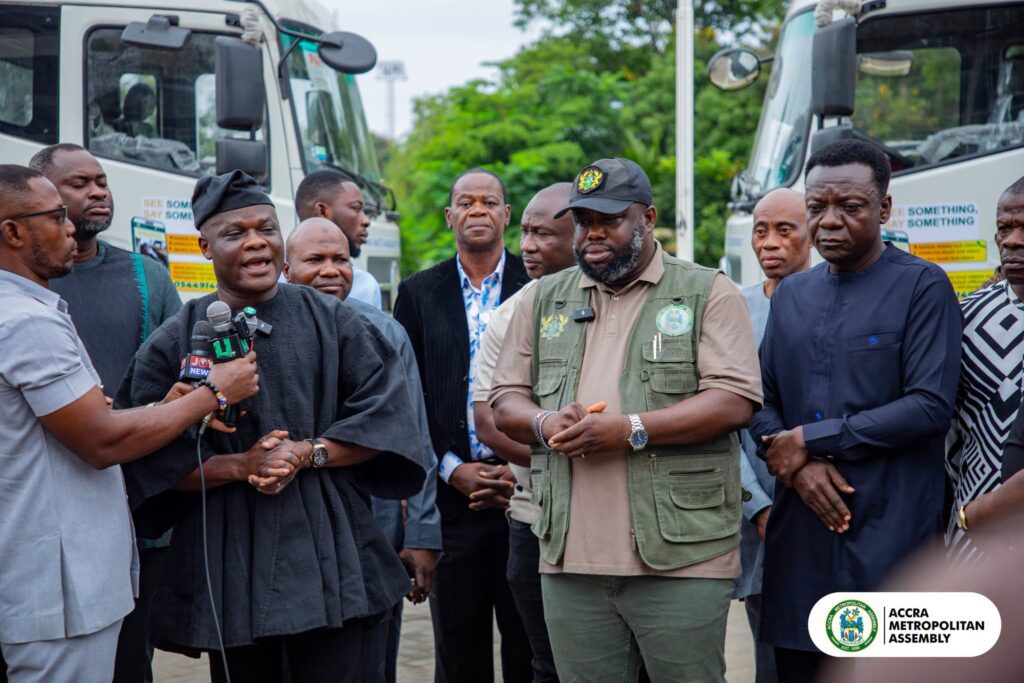
His remarks pointed to the broader institutional difficulties AMA has had to navigate while working to expand its sanitation capacity. Allotey framed the new trucks as part of a larger vision for reshaping how Accra manages its waste, describing the investment as symbolic of a deeper institutional commitment rather than a standalone acquisition.
“This investment is more than the acquisition of equipment; it is a demonstration of our commitment to transforming sanitation in Accra. We will continue to invest in the resources, systems and partnerships necessary to build the clean, orderly and resilient city that every resident deserves”.
Chief Executive of the Accra Metropolitan Assembly, Hon. Michael Kpakpo Allotey
The Scale of Accra’s Waste Crisis
The commissioning comes against the backdrop of a severe and persistent waste management crisis in Accra, where the city generates over 4,400 tonnes of refuse daily.
According to findings from Parliament’s Committee on Sanitation, Accra produces roughly 4,000 tonnes of waste each day, while existing facilities within the Accra Metropolitan Assembly can process only 2,000 tonnes, leaving an estimated 2,000 tonnes unaccounted for daily.
This gap has contributed to choking drains, overflowing landfills and mounting public health risks across the capital. The Kpone landfill, which has remained nearly full since 2019, could shut down entirely within six months, further compounding the disposal challenges facing the city.
Current estimates suggest that between 30 and 45 percent of waste generated in Accra goes uncollected, with the lack of permanent, accessible final landfill sites leaving thousands of informal tricycle operators, known locally as aboboyaa, stranded without places to unload collected refuse.
This bottleneck has caused significant delays in neighbourhood-level waste collection, deepening the sanitation challenges the new compactor trucks are intended to help address.
While the addition of two compactor trucks represents a modest expansion relative to the scale of Accra’s daily waste generation, the acquisition signals a broader shift toward building sustainable, in-house sanitation capacity rather than relying indefinitely on rented equipment and third-party contractors.
As AMA continues to expand its fleet, the success of this approach will likely depend on sustained government funding and continued coordination across the capital’s various metropolitan and municipal assemblies to close the persistent gap between waste generation and collection capacity.
READ ALSO: BoG ‘Backtracks’ on Pre-Financing Goldbod’s Gold Purchase Programme