Africa’s health challenges cannot be solved by any single nation or institution acting alone, the African Union’s top health official told delegates gathered in Accra, warning that hard-won gains across the continent risk stalling without deeper solidarity and stronger domestic financing.
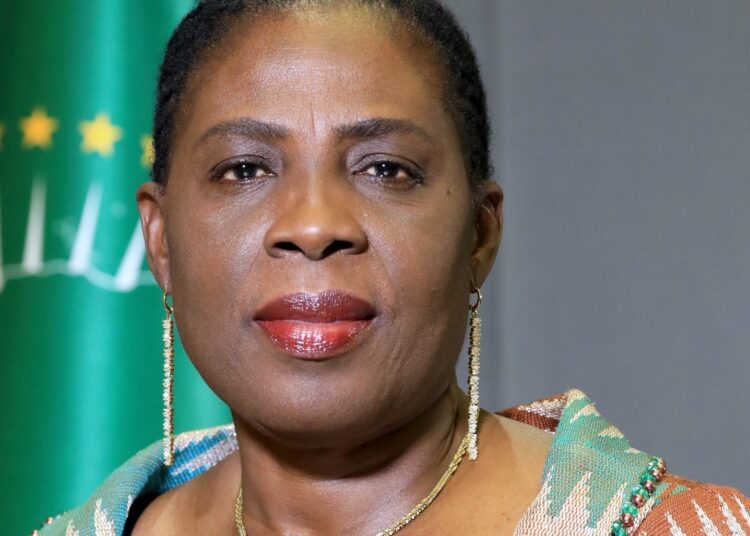
Ambassador Amma Twum-Amoah, AU Commissioner for Health, Humanitarian Affairs and Social Development, delivered the remarks at the AU Extraordinary Health Summit, where ministers, ambassadors and development partners convened under the theme of advancing justice, equity and universal health coverage across the continent.
She grounded her message in a proverb to illustrate the scale of cooperation required to move the continent’s health agenda forward.
Mad. Twum-Amoah told the gathering that no country, institution or partner could overcome Africa’s health challenges in isolation, arguing that only shared purpose, mutual accountability and continental solidarity could shift the trajectory of the region’s health outcomes.
Progress Made, But No Room for Complacency
The commissioner acknowledged that Africa has recorded meaningful gains in recent years, pointing to expanded access to life-saving HIV treatment, wider malaria prevention and control efforts, and improved survival rates for mothers and children.

She also credited African institutions with demonstrating the capacity to lead coordinated responses during public health emergencies.
Despite this progress, she cautioned delegates against treating past achievements as a finishing line, framing the summit as an opportunity to confront the human realities behind persistent health statistics rather than simply reviewing them.
She said the unfinished agenda facing the continent remains immense, citing tuberculosis as a disease that continues to affect millions, driven by poverty, malnutrition, overcrowding, displacement and limited access to timely diagnosis and treatment.
The Scale of the Burden
Mad. Twum-Amoah laid out figures illustrating the depth of Africa’s disease burden. She noted that the continent carries close to 94 percent of global malaria cases and roughly 95 percent of malaria deaths worldwide, with the toll falling heavily on children who never reach their fifth birthday and on families pushed further into poverty as a result.
She described maternal mortality on the continent as equally unacceptable, noting that Sub-Saharan Africa accounted for approximately 70 percent of maternal deaths recorded globally in 2023, an estimated 182,000 women.
Most of these deaths, she stressed, are preventable, and meeting the continent’s 2030 targets will require accelerating progress twelvefold.
Beyond infectious disease and maternal health, she pointed to neglected tropical diseases, which account for close to 40 percent of the global burden, alongside a rapid rise in non-communicable diseases such as cardiovascular disease, diabetes, cancer, chronic respiratory illness and mental health conditions.
Systems Built Around People, Not Programs
Turning to how health services are delivered, Twum-Amoah argued that many Africans face overlapping health burdens simultaneously, such as a child contending with malaria, malnutrition, unsafe water and inadequate sanitation all at once, often compounded by barriers of distance or cost.
“Our systems must therefore respond to the whole person, not merely to a single disease.”
Ambassador Amma Twum-Amoah,
She presented the AU Road Map to 2030 and Beyond as the continent’s principal vehicle for addressing these overlapping challenges, describing it as aligned with Agenda 2063 and the broader Africa Health Strategy.

The road map, she explained, envisions a continent that ends AIDS as a public health threat, brings tuberculosis, malaria, neglected tropical diseases and non-communicable diseases under control, prevents avoidable newborn and child deaths, and advances universal health coverage through strong primary health care systems.
Seven Pillars, One Continental Compact
Twum-Amoah outlined seven interconnected pillars underpinning the roadmap, spanning population groups such as adolescents, women and youth; health equity for vulnerable populations, access to medicines alongside regulatory harmonisation and local manufacturing, health security and system strengthening; diverse and sustainable financing; leadership and governance; and integrated service delivery across diseases and population groups.
She was careful to frame these not as separate initiatives but as parts of a single continental compact designed to place people, equity, resilience and sustainability at the centre of Africa’s health transformation.
Financing Named as the First Urgent Priority
Among four areas she identified as requiring urgent attention, Twum-Amoah placed health financing first, warning that the continent cannot build durable health systems on external assistance that is often unpredictable and in decline.
She said development cooperation remains important and valued, but stressed that it must complement rather than substitute domestic responsibility.

To that end, she called for stronger domestic resource mobilisation, protected health budget allocations, improved financial management and the elimination of inefficiencies, alongside renewed efforts to meet the long-standing Abuja Declaration commitment of allocating at least 15 percent of national budgets to health.
Her remarks set the tone for further sessions at the summit, where ministers were expected to build on the roadmap’s priorities in shaping the continent’s next steps toward self-reliant, equitable health systems.
READ MORE: July 23 Budget Review Could Redefine Ghana’s Economic Future: