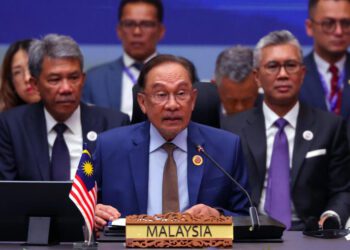
The Foreign Ministers of the Association of Southeast Asian Nations (ASEAN) have issued a joint statement calling for an immediate halt to fighting in the Middle East and the full and safe reopening of the Strait of Hormuz, a key corridor for energy shipments.
The diplomats met behind closed doors in Manila before issuing the statement. This comes as Southeast Asia’s top diplomats opened three days of talks in the Philippine capital today with an agenda topped by their most daunting security problems and a backdrop of unfolding crises led by resurging U.S.-Iran fighting and a violent skirmish in the disputed South China Sea.

ASEAN Ministers said that they expressed serious concern over the rapidly evolving situation in the Middle East, particularly the renewed hostilities involving the United States of America and the Islamic Republic of Iran. The Ministers added that they reaffirmed the obligations of states to peacefully resolve their differences and respect national sovereignty and territorial integrity.
Southeast Asia, a bustling region of more than 680 million people, relies heavily on Middle East oil and gas and was severely hit by the global supply and price shocks sparked by the Iran war. Philippine President Ferdinand Marcos Jr. declared a national energy emergency in March to ensure the availability of fuel, food and other basic goods and prevent hoarding and profiteering.
ASEAN Ministers are scheduled to meet Chinese Foreign Minister Wang Yi tomorrow with an agenda that includes a discussion on the status of negotiations between China and the regional bloc on a proposed pact called a “code of conduct,” which aims to prevent territorial disputes in the South China Sea from spiraling out of control.
A new clash in the disputed waters underscored the urgency of the proposed nonaggression pact, which has been negotiated by the two sides for about two decades. They aim to conclude talks within the year.
The Philippine military accused China’s coast guard of injuring a Filipino sailor during an altercation yesterday in the disputed Second Thomas Shoal. Chinese coast guard personnel aboard a motorboat repeatedly struck the sailor on the head with a wooden baton, injuring him and damaging his smaller vessel, the Philippine military said.
Philippine officials condemned the Chinese coast guard, which blamed the Filipinos for starting the high seas confrontation. Marcos called the Chinese Ambassador Jing Quan for a meeting this afternoon, his spokesperson said without providing details. In Beijing, China’s Foreign Ministry said the Philippine ambassador was summoned on Tuesday to protest his country’s actions in the confrontation.
Other key issues to be discussed at the ASEAN summit include the civil war in Myanmar, as the bloc’s peace initiatives falter, five years after a military coup plunged the country into a conflict that has killed an estimated 100,000 people
Rubio To Participate In ASEAN Meeting
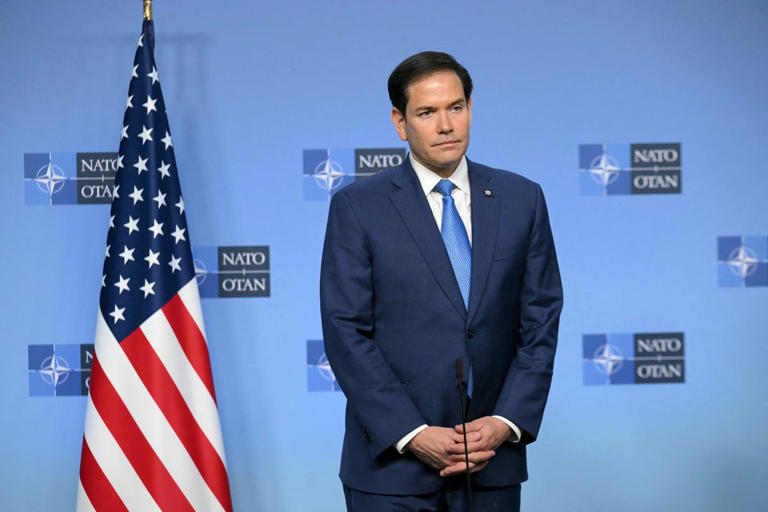
U.S. Secretary of State Marco Rubio arrived in Manila on Tuesday morning for an annual meeting with his ASEAN counterparts on Wednesday, where the Middle East crisis will be high on the agenda along with other security and economic issues.
Rubio plans to join regional security talks called the ASEAN Regional Forum, which also will include the European Union, Russian Foreign Minister Sergey Lavrov and Chinese Foreign Minister Wang Yi.
According to the US State Department, Rubio will meet Wang on the sidelines on Wednesday..It will be the highest-level contact between the U.S. and China since President Donald Trump flew to flew to Beijing in May for talks with Chinese President Xi Jinping that focused on the U.S.-Israel war on Iran, trade and the status of Taiwan, among other issues.
Rubio, Wang and Lavrov will attend a final forum Thursday called the East Asia Summit, where 18 Western and Asian countries, including the 11-nation ASEAN, will tackle geopolitical, economic and security concerns.
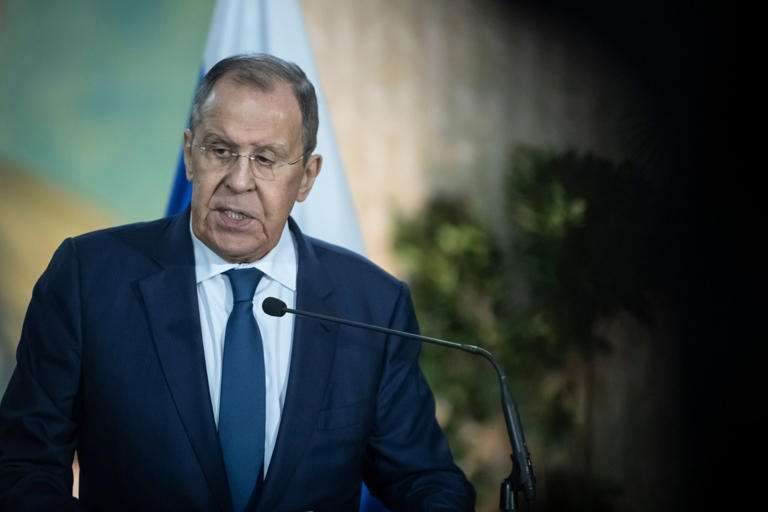
Rubio’s attendance in the ASEAN meetings was apparently aimed at dispelling concerns that the war in the Middle East would deter the U.S. from focusing on the Indo-Pacific, especially China’s actions in the disputed South China Sea and its pressure on Taiwan. “The secretary’s visit advances a clear U.S. priority: a free and open Indo-Pacific that delivers safety, security and prosperity for the region and for the American people,” State Department Spokesperson Thomas Pigott said in Washington.
Rubio is also expected to meet member of the Quad, which consists of the U.S., India, Japan and Australia, and is seen as a major component of the American strategy to counter China. It has been repeatedly criticized by Beijing as a U.S. scheme to contain its growing influence.
READ ALSO: Original Koffee Announces Sophomore Album Release Scheduled for November 2026