
Ghana’s ambition to build a globally competitive indigenous oil and gas industry is facing renewed scrutiny after the Auditor-General found that millions of cedis earmarked to support local participation in the upstream petroleum sector remained idle, even as Ghanaian companies continued to grapple with limited access to financing and opportunities in the industry.
The findings, contained in the Auditor-General’s performance audit of the Petroleum Commission’s implementation of the Local Content and Local Participation Regulations, raise fresh questions about whether one of the country’s most important industrial policy tools is delivering the intended impact.
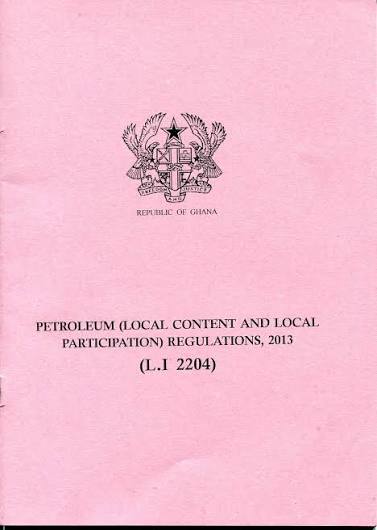
At the heart of the report is the Local Content Fund, a financing mechanism established under the Petroleum (Local Content and Local Participation) Regulations, 2013 (L.I. 2204), to strengthen the capacity of Indigenous Ghanaian Companies (IGCs) to participate meaningfully in upstream petroleum activities.
Although the Fund accumulated significant resources, the audit found that it remained largely undisbursed because operational guidelines had not been approved, leaving local companies without access to capital that was specifically intended to help them compete in an industry dominated by multinational operators.
The development has renewed debate over whether institutional bottlenecks, rather than policy intent, are slowing Ghana’s efforts to deepen local participation in one of its most strategic economic sectors.
Millions Remained Untapped
The Auditor-General reported that as of the period under review, the Local Content Fund held GH¢26.9 million and US$1.99 million, yet the money had not been deployed to support indigenous companies because the operational framework governing disbursement had not received Board approval.
The audit noted that without approved operational guidelines, the Petroleum Commission was unable to utilise the Fund for its intended purpose, despite persistent financing challenges confronting Ghanaian service providers seeking to expand within the petroleum value chain.
Rather than functioning as a catalyst for indigenous participation, the report suggests the Fund remained inactive while businesses that could potentially benefit from it continued to rely on commercial financing, often at significantly higher costs.
The Auditor-General therefore recommended that the Commission expedite the approval and operationalisation of the Fund to ensure it serves its statutory objective of supporting local participation in the petroleum industry.
Financing Remains Local Content’s Weakest Link
Access to finance has consistently been identified as one of the biggest obstacles preventing Ghanaian-owned petroleum companies from competing for larger contracts.
Although the Local Content Regulations require increasing participation of indigenous companies across the upstream value chain, many local firms continue to struggle to raise the capital needed to acquire specialised equipment, invest in technology, recruit highly skilled personnel and satisfy contractual requirements imposed by international operators.
Industry observers have long argued that without affordable financing, local content policies risk becoming aspirational rather than transformational.
The Auditor-General’s findings appear to reinforce that concern by highlighting that a financing vehicle specifically created to address those challenges had yet to become operational years after its establishment.
Auditors Seek Faster Action
Beyond identifying the delay, the audit stressed the importance of activating the Fund to strengthen the competitiveness of indigenous companies operating in Ghana’s petroleum sector.
According to the report, timely implementation would not only improve access to finance but also contribute to achieving the broader objectives of the Local Content Regulations, which seek to increase Ghanaian ownership, employment, technology transfer and value retention within the upstream industry.

The findings suggest that financing remains a critical missing link in Ghana’s local content architecture, despite more than a decade of policy implementation.
Without deliberate financial support, many indigenous firms may remain confined to lower-value segments of the petroleum value chain while larger engineering, procurement and technical contracts continue to be dominated by foreign companies.
Commission Responds
In its response captured in the audit report, the Petroleum Commission acknowledged the delay and attributed it to the absence of Board approval for the operational guidelines governing the Fund.
Management indicated that steps were being taken to finalise the framework required for implementation, signalling its intention to operationalise the financing mechanism once the necessary approvals were secured.

Management indicated that the operational guidelines for the Local Content Fund were awaiting Board approval before implementation.
The report stated
While the explanation provides context for the delay, the audit makes clear that the continued inactivity of the Fund has limited its effectiveness as an instrument for promoting indigenous participation.
A Broader Industrial Policy Question
The Local Content Fund forms part of Ghana’s wider strategy to ensure that petroleum resources generate lasting domestic economic benefits beyond government revenues and royalties.
The policy aims to increase local ownership of petroleum businesses, create skilled employment opportunities, develop domestic technical expertise and build competitive Ghanaian companies capable of participating across the oil and gas value chain.
However, achieving those objectives depends not only on regulatory requirements but also on creating an enabling environment in which local businesses can access the capital required to compete.
As Ghana seeks to position itself as a regional energy hub while encouraging greater investment in exploration and production, the effectiveness of institutions responsible for implementing local content policies is likely to come under increasing scrutiny.
The Auditor-General’s findings suggest that stronger implementation, faster operational decisions and improved institutional coordination may prove just as important as the regulations themselves in determining whether Ghana’s local content agenda delivers its intended economic transformation.
With the country looking to maximise value from its petroleum resources amid renewed efforts to stimulate upstream investment, stakeholders will be watching closely to see whether the Local Content Fund finally becomes an active instrument for supporting Ghanaian businesses rather than remaining an untapped policy promise.
READ ALSO: BoG Issues Final Warning to Illegal Loan Operators