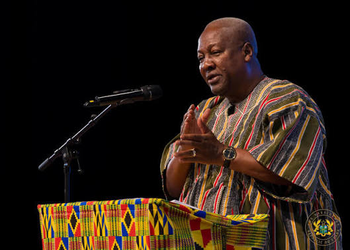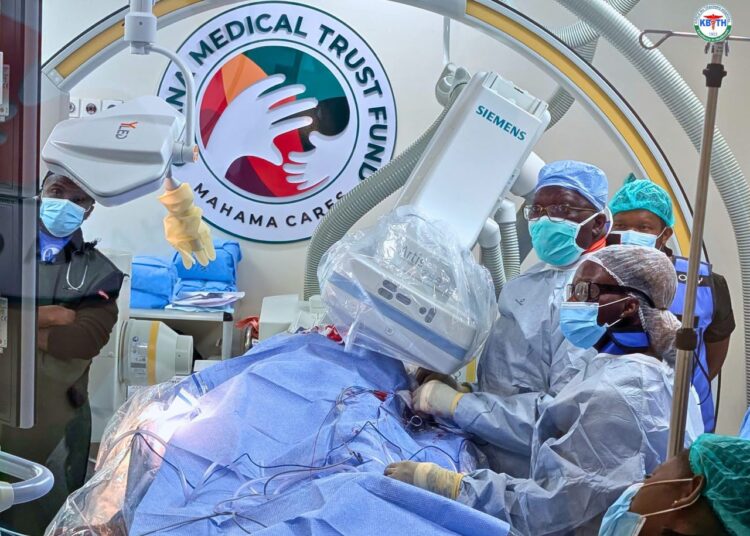
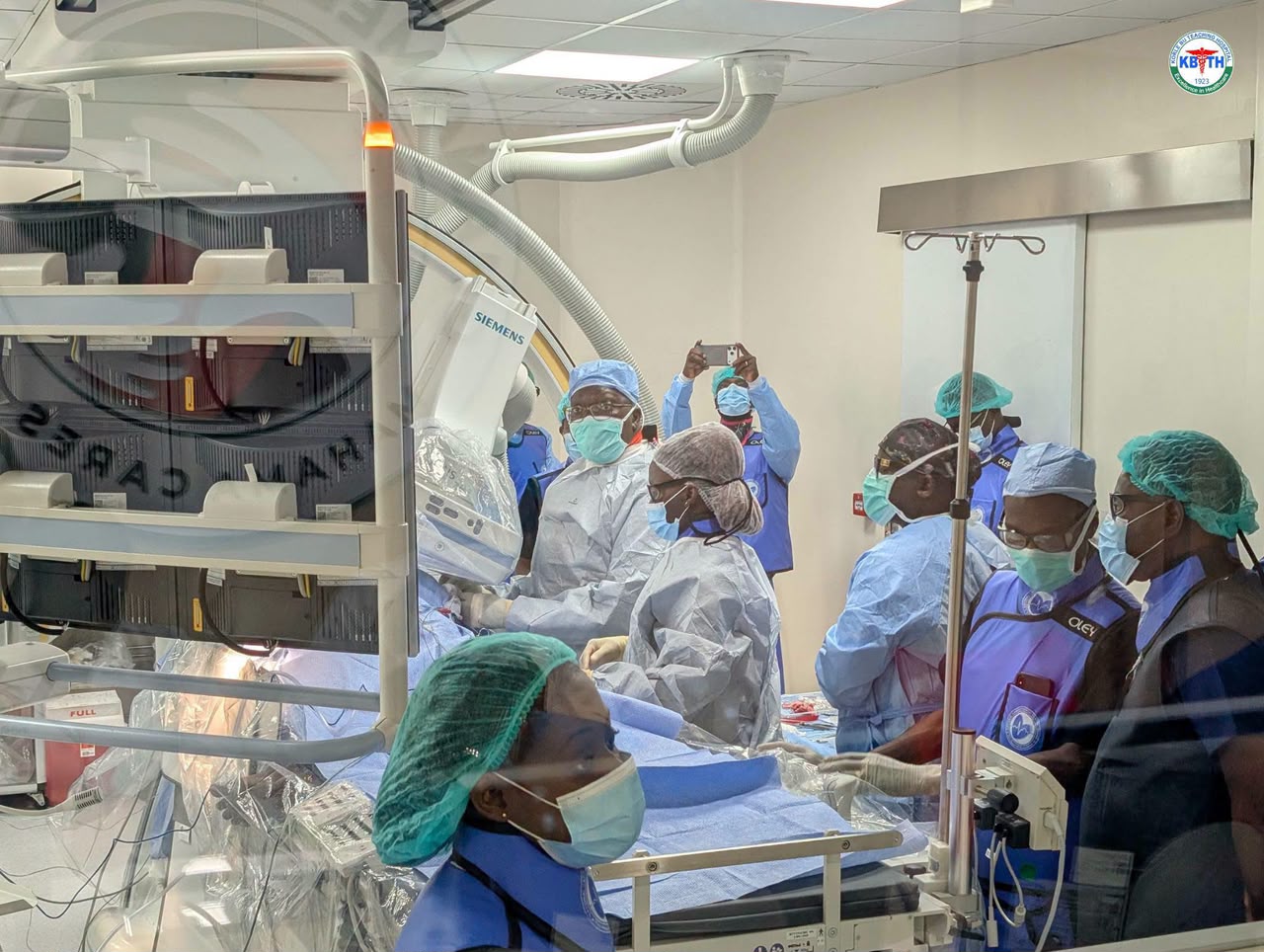
Twenty-two patients battling severe heart rhythm abnormalities have successfully undergone complex cardiac device procedures at the National Cardiothoracic Centre (NCTC), Korle Bu, in a joint mission estimated to have cost GH₵2 million.
The initiative, is a collaboration between the Mount Carmel Foundation, the NCTC, the Ghana Medical Trust Fund-MahamaCares and Africa World Airlines, brought together healthcare specialists from the United States and Ghana over a five-day period, combining local expertise with international support to deliver critical care to patients drawn from across the country.
Speaking during a debriefing session at the close of the mission, Director of NCTC, Dr. Kow Entsua-Mensah, said the exercise demanded seamless coordination across a wide range of medical disciplines.
He noted that the team assembled for the mission included cardiac surgeons, cardiologist-electrophysiologists, anaesthesiologists, cathlab and operating room staff, ward and ICU nurses, radiographers, pharmacists, medical laboratory scientists and other support personnel.
According to Dr. Entsua-Mensah, this level of coordination allowed the medical team to navigate technical challenges safely throughout the mission, with all 22 patients recovering well and cleared for discharge by the final day.
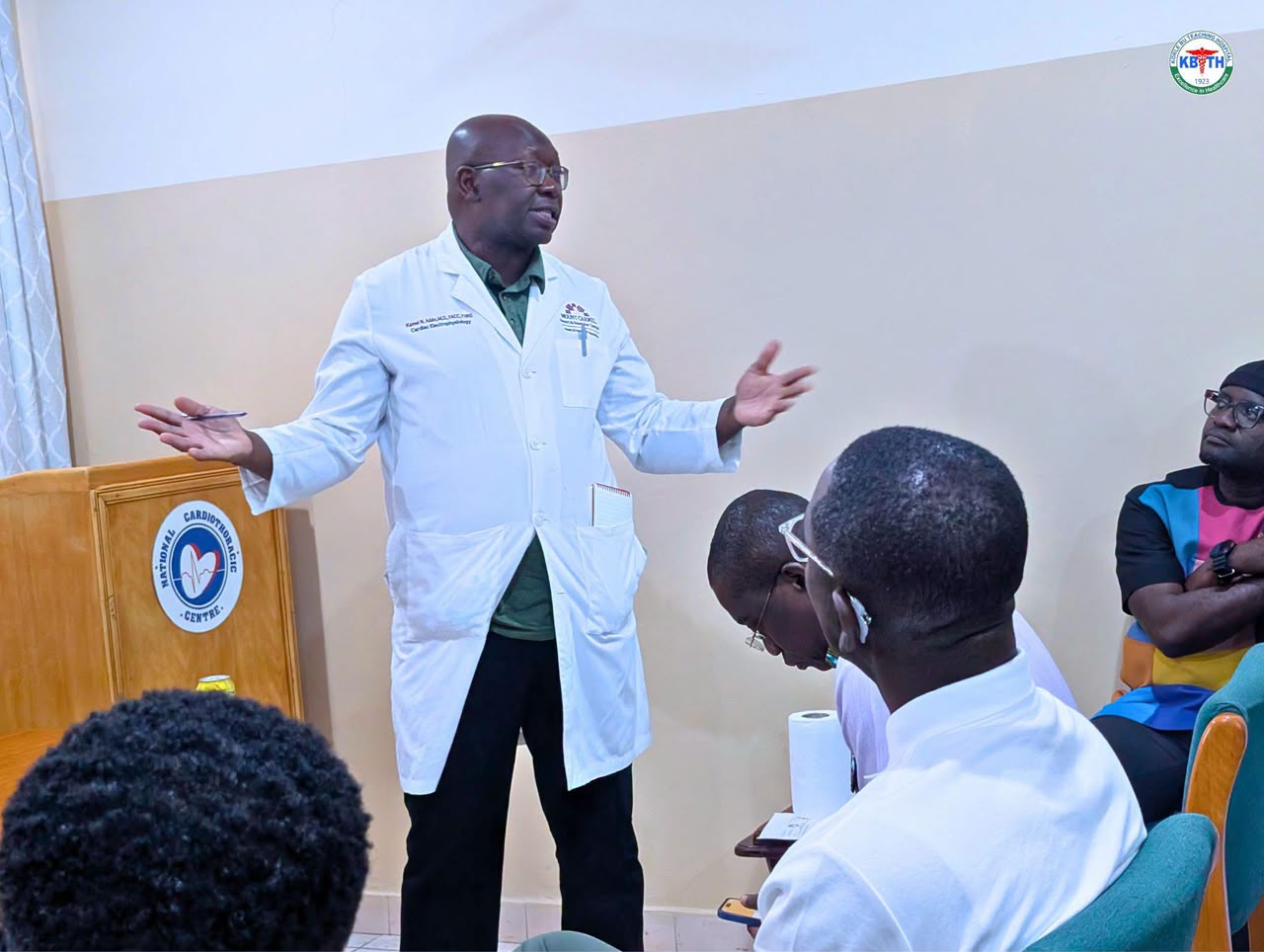
“This seamless coordination enabled the medical team to safely navigate technical challenges, with all patients recovering well and ready to be discharged.”
Director of the NCTC, Dr. Kow Entsua-Mensah
Dr. Entsua-Mensah added that both the visiting and local teams regard the mission’s success as a foundation for long-term collaboration between the two sides. He explained that by pairing direct patient care with sustainable knowledge transfer and local training, the initiative is expected to strengthen the framework for advanced cardiac electrophysiology care in Ghana going forward.
He further noted that patients who were unable to attend treatment during the mission week would not be left out, assuring that the Cardio Centre’s team would continue to attend to them once they were ready.
A Patient’s Relief
Among the beneficiaries was a patient who had been living with heart failure secondary to peripartum cardiomyopathy before receiving a successful Cardiac Resynchronization Therapy (CRT) device procedure during the mission, an intervention she described as life-changing.
Her account reflects a broader theme running through the mission, in which the financial burden of complex cardiac procedures, often placed entirely on patients and their families, was significantly eased through the collaborative funding structure behind the initiative.
Specialist Highlights Complex Procedures Performed
A cardiologist-electrophysiologist and team lead from the Mount Carmel Health System in Columbus, Ohio,Dr. Kamel Addo, mention that the partnership with Cardio Centre has made it possible to tackle intricate electrophysiology procedures, including Cardiac Resynchronization Therapies, Implantable Cardioverter Defibrillators and left bundle branch area pacing, with a focus on under-resourced patients suffering from severe heart rhythm abnormalities.
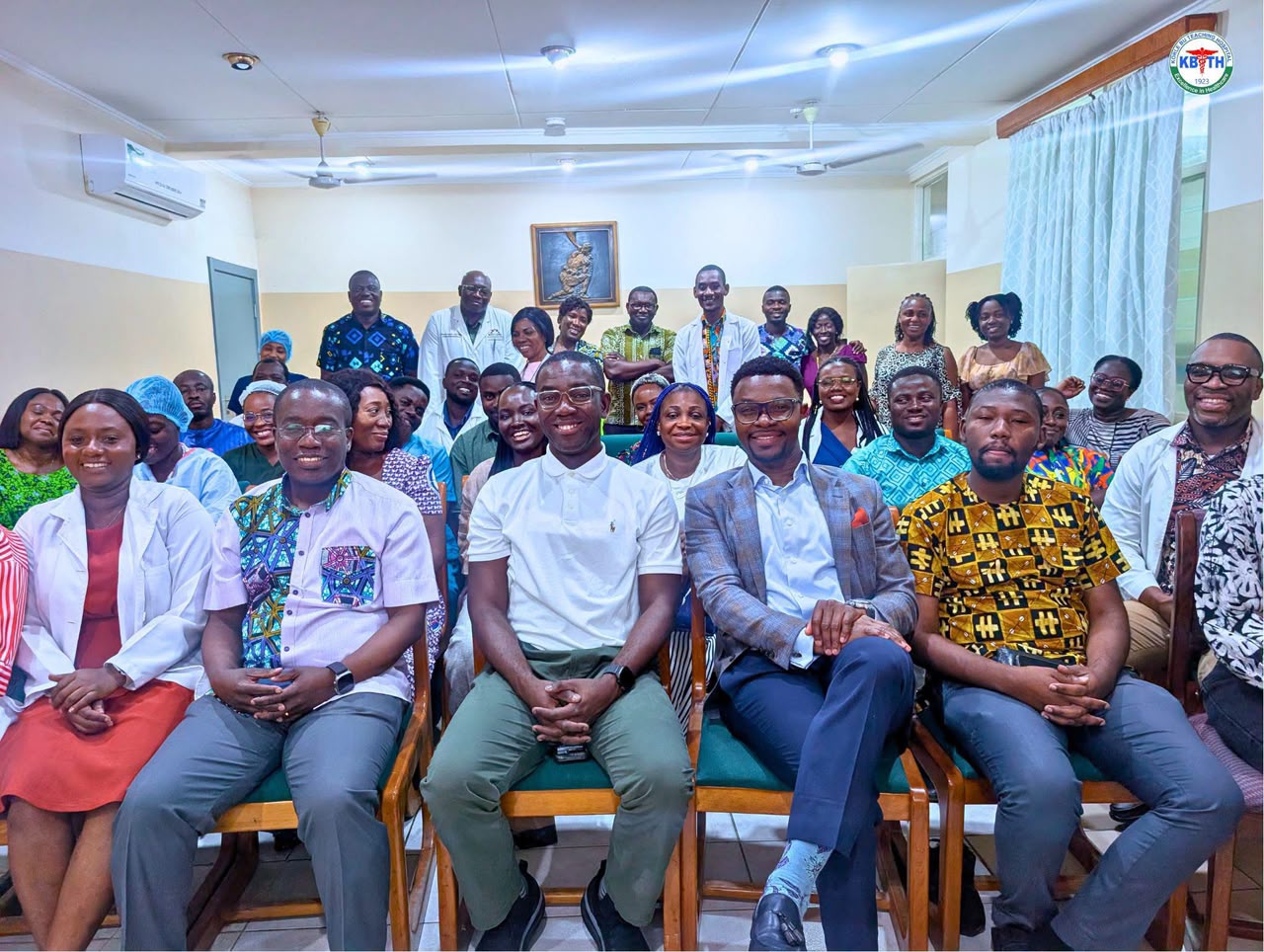
“The cohesion of the team at the Cardio Centre, their discipline, skill and professionalism made sure that this number of cases were treated seamlessly.”
Dr. Kamel Addo
He also pointed to the role played by the mission’s sponsors, noting that funding support helped lessen the financial burden of the devices and procedures involved, ensuring that high-level cardiac care remained accessible to patients who might otherwise have been unable to afford such life-saving interventions.
Building a Sustainable Model for Cardiac Care
Taken together, the outcomes of the mission point to more than a one-off medical exercise. By combining direct clinical intervention with training and knowledge exchange, organisers behind the initiative appear focused on building lasting local capacity in cardiac electrophysiology rather than delivering short-term relief alone.
For the 22 patients treated during the mission, the intervention offered both a medical and financial lifeline, addressing conditions that, left untreated, could have posed serious long-term risks to their health. With assurances that outstanding cases will still be attended to, the mission’s organisers appear positioned to extend its impact well beyond the five days in which the procedures were carried out.
READ MORE: Human Rights Watch : Nigeria’s Boko Haram Trials Fall Short of Justice Standards