Ghana’s financial sector could be on the verge of one of its biggest transformations in recent years as the government considers listing selected State-Owned Enterprises (SOEs), including state-owned banks, on the Ghana Stock Exchange (GSE).
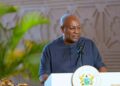
Finance Minister Dr Cassiel Ato Forson announced the ambitious plan as part of a broader strategy to improve governance, transparency, efficiency and profitability across public institutions.
The proposal, which comes on the heels of the presentation of the 2026 Mid-Year Budget Review, has sparked significant interest among investors, financial analysts and the wider business community.
The initiative is expected to reshape the way some of Ghana’s most important public institutions operate while opening the door for greater private sector participation without relinquishing government control.
Government Rejects Privatisation Narrative
Dr Forson was quick to dismiss suggestions that the initiative amounts to privatisation of state assets. According to him, the government’s objective is to strengthen public institutions rather than sell them.
“We are assessing a number of SOEs. It’s not about selling, it’s not about shutting down; it’s about listing some of them on the Stock Exchange to improve governance and ensure profitability.”
Dr Cassiel Ato Forson
His comments make it clear that the government intends to retain ownership while allowing ordinary Ghanaians and institutional investors to acquire stakes through the stock market.
The strategy represents a significant departure from previous approaches where struggling state institutions often depended heavily on government support to survive.
Instead, authorities are seeking to expose these entities to market discipline, stronger corporate governance standards and greater public accountability.
State-Owned Banks Under the Spotlight
Among the institutions expected to benefit from the new strategy are Ghana’s state-owned banks.
Dr Forson specifically mentioned the Agricultural Development Bank (ADB), which is already listed on the Ghana Stock Exchange.
According to him, government intends to deepen private sector participation in ADB by selling additional shares to investors.
“ADB is already there, but we want to deepen it and offload more of those shares to the private sector, to you, to everybody. Everyone can buy some shares. NIB, all of them, we want to.”
Dr Cassiel Ato Forson
The Finance Minister also revealed that the National Investment Bank (NIB) is among the institutions being considered for a similar approach.
Should the proposal materialise, it would mark a significant milestone in Ghana’s banking sector reforms and could strengthen investor confidence in state-owned financial institutions.
Stronger Governance Through Market Discipline
One of the government’s central arguments is that stock exchange listing naturally encourages better corporate governance.
Listed companies are required to publish audited financial statements, comply with strict disclosure requirements and remain accountable to shareholders.
These obligations often lead to improved management practices, increased operational efficiency and stronger financial performance.
The government believes extending these standards to state-owned enterprises will help transform organisations that have historically struggled with operational inefficiencies and governance challenges.
Greater transparency is also expected to improve public confidence while attracting both local and foreign investors.
A Boost for Ghana’s Capital Market
Beyond improving state enterprises, the proposal could deliver a major boost to Ghana’s capital market.
Adding more large state-owned companies to the Ghana Stock Exchange would increase market capitalisation, improve liquidity and expand investment opportunities for pension funds, insurance firms and retail investors.
More listings could also attract international investors seeking exposure to Ghana’s growing economy.
Market analysts have long argued that increasing the number of quality companies on the exchange is essential for deepening Ghana’s capital market.
If implemented successfully, the proposed listings could become one of the most important developments for the GSE in years.
Opportunity for Ordinary Ghanaians
Perhaps one of the most exciting aspects of the proposal is the opportunity it presents for ordinary citizens.
Instead of state-owned enterprises being financed almost entirely through government resources, Ghanaians would have the chance to own shares in these institutions.
This broader ownership structure could create wealth for individuals while encouraging greater public interest in the success of national institutions.
It would also allow employees, institutional investors and members of the public to participate directly in the growth and profitability of these companies.
Such a model has proven successful in several countries where governments maintain majority ownership while allowing private investors to participate through stock exchanges.
A New Era for Public Enterprises?
The government’s proposal reflects a broader effort to modernise Ghana’s public sector without abandoning strategic national assets.
Rather than shutting down struggling institutions or selling them outright, authorities are opting for reforms designed to improve performance through stronger governance and commercial discipline.
If successfully implemented, the listing of selected SOEs and state-owned banks could transform how these institutions operate, improve profitability and reduce dependence on government financial support.
While many details remain under consideration, the announcement has already generated widespread discussion within financial circles.
Investors will now be watching closely as the government identifies which institutions will eventually join the Ghana Stock Exchange and how the listings will be structured.
For Ghana’s capital market, the banking industry and the wider economy, the proposed reforms could represent the beginning of a bold new chapter where transparency, accountability and investor participation become the driving forces behind the success of state-owned enterprises.
READ ALSO: ASEC Calls for Stronger Green Transition Focus in Mid-Year Budget