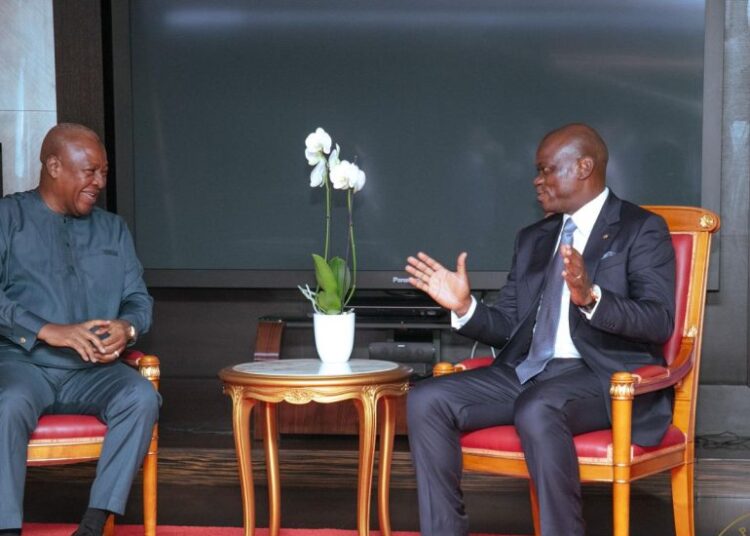
President John Dramani Mahama will host the President of the Gabonese Republic, His Excellency Brice Clotaire Oligui Nguema, for a three-day official visit to Ghana from July 28 to 30, 2026, aimed at strengthening longstanding bilateral relations between the two nations.
The visit will centre on formal talks at Jubilee House in Accra, where both leaders are expected to review existing cooperation and explore new opportunities across a wide range of sectors.
According to details of the visit published by the Presidency, the two Heads of State will begin with a private tête-à-tête meeting before proceeding to official bilateral talks at Jubilee House.
These discussions are expected to cover trade and investment, mining, energy, agriculture, forestry, fisheries, maritime affairs, transport, tourism, education, health, defence and security, environmental protection, climate action, and people-to-people exchanges.
The visit is expected to reaffirm the shared commitment of both countries to deepening bilateral cooperation and promoting sustainable economic development, reflecting the broadening scope of the relationship between the two nations in recent years.
A Relationship Anchored in High-Level Diplomacy
Bilateral relations between Ghana and Gabon have followed an upward trajectory in recent years, driven substantially by strategic high-level diplomatic engagement, maritime security cooperation and expanding trade ties.
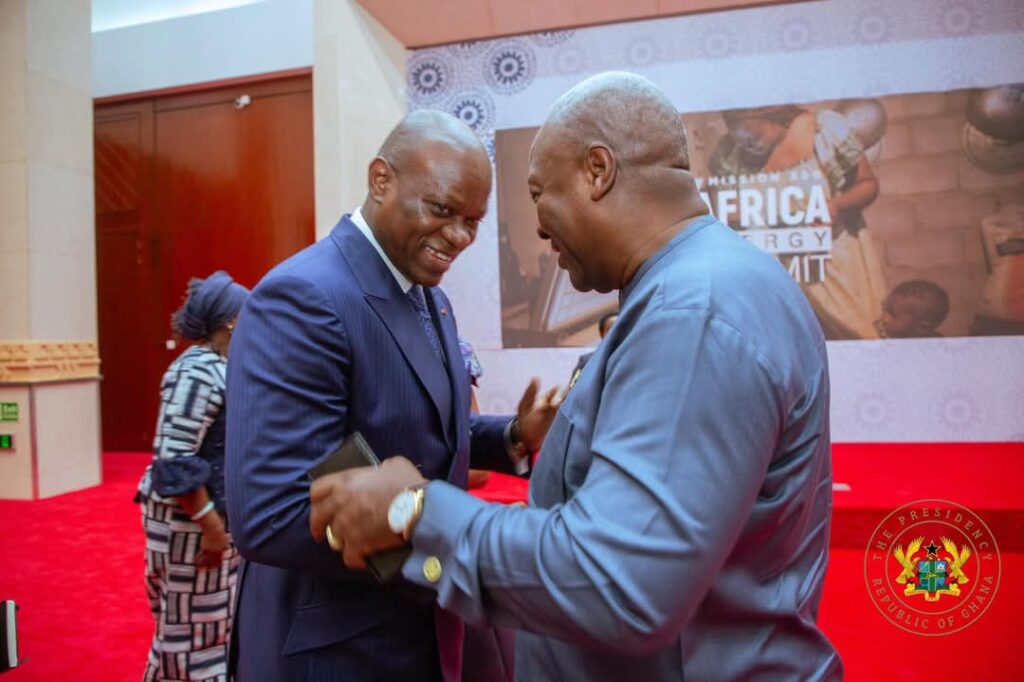
The friendship between the West and Central African nations rests on shared interests in economic diversification, climate action and regional stability. Oligui Nguema’s visit to Accra marks a significant milestone in this diplomatic relationship, arriving at President Mahama’s invitation following earlier engagement between the two leaders.
President Mahama had previously travelled to Libreville, Gabon, to attend Oligui Nguema’s formal transition milestones, a visit that underscored Ghana’s proactive diplomatic role as a mediator and constitutional partner across the African continent.
Beyond bilateral engagement, Ghana and Gabon have historically collaborated on global platforms, notably serving simultaneously as non-permanent members of the United Nations Security Council as part of the A3 coalition alongside Mozambique.
Through this multilateral collaboration, both countries aligned on issues concerning African sovereignty, peacebuilding and counter-terrorism, reflecting a broader pattern of cooperation extending well beyond their immediate bilateral relationship.
Trade Expansion Under AfCFTA Framework
Among the key economic priorities expected to feature during the Jubilee House talks is trade expansion, with both governments looking to leverage the African Continental Free Trade Area framework to boost mutual investment and reduce trade barriers between the two economies.
This focus reflects a broader continental push to strengthen intra-African trade through the AfCFTA mechanism, an initiative both nations have shown sustained interest in advancing.
Alongside trade, both countries are expected to deepen collaboration around shared economic pillars, including mining, forestry, oil and sustainable agriculture, sectors that feature prominently in both nations’ economic structures.
Maritime security is expected to feature prominently in discussions, with both countries continuing close cooperation on counter-piracy initiatives aimed at protecting commercial shipping corridors within the Gulf of Guinea.
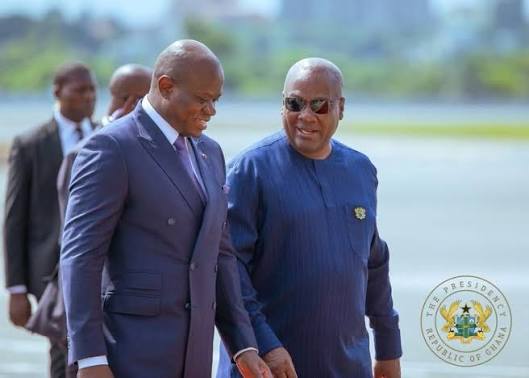
This cooperation reflects the shared strategic interest both nations hold in maintaining secure maritime routes critical to regional trade and economic stability along West and Central Africa’s coastlines.
Institutional Knowledge Exchange Across Sectors
Beyond trade and security, the two countries are expected to explore shared knowledge exchange across education, healthcare delivery, eco-tourism and defence, areas identified as offering mutual benefit given each country’s distinct institutional strengths and development priorities.
Ghana and Gabon present contrasting economic profiles despite their deepening partnership. Ghana, anchored within the West African ECOWAS bloc, carries a population of approximately 35.1 million and a nominal GDP of roughly $114 billion, translating to a GDP per capita of about $3,257.
Gabon, positioned within the Central African ECCAS bloc, holds a considerably smaller population of approximately 2.59 million, alongside a nominal GDP of around $21.4 billion and a notably higher GDP per capita of approximately $8,263.
Diplomatically, Ghana maintains a High Commission and Embassy presence in Libreville, while Gabon maintains an Embassy and Consulate in Accra, reflecting the formal diplomatic infrastructure supporting the relationship between the two nations.
Travel Links Between the Two Nations
Travel between Ghana and Gabon currently relies primarily on direct flights connecting Accra and Libreville, given the practical challenges of overland travel between West and Central Africa.
According to available travel details, the overland driving distance between the two capitals spans roughly 2,558 kilometres via regional transit pathways, a distance that makes air travel the preferred option for most travellers moving between the two countries.
Ghanaian citizens are eligible to secure an eVisa online ahead of entering Gabon for tourism or business purposes, a process that has helped facilitate smoother travel between the two nations as bilateral ties continue to strengthen.
Oligui Nguema’s state visit to Ghana represents the latest step in a diplomatic relationship that has steadily deepened through reciprocal high-level visits, shared multilateral engagement and expanding sectoral cooperation.

With President Mahama’s earlier visit to Libreville during Gabon’s transition period having laid important diplomatic groundwork, this three-day visit to Accra offers both leaders an opportunity to translate that goodwill into concrete agreements spanning trade, security and sustainable development.
As the two Heads of State prepare for their meetings at Jubilee House, attention will likely focus on whether the talks produce specific agreements or memoranda of understanding across the sectors identified for cooperation, particularly given the emphasis placed on trade expansion under the AfCFTA framework and continued maritime security collaboration in the Gulf of Guinea.
For both Ghana and Gabon, the visit offers an opportunity to demonstrate the practical benefits of sustained diplomatic engagement between West and Central Africa, potentially setting a template for how mid-sized African economies with complementary strengths can deepen cooperation despite geographic distance and differing regional bloc affiliations.
READ ALSO: Deloitte Flags Shocking 40% Capital Spending Shortfall