
Press Secretary and Presidential Spokesperson for the Interior Ministry, Julius Kwame Anthony has argued that Ghana’s fight against drug abuse must move beyond traditional law enforcement to protect young people from the growing threat of harmful substances. The Press Secretary explained that the state must combine prevention, deterrence and rehabilitation to address the problem at both individual and community levels.
Mr Anthony highlighted the ways in which drugs were reaching young people and communities. According to him, the revelations reinforced the need for a national security approach that placed human safety at the centre of public policy.
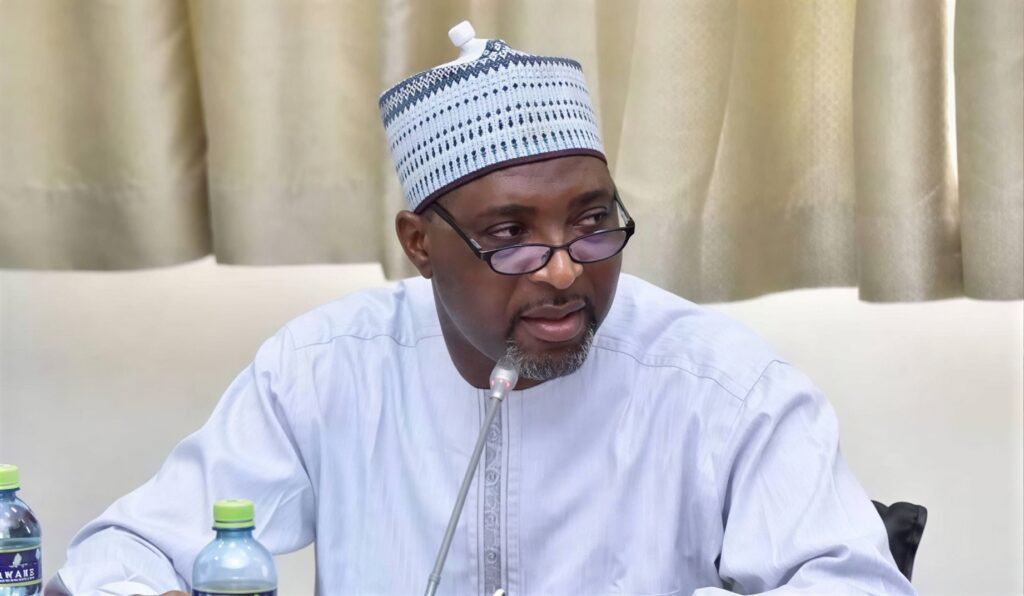
The Spokesperson noted that national security has traditionally focused on maintaining law and order and protecting the country’s territorial sovereignty. He argued that the changing nature of drug abuse required the state to give equal attention to the protection of vulnerable young people.
“National security must move from only maintaining law and order and protecting our territorial sovereignty to human security and the protection of our young people.”
Julius Kwame Anthony
Turning to government policy, Mr Anthony disclosed that a Cabinet memorandum was being prepared to introduce drug testing as part of the public service regime. He explained that the policy was intended to create an additional deterrent against the consumption of harmful substances while law enforcement agencies worked to prevent the drugs from entering the country.
The initiative has already been piloted during recruitment into the security services, although the policy attracted a different interpretation from some members of the public. The Press Secretary clarified that the objective is not to eliminate applicants indiscriminately, but to create a system that encouraged responsible choices and strengthened public sector safeguards.
Alongside testing, the Ministry is also considering rehabilitation as part of the state’s response to drug use. The approach, Mr Anthony explained, recognised that law enforcement alone could not resolve the problem after individuals had already become dependent on harmful substances.
From his perspective, prevention had to begin before drugs reached vulnerable groups. He therefore linked the proposed public sector measures to a wider national strategy involving families, schools, communities and enforcement agencies.
The Spokesperson also connected the policy to a broader shift in the way the country approached public safety. He argued that protecting young people from drugs was an important part of national security because the consequences extended into families, education, employment and public health.
Schools And Communities Drawn Into National Drug Prevention Drive
The Interior Ministry also called for stronger community participation in the fight against drug abuse as authorities expand prevention programmes across schools and the country’s districts. The Spokesperson argued that families, educational institutions and local communities have a direct role to play in preventing the spread of harmful substances.
Mr Anthony cited data indicating that a significant proportion of students in tertiary institutions were aware of the presence of drugs on their campuses. He also pointed to awareness among students at the second cycle level, arguing that the figures demonstrate the need for sustained prevention programmes.
The campaign against drug abuse, he noted, could not remain seasonal. The Press Secretary therefore called for initiatives such as the Stop Red campaign to be decentralised and sustained across communities instead of being limited to specific periods.

Narcotics Control Commission (NACOC) has also been working with tertiary institutions and guidance and counselling units to strengthen prevention on campuses. According to the Spokesperson, such partnerships could help identify risks early and give students the information required to avoid drug use.
“Without community compliance, without families and individuals supporting the state, I do not think that we can win this fight, no matter how sophisticated the state gets.”
Julius Kwame Anthony
The government is also expanding NACOC’s administrative presence across the country. Mr Anthony disclosed that the number of districts with a NACOC presence had increased from seven when the current administration took office to more than 77.
He explained that the expansion was necessary because drug control depended heavily on intelligence and information gathered from communities. Greater presence on the ground, he added, would enable officials to build relationships, receive information and respond more effectively to emerging threats.
Entry point security also formed part of the government’s response. The Spokesperson disclosed that the administration was improving body and baggage scanning systems to strengthen the detection of drugs entering the country.
Mitigating the Abuse Of Illicit Drugs
At the community level, however, the responsibility extends beyond government agencies. Mr Anthony argued that families and residents must remain alert to the ways in which harmful substances could be disguised and distributed through ordinary products and social activities.
He cited examples of drugs being concealed in items such as cakes and sobolo to illustrate the difficulty of detecting substances through conventional enforcement alone. The development, he explained, made community intelligence and public cooperation essential to effective drug control.

The role of schools also featured prominently in the discussion. Mr Anthony acknowledged that educational institutions have a responsibility to protect students from drug use and distribution while arguing that education and prevention should form the first line of defence.
He explained that expulsion alone could fail to address the underlying problem of drug use. At the same time, schools had a responsibility to act firmly when students became involved in selling drugs to others because such conduct could amount to a criminal offence under Ghanaian law.
The Spokesperson therefore distinguished between drug use and the distribution of harmful substances within educational institutions. While prevention and education could assist students who are struggling with drug use, the sale and transmission of drugs to other students require a stronger institutional response.
He called for schools to combine education with appropriate sanctions while communities and families supported national enforcement efforts. The Ministry’s approach ultimately places prevention, intelligence gathering and community participation at the centre of the country’s response to drug abuse.
READ ALSO: Labour Leads Reform UK in New Poll After Burnham’s First Week