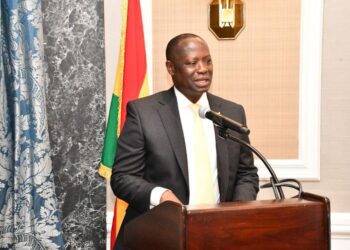
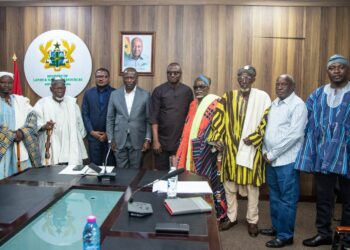
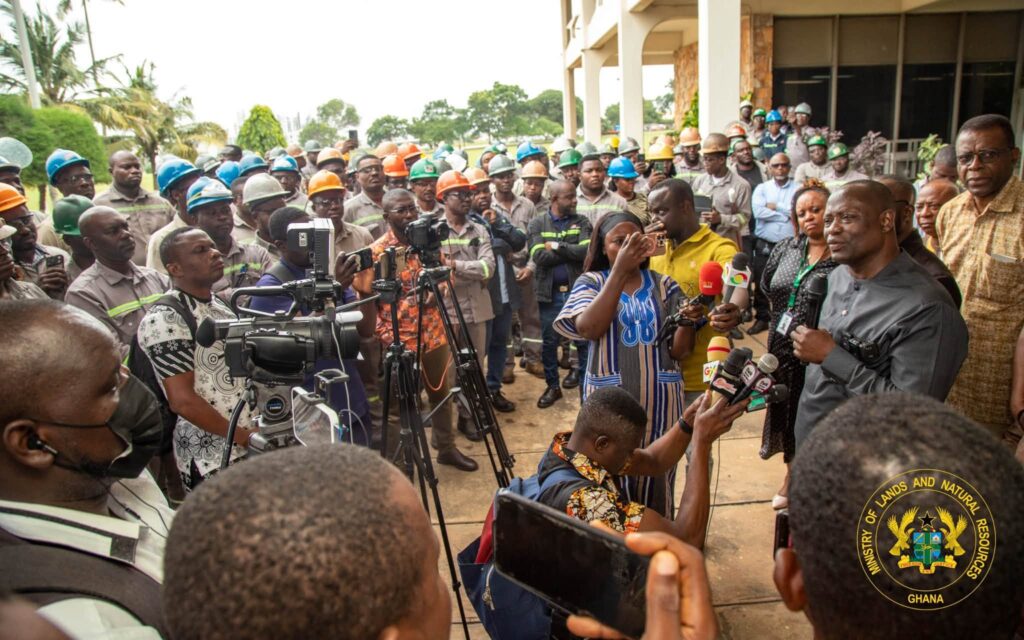
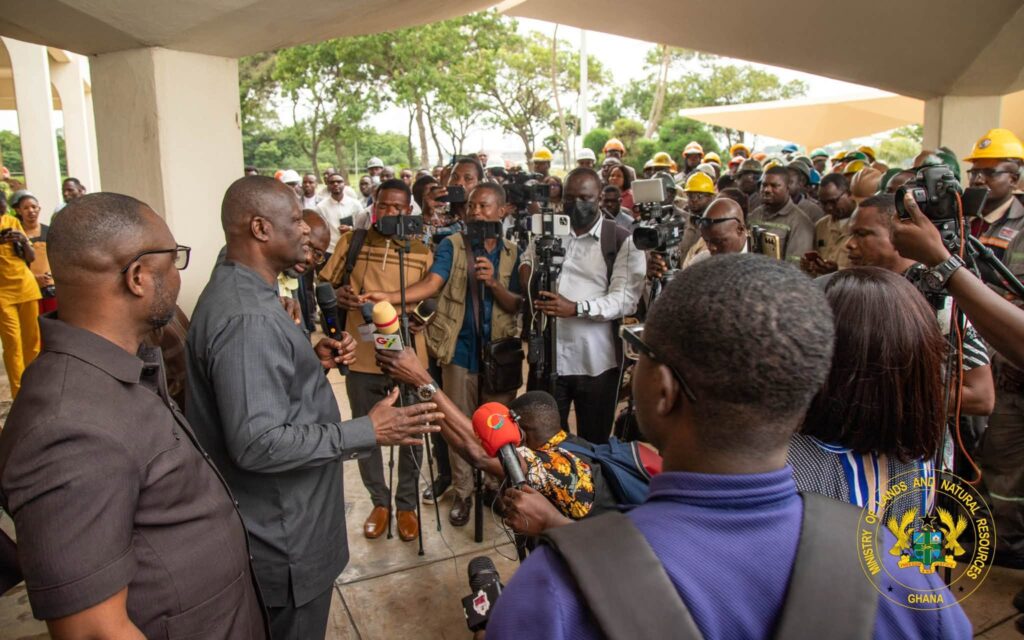
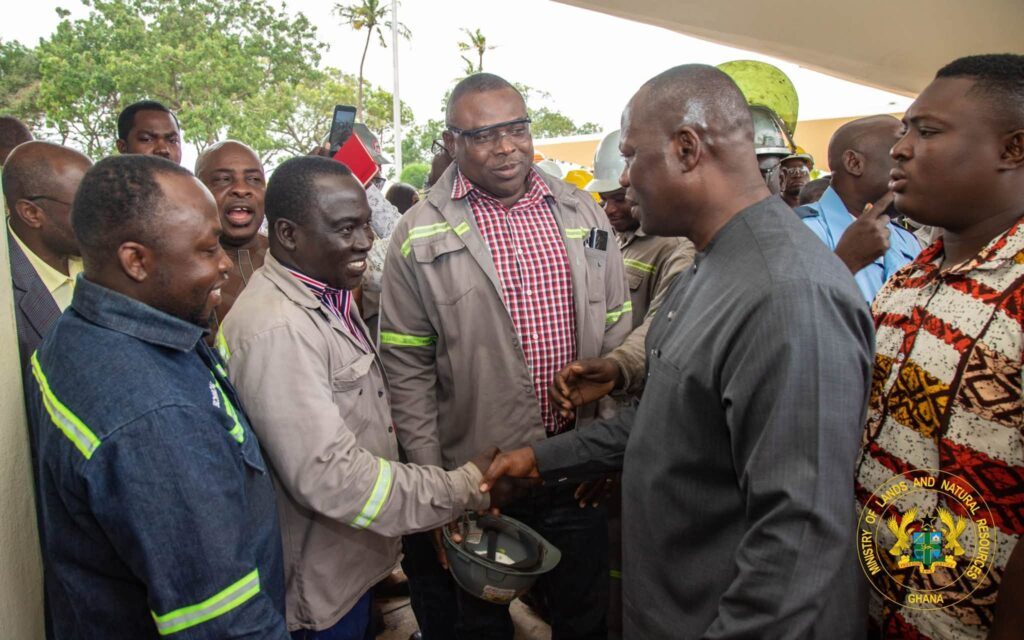
The Minister of Lands and Natural Resources, Hon. Emmanuel Armah-Kofi Buah, has engaged management and staff of the Volta Aluminium Company (VALCO) to outline Cabinet’s strategic framework aimed at modernizing and revitalizing the state-owned smelter to enhance domestic mineral value addition and strengthen Ghana’s manufacturing base.
Hon. Armah-Kofi Buah explained that the strategic initiative is designed to transition VALCO into a core industrial pillar, unlocking the full economic potential of Ghana’s vast bauxite and mineral resource reserves. By addressing systemic structural deficits, the government aims to position the company as a key supplier for domestic downstream processing industries.
“It has therefore become imperative to invite prospective investors with the capacity to partner with the government to revitalize VALCO – a process that remains open, as no investor has been settled on yet. The government remains fully committed to safeguarding this key national asset while giving it the capital and technology it needs to thrive. The objective is simply to revive VALCO, not to sell it.”
Minister of Lands and Natural Resources, Hon. Emmanuel Armah-Kofi Buah

Hon. Armah-Kofi Buah disclosed that VALCO is currently operating severely below its installed production capacity due to long-standing financial and operational bottlenecks. Out of the plant’s 500 reduction cells, only about 90 are currently operational, creating a massive output deficit that hinders profitable performance.
Consequently, the Ministry has initiated an open procurement process to invite strategic strategic investors capable of injecting requisite capital and advanced technological infrastructure, ensuring the smelter re-establishes high-capacity efficiency without compromising state ownership.
Capital Injection and Technological Upgrades
The planned modernization drive addresses VALCO’s operational limitations by replacing outdated retrofitted cell technology with modern, energy-efficient reduction cells.
Integrating high-amperage potlines will allow the smelter to significantly reduce energy consumption per metric ton of primary aluminum produced, directly alleviating high electricity tariff pressures.
Moreover, expanding operational capacity beyond the current 90 reduction cells toward full 500-cell utilization will optimize economies of scale, converting fixed operational overheads into higher profit margins.
Upgrading VALCO’s smelting equipment allows Ghana to complete the Integrated Aluminium Industry (IAI) value chain by directly linking local bauxite mining and refining to domestic smelting.
Upstream bauxite extraction managed by the Ghana Integrated Aluminium Development Corporation (GIADEC) requires a fully functional, high-capacity smelter to process alumina locally.
Modernizing the plant ensures that raw Ghanaian bauxite is transformed on-site into high-grade primary aluminum ingots and billets, retaining maximum economic value within the country’s extractive ecosystem.
Industrial Growth, Job Creation, and Downstream Integration
Beyond raw production figures, operationalizing the entire smelter infrastructure will generate direct and indirect jobs across Ghana’s industrial corridors.
Revitalized smelting operations create an immediate demand for skilled engineering, metallurgical, and administrative labor, alongside thousands of indirect support jobs in transport, equipment maintenance, and logistics.
This workforce expansion directly aligns with national broader industrial policies aimed at youth employment and technical skill retention.
A reliable domestic source of primary aluminum will revitalize Ghana’s downstream manufacturing sector, providing local industries with consistent raw materials for producing cables, roofing sheets, automotive components, and industrial extrusions.

Reducing reliance on imported aluminum feedstock protects domestic manufacturers from supply chain disruptions and foreign exchange volatility.
Safeguarding Strategic State Assets
Government intervention reasserts state ownership of critical industrial infrastructure while leveraging private sector capital for operational turnarounds.
The transparent search for equity or technical partners guarantees that strategic control remains with the state, guarding against asset stripping while restoring operational viability.
By pairing public sector oversight with private capital execution, the Ministry creates a sustainable model for state-owned enterprise management.
Ultimately, modernizing VALCO shifts Ghana away from raw commodity export dependencies toward an integrated value-addition economy.
Restoring the smelter’s 500-cell capacity converts an underperforming asset into a primary driver of industrialization, ensuring natural mineral wealth directly accelerates domestic manufacturing capability, industrial growth, and national prosperity.
READ ALSO: Ukraine Offers Assistance In Poland Airspace Violation Probe