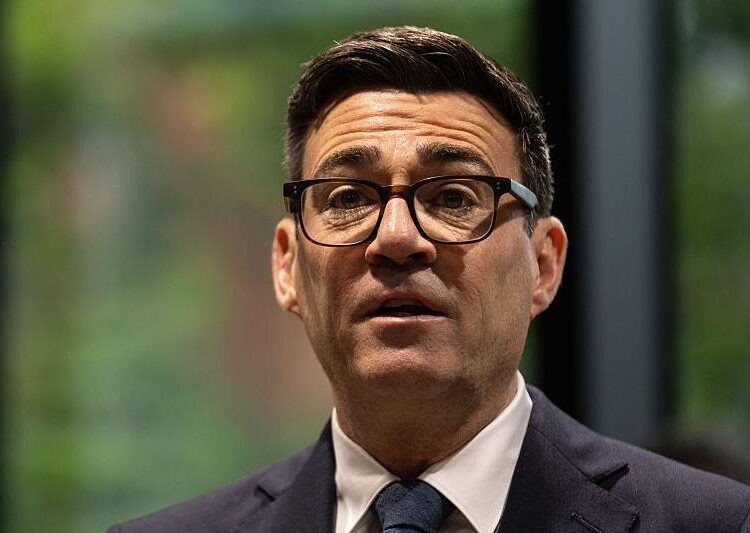
UK Prime Minister Andy Burnham has signalled that his government could reconsider controversial plans to reduce the number of jury trials in England and Wales, saying he has serious concerns about the proposals and intends to examine them in detail before deciding whether they should proceed.
Speaking during a visit to Sheffield, Burnham stated his instinct was to preserve public access to jury trials, one of the oldest and most fundamental features of the British justice system.
While stopping short of announcing an immediate reversal, he suggested the planned reforms would undergo careful scrutiny before his government commits to implementing them.
The Prime Minister stated, “my instincts are that we need to find ways of not reducing access to jury trial,” adding that he wanted to “really look in detail” at the proposals before confirming whether they would remain part of the government’s legislative programme.
Burnham’s remarks come as Parliament prepares to consider the Courts and Tribunals Bill, legislation introduced under the previous Labour government that would significantly alter the way certain criminal cases are handled in England and Wales.
The proposed reforms were developed by former Justice Secretary David Lammy, who argued that limiting jury trials in less serious criminal cases could help address the unprecedented backlog facing Crown Courts across the country.
Under the proposals, defendants accused of offences carrying prison sentences of up to three years would, in many cases, be tried by a single judge instead of a jury of twelve citizens. Supporters argue the changes would allow courts to hear more cases, reduce lengthy delays and ease pressure on an overstretched judicial system.
Britain’s criminal courts are facing one of the most severe backlogs in recent history. More than 80,000 Crown Court cases remain unresolved, with some defendants charged today unlikely to face trial until 2030. The growing delays have raised concerns among judges, prosecutors and victims’ groups about access to justice and confidence in the legal system.
David Lammy defended the reforms as a necessary response to an extraordinary crisis, arguing that without structural changes the backlog would continue to grow despite increased investment in courts and judicial resources.
However, critics contend that removing jury trials from thousands of criminal cases risks weakening a cornerstone of British justice.
Jury trials have long been viewed as an important safeguard against excessive state power, ensuring that ordinary citizens rather than government officials determine guilt in serious criminal proceedings.
Burnham suggested his broader review of inherited policies would not be limited to jury reform. Drawing comparisons with his recent decision to pause a controversial early prisoner release programme, he explained that the new administration intends to carefully reassess policies introduced before he entered Downing Street.
“It’s similar to the early release scheme. I want to get inside these issues before I confirm any of the plans that I inherited and, in fact, probably looking for changes.”
Andy Burnham
Burnham Faces Mounting Pressure Over Controversial Jury Trial Reforms

The concerns over jury trials has become one of the most contentious justice issues facing the new government, exposing divisions within the Labour party.
Among the most vocal opponents has been Hull East MP Karl Turner, a former shadow attorney general and practising barrister who repeatedly challenged David Lammy’s proposals while Keir Starmer remained Prime Minister.
Turner argued that replacing juries with judges in thousands of criminal cases would undermine long-established legal protections and reduce public confidence in the justice system.
He described the reforms as a “stupid idea” and publicly urged Lammy to “please God, stop what you’re doing.”
Soon afterwards, Turner had the Labour whip suspended. Although Keir Starmer’s administration maintained the disciplinary action resulted from “uncollegiate” behaviour toward colleagues rather than disagreements over policy,
Turner insisted it was “clear” that his criticism of the jury trial reforms lay behind the decision.
In a move widely interpreted as an attempt to heal divisions within the parliamentary party, Burnham confirmed that he has asked the Chief Whip to begin the process of restoring Turner to the Parliamentary Labour Party.
“I’ve asked the chief whip to speak to Karl and, sort of, agree a process that can be taken forward. Obviously, addressing issues that the chief whip will need to discuss, but that’s where we are.”
Andy Burnham
The Prime Minister’s decision has been welcomed by some Labour MPs who believe the party should encourage open debate on major constitutional and legal reforms rather than punish dissenting voices.
Outside Parliament, opposition to the proposed legislation has also been strong.
The Bar Council, representing barristers across England and Wales, has questioned both the evidence supporting the reforms and the speed with which the legislation has been advanced.
Its chair, Kirsty Brimelow KC, warned that the government had failed to demonstrate why such a fundamental change to criminal justice was necessary.
“There is very little evidence to support even basic rationality of the government’s decision to rush through this legislation which unnecessarily removes jury trials from thousands of people.”
Kirsty Brimelow
The Conservatives have likewise pledged to oppose the proposals.
Shadow Justice Secretary Nick Timothy urged Labour MPs to join Conservative members in voting against the reforms, arguing that juries provide an essential constitutional safeguard between citizens and the state.
The renewed controversy places Burnham in a difficult position. While his government faces mounting pressure to tackle record Crown Court backlogs that threaten the effectiveness of Britain’s criminal justice system, any move to restrict jury trials is expected to trigger strong resistance from lawyers, MPs and civil liberties campaigners determined to safeguard one of the country’s oldest legal traditions.
READ ALSO: GoldBod Prepares Gold Backed Assets to Expand African Mineral Ownership