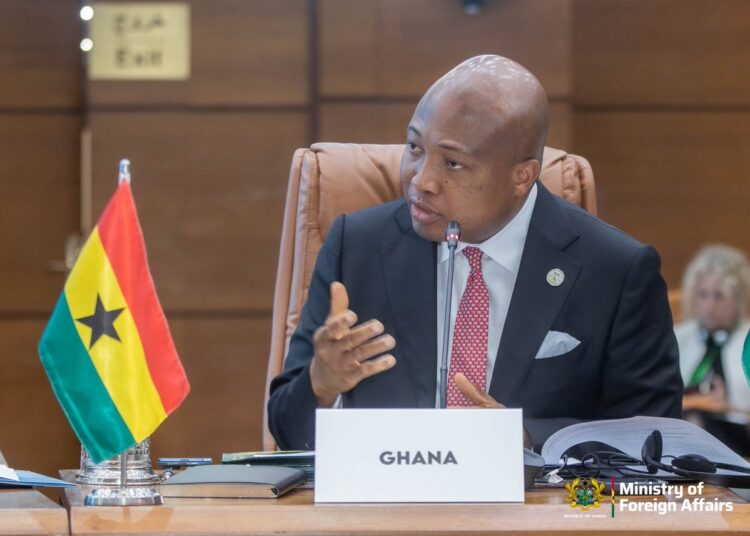
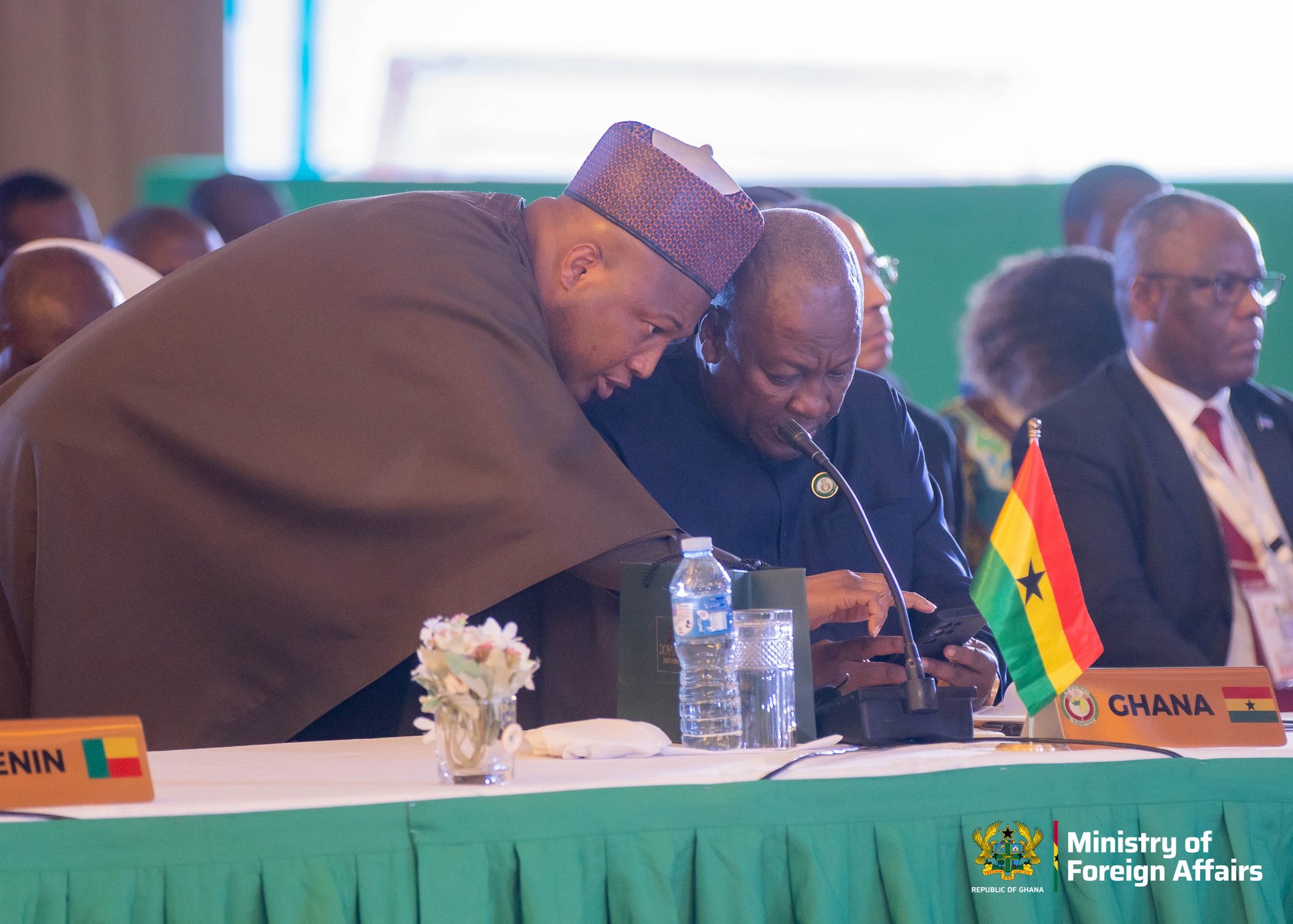
Ghana’s Minister for Foreign Affairs, Samuel Okudzeto Ablakwa, announced that ECOWAS has notified the Foreign Ministry of its decision to donate 250,000 US dollars, approximately GH¢3 million, to Ghana in support of victims affected by the recent devastating floods.
Hon. Ablakwa made the announcement in a Facebook post, describing the disclosure as part of the ministry’s commitment to transparency and accountability.
“I wish to announce, in the spirit of transparency and accountability, that the Foreign Ministry has just been notified by ECOWAS that they have decided to donate US$250,000.00, about GH¢3 million, to Ghana for victims of the recent devastating floods.
“As can be expected, the Foreign Ministry will hand over the entire funds as soon as we receive it in our accounts”.
Ghana’s Minister for Foreign Affairs, Samuel Okudzeto Ablakwa
Hon. Ablakwa conveyed government’s gratitude to ECOWAS for the gesture, framing the donation as an expression of regional unity and support during a period of significant national hardship.

A Disaster of Historic Proportions
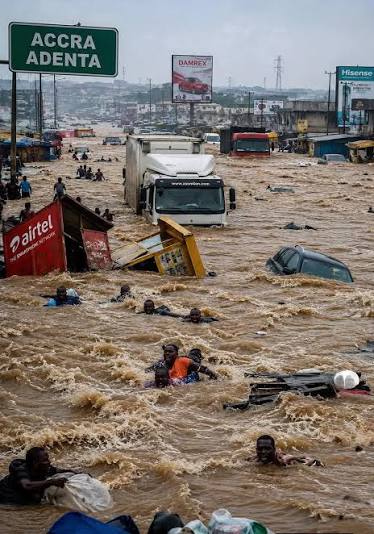
The donation comes in response to catastrophic flooding that struck southern Ghana on June 29, 2026, following torrential rains that resulted in at least 35 deaths nationwide, displaced tens of thousands of citizens, and caused extensive damage to infrastructure across multiple regions.
The scale of destruction prompted hundreds of emergency rescues carried out by the Ghana National Fire Service, as record-breaking rainfall collapsed buildings and submerged roads across affected areas.
According to the Ghana Meteorological Agency, the country recorded 169.2 millimetres of rainfall in a single day, marking the fourth-highest daily total since 1995.
The scale of this downpour becomes clearer when compared to broader monthly figures, with Accra’s total rainfall accumulation for June 2026 reaching 333 millimetres, nearly double the 172 millimetres recorded during the same month in 2025.
Greater Accra Bears Heavy Toll
Greater Accra emerged as one of the hardest-hit regions, recording at least 13 deaths and displacing 58,000 residents across 18 districts, including Adabraka, Alajo and Tema. The chaos was compounded by a massive fire that broke out at a rubber factory amid the flooding, adding to the destruction facing communities already grappling with rising floodwaters.
The Central Region suffered the most severe casualties among all affected areas, recording 18 fatalities alongside 58 building collapses and nearly 9,000 total victims. Cape Coast and Awutu Senya bore the brunt of this damage, with widespread structural failures compounding the human toll of the disaster.
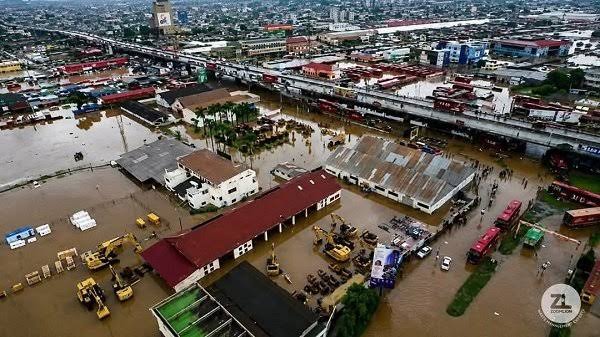
Beyond Greater Accra and Central Region, more than 60 communities across the Volta Region experienced flooding impacts, resulting in four deaths and displacing over 8,500 people.
In the Western Region, overflowing of the Tano and Samre rivers displaced more than 2,000 residents, while Ashanti, Western North and Eastern regions collectively saw thousands more people displaced from their homes.
In response to the disaster, President John Dramani Mahama declared a two-day national clean-up exercise and ordered the immediate opening of previously unutilised waste transfer stations to help manage the massive volume of debris left behind by the flooding.
This clean-up initiative formed part of a broader government effort to address both the immediate aftermath of the disaster and the underlying waste management issues that contributed to the severity of the flooding.
Financial Strain Mounts as Claims Surge
The economic impact of the disaster has been substantial, with non-motor insurance claims surging toward GH¢500 million as affected residents and businesses sought compensation for flood-related losses. This figure underscores the significant financial burden the disaster has placed on both individual households and Ghana’s insurance sector.
Beyond government interventions, the Red Cross launched a substantial humanitarian response targeting cash assistance and relief items for more than 30,000 victims across the worst-hit regions.
This intervention has provided critical support to displaced families navigating the aftermath of losing homes, property and, in many cases, their primary sources of income.
International Solidarity Amid National Recovery
The ECOWAS donation adds to the broader web of support Ghana has received in the aftermath of the June flooding disaster, joining domestic government interventions and humanitarian efforts from organisations such as the Red Cross.
While the 250,000 dollar contribution represents a modest sum relative to the overall scale of damage, estimated in the hundreds of millions of cedis through insurance claims alone, the gesture reflects continued regional solidarity as Ghana works to recover from one of its most destructive flooding events in recent years.
As the Foreign Ministry prepares to transfer the ECOWAS funds once received, attention will likely turn to how the money is distributed among the tens of thousands of displaced families across Greater Accra, Central, Volta, Western and Eastern regions, all of whom continue rebuilding in the aftermath of the disaster.
READ ALSO: GH¢5bn Bond Market Surge: Expert Sees Bond Rally Extending on Policy Signals and IMF Support