Three young Ghanaians shared candid assessments of the 2026 Mid-Year Budget Review in interviews with The Vaultz News, acknowledging signs that Ghana’s economy is stabilising while pressing government to translate that stability into jobs and tangible relief for ordinary citizens.
All three recognised progress in the country’s macroeconomic management, yet their central demand converged on the same point, that stabilisation on paper must now give way to real employment opportunities and improved daily living conditions.
A Correctional Period Following Past Slippages
The first speaker, Evans Senior, offered the most favourable assessment of the three, framing the past year as a necessary period of economic correction following disruptions tied to the 2024 election cycle and Ghana’s earlier engagement with the IMF programme.
“If you look at where we come from as a country, the 2022 economic crisis and how, even when we entered the IMF programme and a lot of the benchmarks that we set for ourselves to help us to be able to get up on track, how even the 2024 election brought a lot of slippages. So this past year has been a correctional year,” he said.
Evans Senior, 1st Speaker
He explained that both the 2025 and 2026 budgets appeared deliberately aimed at addressing those earlier setbacks, expressing confidence in the Finance Minister’s overall approach.
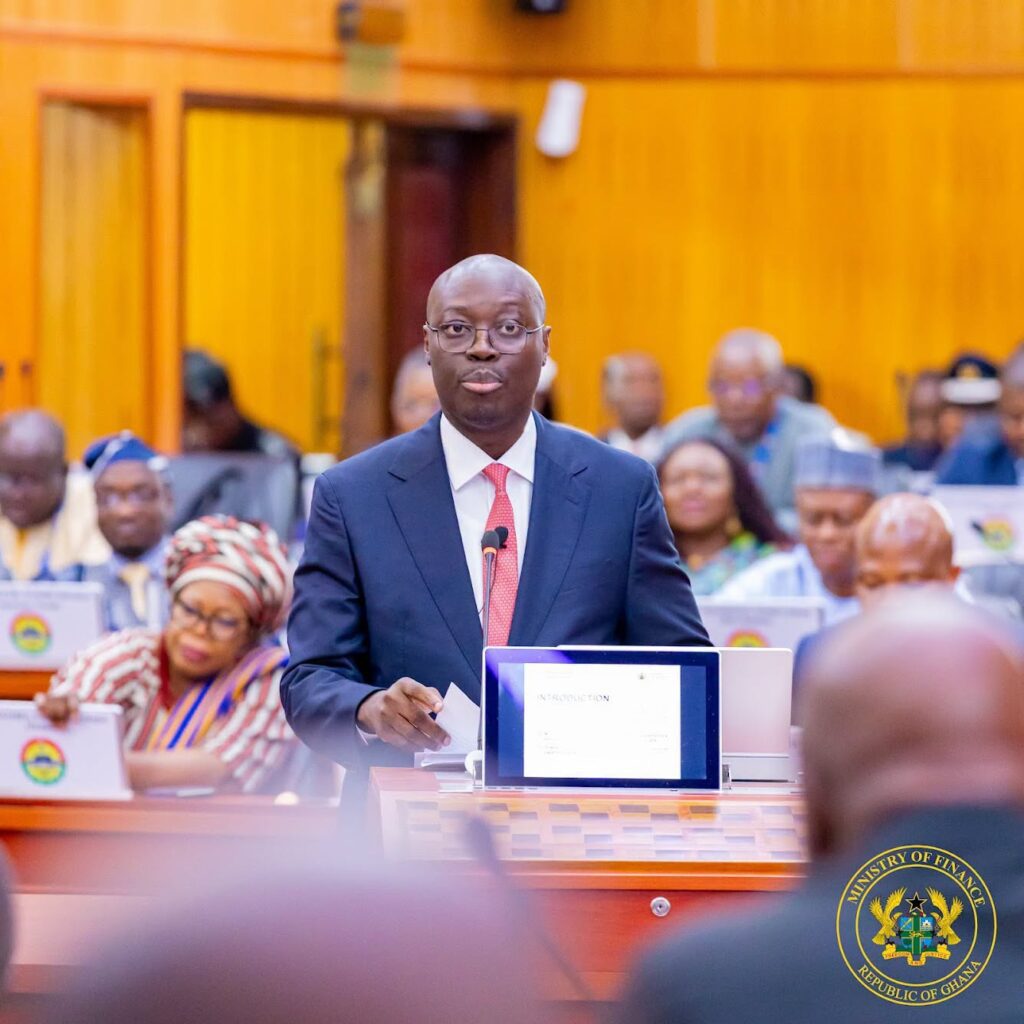
“I think that mainly the target and objective of both the 2025 and 2026 budgets was to seek to correct that. So the Finance Minister made it clear. So largely I’m impressed. I think that we are on track; we have a Finance Minister who cares not only about the numbers”.
Evans Senior, 1st Speaker
Evans defended the government’s prioritisation of fiscal discipline ahead of expanded spending, arguing that responsible debt management must precede any push for economic growth.
“You can’t be wallowing in debt and still decide to proceed to spend anyhow. You must firstly proceed to be able to now spur growth. So on that I said, I agree with you,” he said.
Moderate Improvement Acknowledged, But Jobs Remain the Priority
When asked whether he had personally experienced improvements in daily life, Evans Senior pointed to a moderate easing in the prices of goods and services compared to previous years, though he was clear that job creation remains the outstanding test of the government’s economic programme.
He credited government’s macroeconomic policies with delivering measurable results, while stressing that these gains must now show up in the job market.
“All the economic indicators are telling you that we are getting things right, and the Finance Minister himself recognised that. Now we look forward to see how that translates into tangible growth, in terms of the job sector, where we’re able to see numbers picking up”.
Evans Senior, 1st Speaker
Stronger Fiscal Discipline, But Limited Personal Impact
The second speaker, Najat, offered a more measured assessment, acknowledging improvements in government’s fiscal management while stressing that these gains had not yet reached her own daily experience.
“Compared to the previous administration, there appears to be stronger fiscal discipline, greater accountability in the management of public funds, and more transparency in communicating the country’s financial position”.
Najat, 2nd Speaker
She pointed to falling inflation and a temporary reduction in transport fares earlier in 2025 as early evidence that government policy was beginning to yield results. “The decline in inflation and the temporary reduction in transport fares earlier last year demonstrated that government policies were beginning to have a positive impact,” she said.
Stability Not Yet Reaching Ordinary Ghanaians
Despite these positive indicators, Najat was direct in stating that she had not personally felt significant improvement in her daily life, citing rising transport costs and stagnant private sector wages as ongoing challenges.
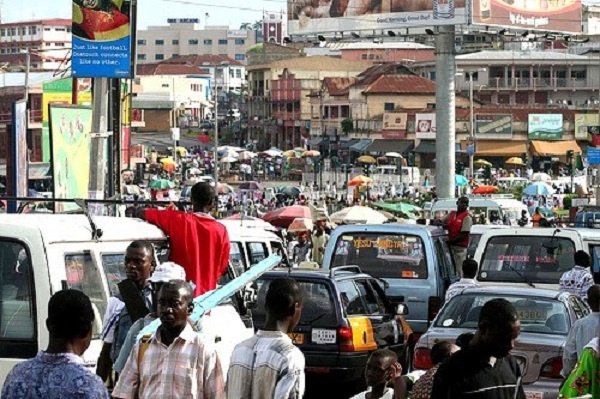
“Transport fares have increased again, businesses continue to raise prices at their own discretion and many workers in the private sector are still not earning wages that match the rising cost of living.”
Najat, 2nd Speaker
Enforcement, Not Policy, Identified as the Gap
Rather than criticising the substance of government’s economic policies, Najat argued that the real shortfall lies in weak enforcement mechanisms that prevent national-level gains from filtering down to individual households.
“Government should strengthen the implementation of its policies by ensuring greater compliance with labour standards, consumer protection measures and fair market practices”.
Najat, 2nd Speaker
She argued that stronger enforcement would help ensure that improvements reflected in national statistics eventually show up in lower living costs and better standards of living for ordinary citizens.
No Improvement Felt in Cost of Living
The third speaker, Thomas, offered the most critical assessment among the three, stating plainly that he had not experienced any meaningful relief in his day-to-day expenses despite the positive economic indicators cited elsewhere.

“Personally, I have not experienced any significant improvement in the cost of living. Prices of goods and services remain high, and many households continue to struggle to make ends meet”.
Thomas, third speaker
He argued that genuine economic recovery must be measured beyond national statistics, insisting that ordinary citizens’ lived experiences should serve as the ultimate benchmark for policy success. “Economic recovery should not only be reflected in national statistics but also in the daily experiences of citizens,” he said.
Youth Demand Jobs, Not Just Stability
Thomas called on government to take more concrete steps to ensure that reported economic gains translate into real improvements for citizens, placing job creation at the centre of his demands alongside other targeted interventions.
“The government should do more to ensure that the reported economic gains translate into real relief for the people. Greater efforts should be made to reduce the cost of essential goods, create sustainable jobs, support small businesses, improve salaries, and strengthen social intervention programmes”.
Thomas, third speaker
He closed with a pointed observation capturing the disconnect between official economic narratives and everyday realities. “The economy may be showing signs of recovery on paper, but many Ghanaians are still waiting to experience that recovery in their own lives,” he said.
Taken together, the three perspectives reveal a generation of young Ghanaians who broadly acknowledge that Ghana’s economy is stabilising, while remaining unconvinced that this stability has translated into the one thing they say matters most, jobs.
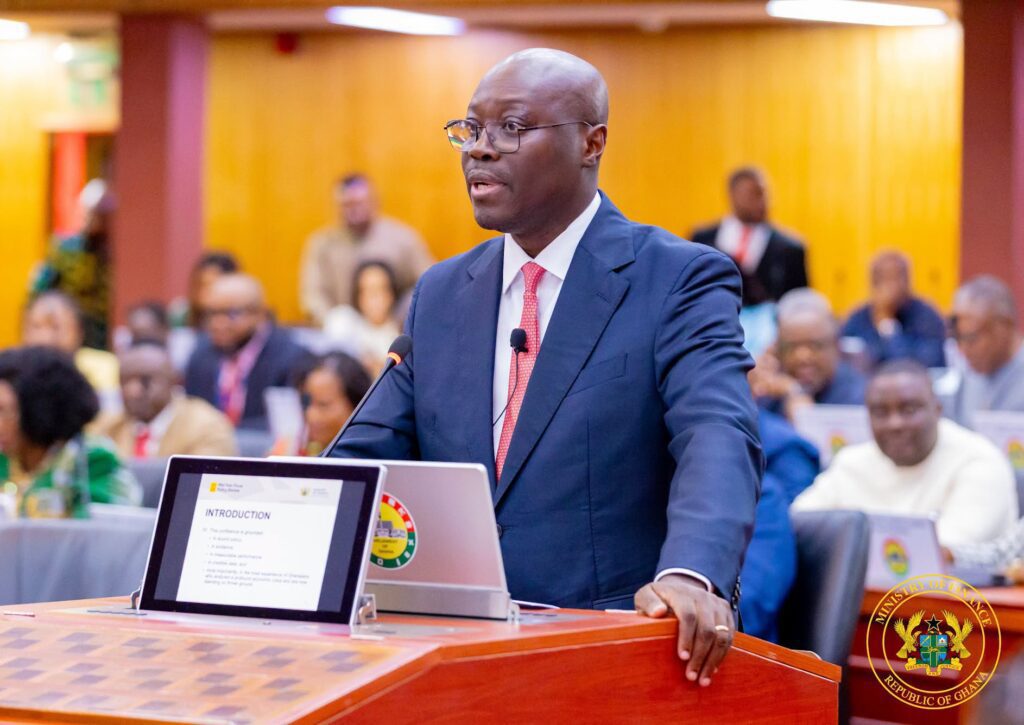
Whether framed as cautious optimism, measured acknowledgment, or direct frustration, all three voices converge on the same central demand: that the next phase of economic recovery must be measured not by growth figures or inflation data alone, but by whether young Ghanaians can find meaningful employment and feel genuine improvement in their daily lives.
As government continues implementing the policies outlined in the Mid-Year Review, these varied perspectives from young Ghanaians offer a grounded counterpoint to official economic narratives, highlighting the persistent gap between macroeconomic stability and the job creation that remains this generation’s most pressing demand.
READ ALSO: ECOWAS Donates $250,000 to Ghana for Flood Victims