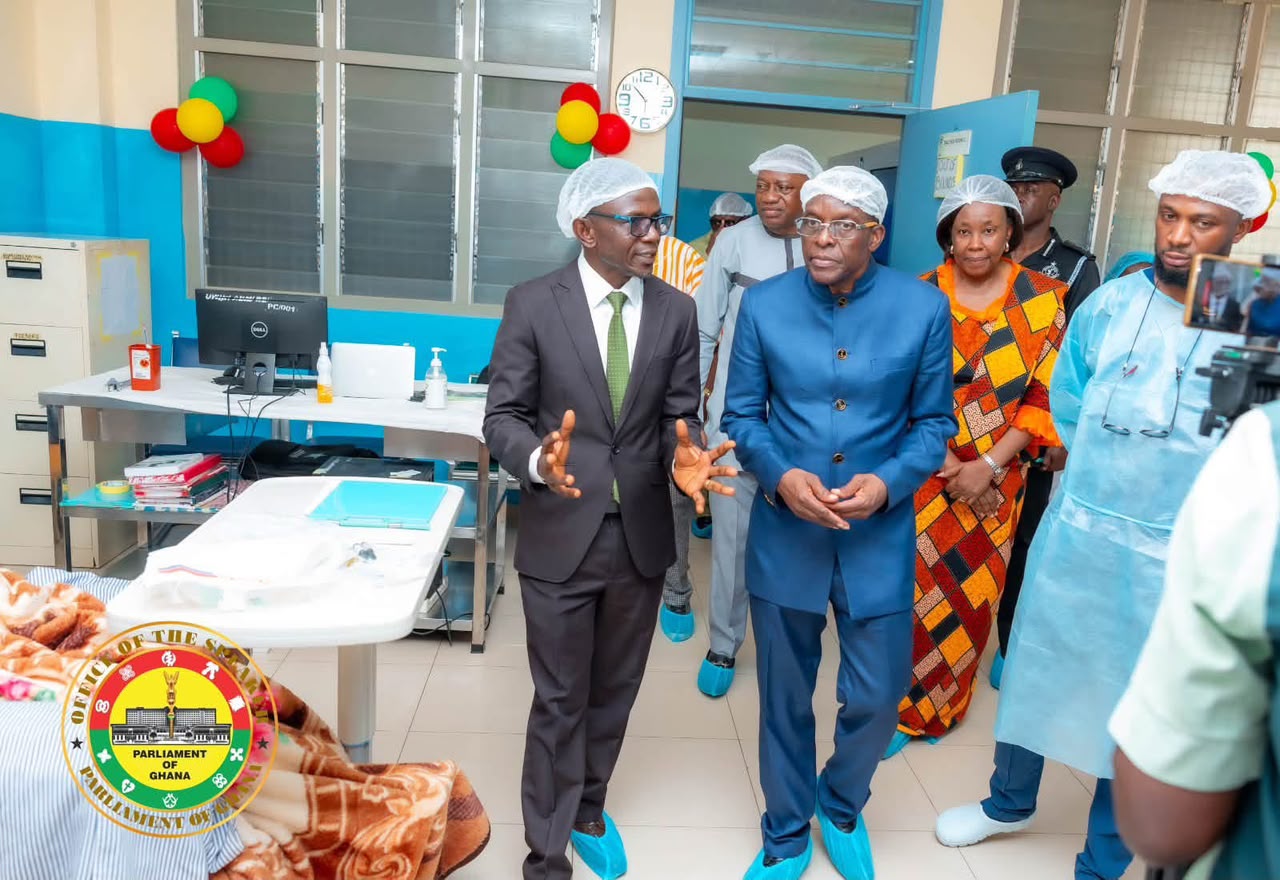
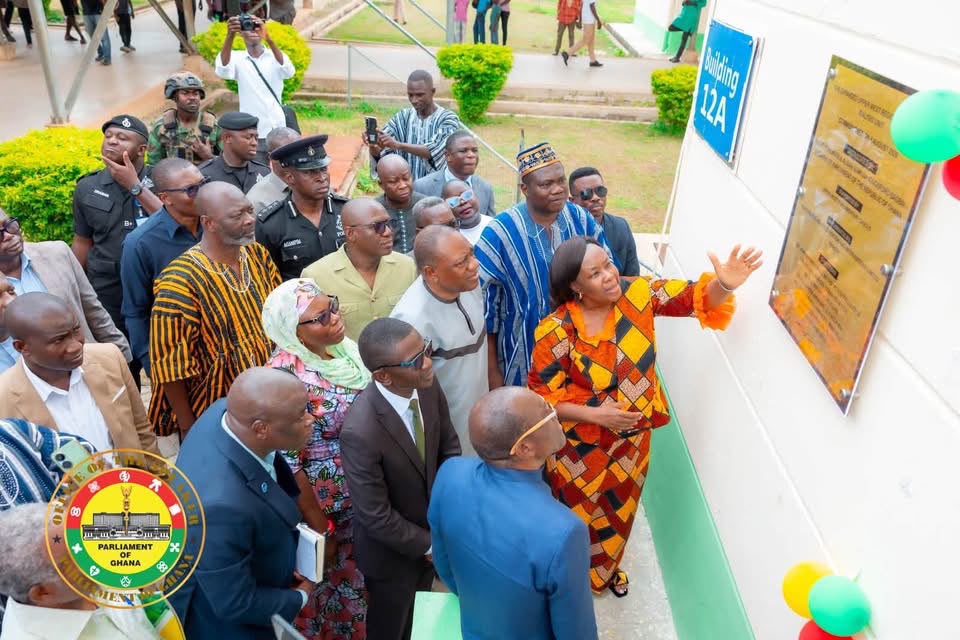
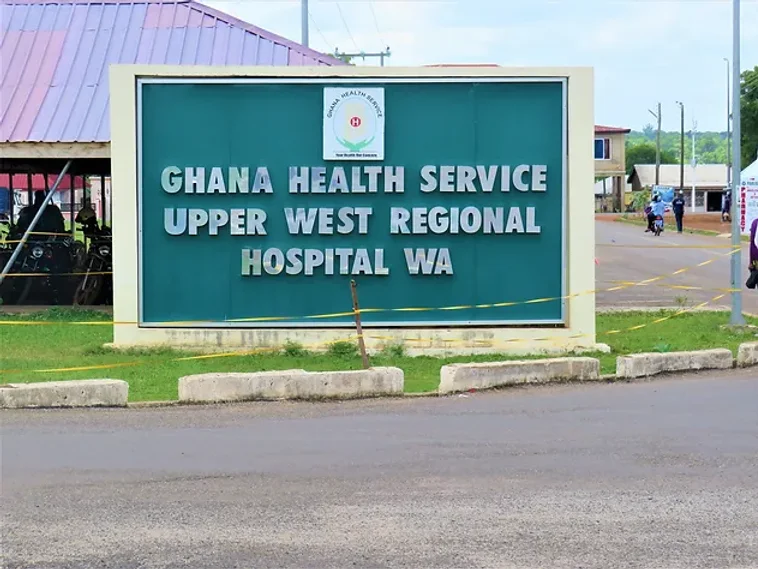
The Upper West Regional Hospital in Wa marked a historic milestone with the official commissioning of its expanded Dialysis Unit, an initiative spearheaded by Speaker of Parliament, Rt. Hon. Alban Sumana Kingsford Bagbin, who donated six state-of-the-art dialysis machines and recliners to the facility.
The donation was channelled through the Ghanaian-founded NGO, Sustainable Health Education and Interventions Limited (SHEILD), and represents a significant expansion of kidney care services available to residents of the Upper West Region, a part of the country that has long struggled with limited access to specialised dialysis treatment.
The commissioning drew together political leaders, health officials and residents eager to witness what many described as a long-overdue transformation in the region’s capacity to treat kidney disease locally.
Speaking at the commissioning ceremony, the Speaker, who hails from the region, was emphatic in framing the expansion as a matter of basic fairness rather than charity, insisting that access to life-saving treatment should not depend on where a person happens to live.
“This is not a political gesture. It is an act of service.”
Rt. Hon Bagbin
He stressed that healthcare is a fundamental right rather than a privilege reserved for residents of major cities, describing the new unit as a direct response to the significant financial and psychological hardships families in the region have endured while travelling long distances in search of dialysis treatment.
many families in the Upper West, he noted, the absence of adequate local dialysis services had meant repeated trips to Accra, each one carrying its own financial strain and emotional toll on both patients and their relatives.
Healthcare as a Right, Not a Privilege
For Speaker Bagbin, the commissioning carried deep personal significance, tracing back to his own firsthand experience of the region’s healthcare gaps. He recalled the painful reality of having to arrange for patients to be airlifted from the Upper West Region to Accra for dialysis treatment, a process fraught with delay, expense and, in some tragic cases, loss of life for patients who could not access care in time.
This personal history appeared to shape the urgency behind his advocacy for the expanded unit, transforming what might otherwise have been a routine infrastructure donation into what he described as a deeply personal victory tied to years of witnessing the human cost of inadequate regional healthcare access.
The commissioning ceremony brought together several key stakeholders whose collaboration made the expanded unit possible. The Speaker was joined by members of the Upper West Parliamentary Caucus, alongside representatives of SHEILD, hospital management led by Dr. Philip Baabiineh, and the hospital’s dedicated dialysis team under the leadership of Dr. Abednego Attoh.
Rt. Hon. Bagbin used the occasion to publicly commend each of these groups for their role in bringing the expanded facility to fruition, recognising that the project’s success depended not only on the donated equipment itself but on the sustained institutional cooperation required to integrate it effectively into the hospital’s existing operations.
Call for Maintenance and Long-Term Support
Beyond the ceremonial handover, Speaker Bagbin used his remarks to issue a direct appeal to hospital management, urging them to prioritise the proper maintenance of the newly commissioned equipment to ensure its long-term functionality and value to patients. He further pledged continued support for staff capacity building, signalling that his involvement with the facility would extend beyond the initial donation.
This emphasis on maintenance and training reflects a broader awareness that donated medical equipment often loses its impact over time without adequate technical support and skilled personnel to operate and sustain it, a challenge that has affected similar donations to public health facilities in the past.
By pairing the equipment donation with a clear commitment to ongoing staff development, the Speaker appeared intent on avoiding the common pitfall of well-intentioned health interventions losing their value once the initial fanfare of commissioning fades.
The expanded unit is expected to significantly ease the operational burden currently placed on the hospital’s dialysis team, who have had to manage patient demand with more limited equipment capacity prior to this expansion.
With six additional dialysis machines and recliners now in place, the facility stands to considerably increase the number of patients it can treat at any given time, reducing strain on both staff and the existing infrastructure that had previously struggled to keep pace with regional demand for kidney care services.
While the primary beneficiaries of the expanded unit are residents of the Upper West Region, the facility’s enhanced capacity is expected to extend its reach to patients from neighbouring areas as well, positioning the hospital as a stronger regional hub for kidney care services rather than a facility limited strictly to serving its immediate catchment area.
Model for Regional Healthcare Investment
The commissioned dialysis unit stands as a tangible symbol of what can be achieved when political leadership translates directly into concrete healthcare investment, offering a model that other regions facing similar access gaps may look to as a reference point for addressing their own healthcare infrastructure deficits.
For a region that has historically ranked among the more underserved in terms of specialised medical equipment, the expanded unit represents a rare and welcome departure from the pattern of centralised healthcare access that has long disadvantaged residents outside the country’s major cities.
Following the commissioning, hospital management and staff have been encouraged to maintain direct contact with the Speaker’s office to ensure the facility is utilised to its full potential going forward.
This ongoing engagement is intended to ensure the expanded unit continues delivering on its core promise, that residents of the Upper West Region and surrounding areas can access critical kidney care without being disadvantaged by their geographic location, a commitment Speaker Bagbin framed as central to the very purpose of the initiative.
READ MORE: Ministry of Education Directs GETFund Scholarships Through Ghana Scholarship Authority