Principal Mining Consultant and Head of Technical Communications at the West Africa Cooperatives Networks (WACoN), Agyarko M. Ebenezer, has urged Ghanaian policymakers to establish a dedicated mineral revenue stabilization fund to insulate the national economy from potential commodity market downturns.
The call comes as favorable international gold prices continue to drive strong export revenues for the country, prompting extractive sector experts to advocate for channeling current windfall receipts into a sovereign wealth mechanism before global market conditions shift.
“Given the current favourable gold price environment, Ghana should also consider establishing a dedicated mineral revenue stabilization mechanism. With gold prices at historically high levels, a percentage of exceptional mineral revenues could be saved in a stabilization or sovereign fund. Such a fund would provide financial support during periods of commodity price declines and help cushion the economy against external shocks.”
Agyarko M. Ebenezer,
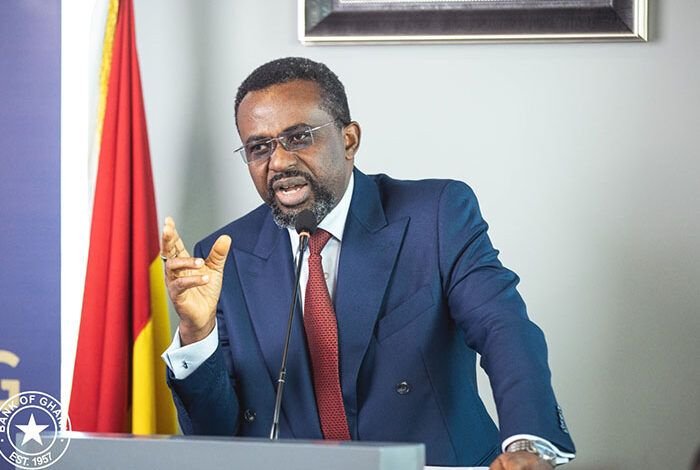
Expanding on this position, the recommendation aligns with warnings from multilateral institutions regarding Ghana’s structural economic vulnerabilities.
Recent macroeconomic consultations by the International Monetary Fund (IMF) highlighted that while high gold receipts have significantly underpinned Ghana’s ongoing recovery and external stability, long-term resilience demands urgent structural diversification.
The Bank of Ghana (BoG) has similarly emphasized the implementation of defensive fiscal policies to prevent severe balance-of-payments disruptions in the event of an inevitable correction in international bullion prices.
Mitigating External Vulnerabilities Through Strategic Mineral Diversification
Over-reliance on a single export commodity exposes the national economy to severe foreign exchange volatility, budget deficits, and reserve depletion whenever international prices dip.
Mr. Ebenezer argues that “mineral diversification, simply put, refers to the deliberate development, production and investment in a wide range of minerals to expand the country’s revenue base,” necessitating a decisive policy shift beyond traditional gold mining.

To build a broader resource foundation, state agencies must step up greenfield exploration.
The Ghana Geological Survey Authority is expected to expand its nationwide mapping and exploration programs to discover unexploited mineral deposits.
Meanwhile, new ventures in green transition minerals most notably the upcoming commercial launch of the Ewoyaa Lithium Project signal a major opportunity to diversify export earnings, capture market share in global battery supply chains, and attract international capital inflows.
Advancing In-Country Value Addition Across Bauxite, Manganese, and Critical Minerals
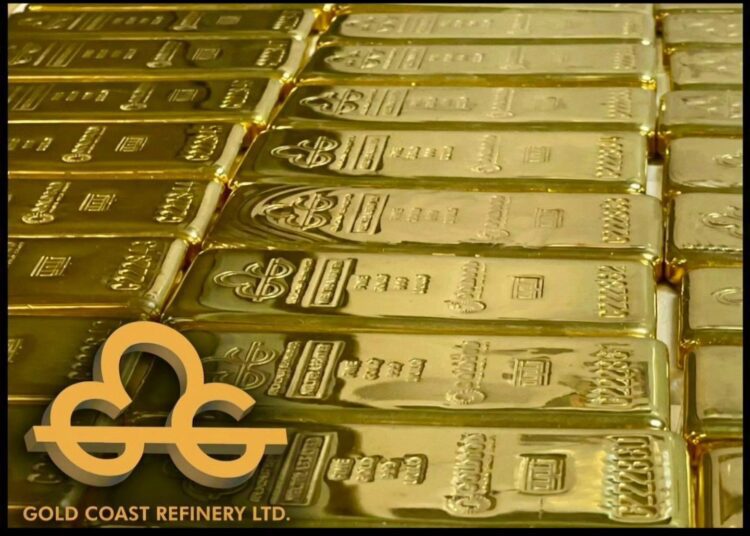
While recent strides in local gold processing through the Gold Coast Refinery and Royal Ghana Gold Refinery have increased in-country value retention, the broader extractive sector must transition away from exporting unrefined raw ores.
Value addition converts raw geological wealth into an industrial engine, protecting revenue yields even during broader market slumps.
In the bauxite sector, Ghana must establish a fully integrated aluminum industry anchored by a domestic alumina refinery.

By refining locally mined bauxite into alumina to feed the Volta Aluminium Company Limited (VALCO), the country can eliminate costly alumina imports, build a self-sustaining industrial value chain, and generate thousands of skilled manufacturing jobs.
Similarly, efforts by the Ghana Manganese Company (GMC) to construct a dedicated manganese refinery will allow the nation to process raw manganese ore into high-value derivatives, enhancing export value per ton.
Enforcing Local Content Frameworks and Retaining Mining Expenditures
Industrialization efforts must be matched by the strict enforcement of local content regulations to prevent capital flight from foreign mining operations.
Although the enactment of L.I. 2431 (Minerals and Mining Regulations, 2020) established mandatory procurement and employment guidelines via the Minerals Commission, practical economic leakage remains a major challenge.

For instance, out of every $100 million generated by a gold mine, as much as $40 million may be spent on imported equipment, $20 million on foreign contractors, and $10 million on expatriate compensation leaving barely $30 million circulating in the domestic economy.
Closing this gap requires aggressively upskilling Ghanaian firms to handle complex services, including structural engineering, heavy machinery maintenance, precision fabrication, logistics, and laboratory testing.
Retaining operational expenditure domestically ensures that rating upgrades from agencies like Fitch, Moody’s, and S&P translate into lasting domestic capital accumulation rather than transient export figures.
READ ALSO: It Was a Good Game, Medeama Coach Says After Friendly Win in Yammoussoukro