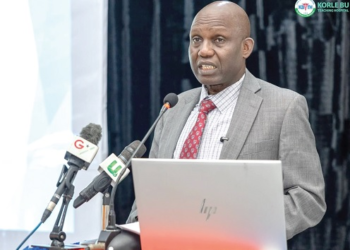
The Minister for Health, Hon. Kwabena Mintah Akandoh, has cautioned directors and senior officials within the health sector that any unauthorised alteration of approved postings could jeopardise their positions, warning that such conduct undermines the discipline required to run an effective health system.
He issued the caution during an engagement with Bishops of the Catholic Church in Ghana, where he placed strong emphasis on discipline, fairness, and strict adherence to administrative procedures as the health sector works to improve service delivery nationwide.
Hon. Akandoh explained that government is prioritising underserved regions and districts in the deployment of health workers, describing the move as central to ensuring equitable access to healthcare regardless of where a Ghanaian happens to live.
He tied this priority directly to his warning on postings, suggesting that when officials manipulate approved deployment arrangements, they risk undermining the very equity the policy is designed to achieve. During the engagement, the Minister took the opportunity to update the bishops on major government interventions currently underway in the health sector.
He referenced the Free Primary Healthcare Initiative, the National Health Insurance Scheme (NHIS), and the Ghana Medical Trust Fund, popularly known as MahamaCare, describing all three as central pillars of government’s strategy to widen access to quality healthcare for ordinary citizens.
He also used the platform to address progress on the Agenda 111 hospital projects, acknowledging candidly that the initiative has faced significant challenges, including funding constraints and delays that have left many of the facilities incomplete.

Rather than overstating progress, Hon. Akandoh was direct about the setbacks, noting that government is now concentrating its efforts on completing 35 priority projects to get them operational and delivering benefits to Ghanaians in the shortest possible time.
Appeal for Faith-Based Partnership
Beyond outlining government’s own interventions, Hon. Akandoh extended a direct invitation to faith-based organisations, including the Catholic Church, to partner with government in completing some of the outstanding health facilities on a non-profit basis.
He explained that under such an arrangement, government would provide the health professionals and other forms of support needed to make the facilities functional, while the church-affiliated institutions would help fast-track completion.
He acknowledged the significant role the Catholic Church already plays in healthcare delivery across the country, noting that in virtually every region, one can find at least one or two health facilities belonging to the Church.
“If you go to every region, you’ll find one or two facilities that belong to the Catholic Church.”
Minister for Health, Hon. Kwabena Mintah Akandoh
He described the Church as a significant stakeholder in the health space, one whose continued involvement government is keen to strengthen rather than take for granted.
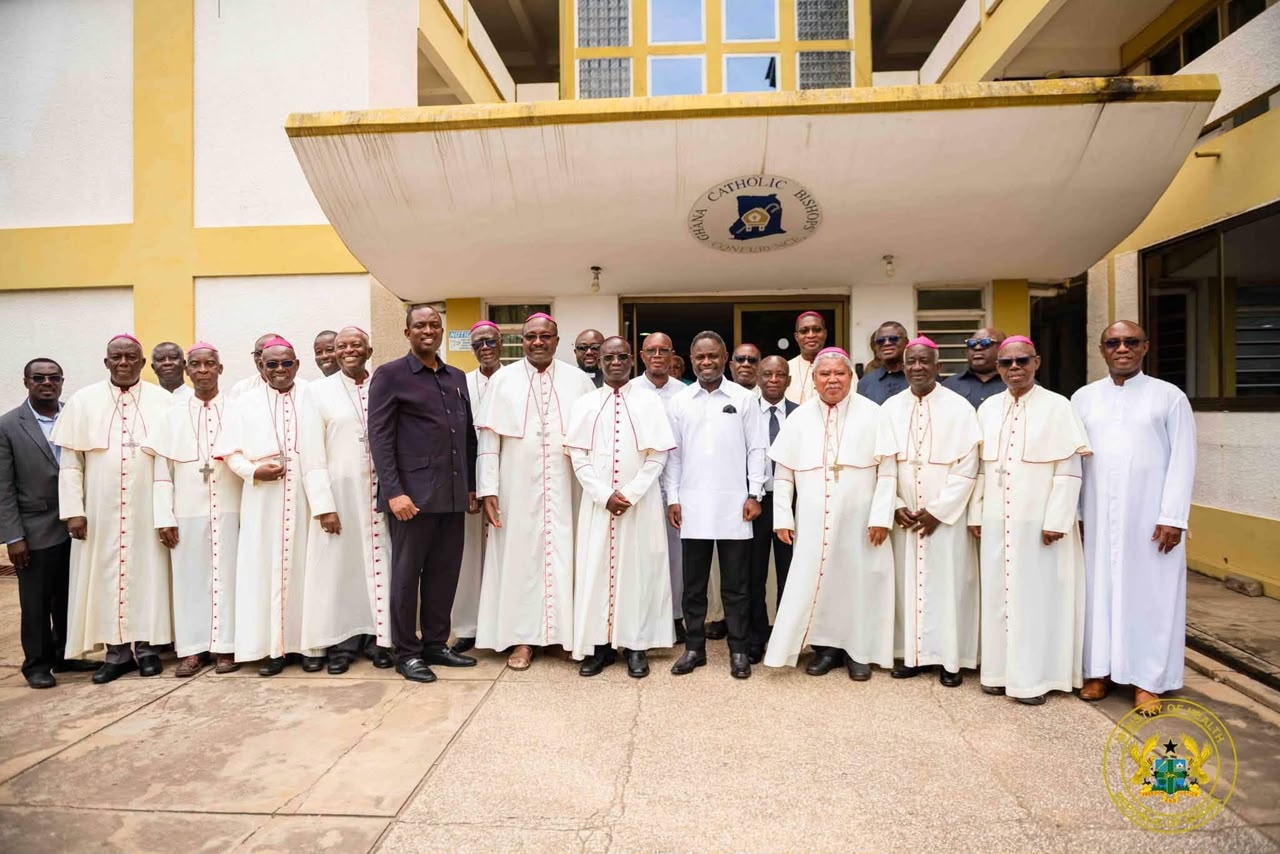
In response to the Minister’s appeal, the Bishops reportedly indicated their willingness to continue playing an active role in the facilities under their care, with several already having provided forms of assistance to government, including logistical support in some cases.
The bishops, for their part, also used the engagement to raise their own requests with the Ministry, appealing for continued government support as they work to sustain the facilities they operate.
Hon. Akandoh’s engagement with the religious leaders suggests that the partnership between government and faith-based health providers may deepen further as authorities look to lean more heavily on such collaborations to bridge existing gaps in the health system.
Broader Push for Discipline and Accountability
The Minister’s remarks on postings reflect a broader push by the Ministry to tighten administrative discipline within the health sector, an issue that has periodically resurfaced amid concerns about the management of health worker deployment nationwide.
By linking discipline directly to the equitable distribution of health workers, Hon. Akandoh appeared to be reinforcing the message that administrative order and access to care in underserved communities are closely connected, rather than separate policy concerns.
His caution to directors also suggests that the Ministry intends to enforce existing postings guidelines more strictly going forward, potentially signalling closer monitoring of deployment records across the country’s regional and district health directorates.
Strengthening Government-Church Collaboration
The engagement with the Catholic Bishops adds to a series of recent consultations the Ministry has held with various stakeholders as it works to shore up support for its healthcare agenda.

With the Catholic Church already a longstanding partner in health service delivery, particularly in parts of the country where government facilities remain limited, Hon. Akandoh’s overtures suggest the Ministry sees such partnerships as key to accelerating progress on stalled projects like Agenda 111.
Whether the pledges made during the meeting translate into concrete commitments remains to be seen, but the tone of the engagement points to a Ministry actively seeking to widen its coalition of partners, from religious institutions to development actors, as it works to address longstanding gaps in Ghana’s healthcare infrastructure and workforce distribution.
READ MORE: UGMC Breaks Silence on Michael Blackson’s Allegations About Mother’s Treatment