

The debate over fuel pricing in Ghana has taken a new turn, with Star Oil Chief Executive Officer Kwame Tieku calling for the National Petroleum Authority (NPA) to publish the tax contributions and net profits of individual Oil Marketing Companies (OMCs) alongside their market-share and sales-volume data.
The proposal, made on the Star Oil CEO’s social-media platform, shifts attention away from pump prices alone and toward the financial health and efficiency of petroleum retailers operating in Ghana’s deregulated downstream market.
Tieku argued that market-share data by itself does not provide enough information to assess whether companies are efficient, financially sustainable, or contributing proportionately to the public purse.
Policy must be grounded in data, not feelings.
Star Oil Chief Executive Officer Kwame Tieku
The intervention comes against the backdrop of a long-running industry dispute over the NPA’s minimum ex-pump price floor, which Star Oil has repeatedly criticised as a mechanism that can protect inefficient operators from competitive pressure.
From price war to transparency debate
Ghana’s downstream sector has been one of the most competitive in West Africa since the country adopted petroleum price deregulation in 2015.
The NPA later introduced a price-floor mechanism to prevent destructive undercutting and preserve market stability, a policy that remains strongly supported by the Chamber of Oil Marketing Companies (COMAC).
Tieku’s latest comments, however, move beyond the earlier argument that the price floor blocks lower pump prices.
His new contention is that regulators and the public need a fuller picture of industry economics.
According to the Star Oil CEO, an OMC that consistently charges high prices but records very low profits may be revealing operational inefficiency rather than competitive strength.
If an OMC charges the same prices as a highly profitable competitor and still reports weak profits, that points to a business-model problem, not a justification for regulatory protection.
Star Oil Chief Executive Officer Kwame Tieku
Why TotalEnergies was cited
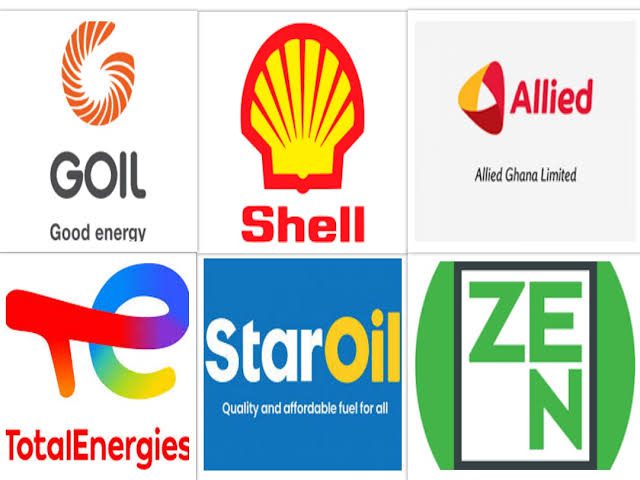
Tieku pointed to TotalEnergies Marketing Ghana PLC as an example of a company that typically maintains relatively high pump prices while remaining strongly profitable.
Publicly available financial statements support the view that TotalEnergies Ghana has remained one of the stronger profit performers in the downstream sector, benefiting from a broad retail network, commercial sales, lubricants, and other higher-margin business segments.
The implication of the comparison is not that high prices are inherently problematic.
Rather, it is that profitability can reflect operational efficiency, brand strength, network scale and business diversification rather than simply higher retail pricing.
GOIL complicates the picture
The argument becomes more nuanced when GOIL PLC is considered.
GOIL has also reported substantial profitability in recent published accounts, despite operating under the same regulatory framework and often competing aggressively on price.
This suggests that the relationship between pump prices and profitability is not straightforward.
Fuel retail margins are only one part of the equation.
Financing costs, storage infrastructure, commercial sales, inventory management, foreign-exchange exposure, and operational efficiency all influence final profitability.
The transparency gap
What is currently published by the NPA is mainly sales volumes, market share and product-distribution data.
What is not published in a standardised public format is: each OMC’s contribution to total industry taxes, net profitability, return on capital,
or comparative efficiency indicators.
That absence makes it difficult for consumers, investors and policymakers to determine whether price differences reflect cost structures, strategic positioning or inefficiency.
A more transparent downstream market would allow public debate to focus on evidence rather than assumptions about who is overcharging or who is being unfairly protected.
Star Oil Chief Executive Officer Kwame Tieku
Would publishing profits improve competition?
The proposal raises an important regulatory question.
In many jurisdictions, competition authorities and sector regulators publish detailed market-performance indicators, but they do not always disclose company-specific profit data unless it is already available through stock-exchange filings.
In Ghana, listed companies such as GOIL and TotalEnergies already publish audited financial statements, while many other OMCs remain privately held.
Requiring or publishing comparable profitability data for all operators would therefore represent a significant change in the transparency regime of the downstream sector.
Supporters could argue that it would improve accountability and expose inefficient business models.
Critics could argue that it risks revealing commercially sensitive information and could distort competition if not presented in a consistent and contextualised manner.
The deeper question: what is the price floor protecting?
The timing of the proposal is significant because it reopens the central unresolved issue in Ghana’s downstream market.
The NPA says the price floor protects competition, supply stability and smaller operators.
COMAC has also argued that the mechanism helps curb illegal fuel trade and predatory pricing.

Tieku’s challenge is different.
He is asking whether the floor may also be protecting inefficient operators that cannot compete effectively on cost or profitability.
That is a more sophisticated policy question than the earlier “remove the floor so fuel becomes cheaper” argument.
A useful challenge, but not a complete solution
The proposal deserves serious consideration, but it is not a complete answer to Ghana’s fuel-pricing debate.
Greater transparency would certainly improve the quality of public discussion.
However, pump prices are still heavily influenced by international product prices, exchange rates, taxes and levies, which together account for a large share of the final retail price.
Even a highly efficient OMC cannot fully escape those external drivers.
The more important contribution of Tieku’s proposal may therefore be conceptual rather than immediate.
It reframes the downstream debate around efficiency, profitability, tax contribution and market structure, not just the price displayed on the pump.
If the NPA were to publish a broader set of industry-performance indicators, whether through tax-contribution rankings, profitability bands, or efficiency metrics, it could help move Ghana’s petroleum-policy discussion from anecdote and social-media exchanges toward a more evidence-based assessment of who is creating value, who is merely surviving, and what kind of competition the regulator ultimately wants to preserve in the downstream market.
READ ALSO: BoG Unveils $12.9bn Shield for Cedi