United Nations has highlighted how a new generation of Indigenous leaders in Brazil is turning to culture, creativity and digital platforms to defend ancestral territories and confront the growing effects of climate change.
Across Brazil’s Indigenous communities, rising temperatures, prolonged droughts, devastating wildfires, disappearing food sources and the accelerating loss of ancestral lands are increasingly reshaping traditional ways of life. Yet alongside those challenges, young Indigenous voices are finding new ways to bring their experiences to wider audiences through social media, music, photography and dance.
Ahead of the United Nations International Day of the World’s Indigenous Peoples on 9 August, three young Indigenous leaders have shared their experiences of witnessing environmental changes in their communities and explained how they are using their platforms to challenge misinformation and draw attention to the climate crisis.
Among them are dancer and entrepreneur Marciele Albuquerque of the Munduruku people, singer-songwriter Kaê Guajajara of the Guajajara people, and photographer and communicator Cristian Wariu of the Xavante people.
The three are members of the UN’s Verified initiative, which works to counter climate-related misinformation and help audiences access reliable information about environmental threats.
Their experiences provide a window into how climate change is affecting Indigenous communities in Brazil, where environmental degradation is increasingly threatening traditional food systems, cultural practices and connections to ancestral lands.
For Marciele Albuquerque, the changes are particularly visible in the Amazon region where she grew up.
Albuquerque was raised in Juruti, in the Brazilian Amazon, where her childhood was closely connected to the surrounding forest and rivers. Swimming in rivers and collecting fruit near her village were once ordinary parts of life. But returning home now presents a markedly different reality.
“We can feel it’s getting hotter every year. The fruits are no longer as abundant as they used to be. We once found them close to the village, right in the forest. Now we have to walk much farther, and even then there isn’t the same quantity. Droughts have become extreme, and so have the floods.”
Marciele Albuquerque
Her account reflects a wider concern among Indigenous communities that environmental changes are undermining the ecosystems on which traditional livelihoods depend.
The disappearance of familiar food sources can have consequences far beyond nutrition. For communities whose knowledge, traditions and cultural practices are closely tied to the land, changes in forests, rivers and wildlife can also threaten the transmission of knowledge between generations.
The United Nations estimates that more than 370 million Indigenous people worldwide are already experiencing the impacts of climate change, with rising global temperatures placing additional pressure on communities that are often heavily dependent on natural ecosystems.
In Brazil, those pressures are also being felt in the Cerrado, where increasingly intense wildfires are disrupting Indigenous communities.
Cristian Wariu, who comes from the Parabubure Indigenous Territory in Mato Grosso state, has witnessed how the worsening fires are affecting the Xavante people and their food systems.
According to Cristian Wariu, “life has become increasingly unsustainable because these fires are now uncontrollable.”
They severely affect the Xavante people’s food chain, and that also makes it easier for foods that are not good for our people to enter our communities. One problem leads to another, and eventually it reaches our health.”
For Wariu, the response cannot be limited to traditional political advocacy. Communication itself has become a critical part of the struggle.
Indigenous Youth Turn to Digital Activism to Defend Ancestral Lands
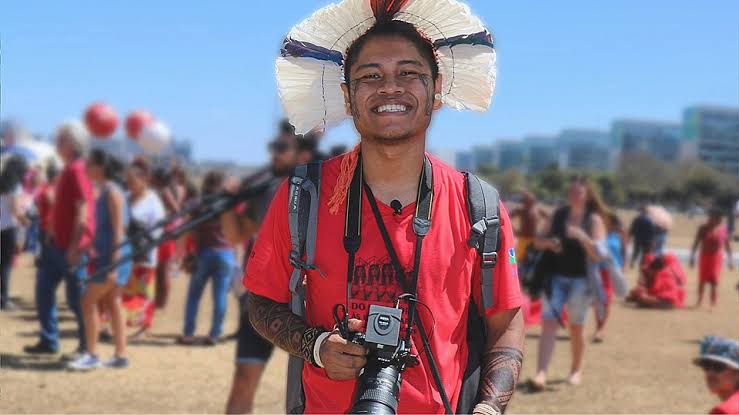
Indigenous youth are increasingly using internet platforms to combat narratives that marginalise Indigenous perspectives and raise awareness of their communities as environmental challenges worsen.
According to Wariu, his generation is carrying on the efforts of Indigenous leaders who battled for greater political representation and constitutional rights, but they are now doing so in a new setting: the internet sphere.
He indicated that, “demarcation is no longer just about politics. It’s also about occupying screens. One strengthens the other.”
“When I look at the Indigenous movement as a whole, I believe our generation’s greatest contribution has been communication.”
Cristian Wariu
The use of social media, photography and other digital platforms has allowed Indigenous communicators to reach audiences far beyond their territories. For communities historically separated from mainstream media spaces, the ability to tell their own stories directly can provide a powerful alternative to narratives produced by outsiders.
Marciele Albuquerque has experienced that power through both cultural performance and public visibility.

She became the first Indigenous woman selected as Cunhã-Poranga, the highest female cultural title at Brazil’s Parintins Folklore Festival, after winning the competition this year while performing with Boi Caprichoso.
Her victory performance, Guerreira das Lutas (Warrior of the Struggles), celebrates Indigenous peoples from across Brazil and reflects the wider role she sees herself playing as an Indigenous cultural figure.
“I’m not representing only my own people. I’m representing Brazil’s extraordinary Indigenous diversity.”
Marciele Albuquerque
For Albuquerque, cultural expression is inseparable from advocacy.
Music has similarly become a vehicle for Kaê Guajajara, whose work connects Indigenous identity, environmental destruction and displacement.
Born in Mirinzal in Maranhão state, Guajajara argued that the environmental crisis cannot be separated from a development model that has historically imposed itself on Indigenous communities.
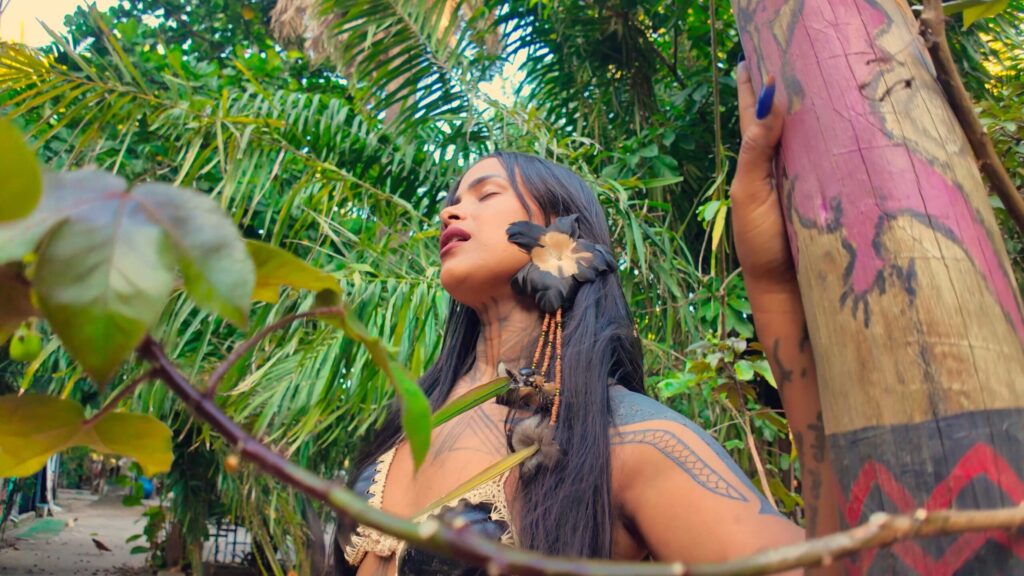
She also stresses the importance of combating misinformation so communities can better understand climate threats and prepare for their consequences.
Her music has evolved alongside the changing reality of Indigenous life. Traditional songs that once celebrated the beauty of nature and the relationship between communities and their territories are increasingly being used to document displacement, deforestation and the loss of ancestral lands.
According to Kaê Guajajara, “our traditional songs once celebrated the beauty of nature and our relationship with it.”
“Today, those same songs speak about our territories and about being forcibly removed from them. They tell the story of deforestation because we’re living it.”
Kaê Guajajara
Modern technology, according to Guajajara, does not necessarily indicate a break from Indigenous identity. Instead, it can offer another way for that identity to endure and evolve.
READ ALSO: Todd Blanche Confirmed As Attorney General