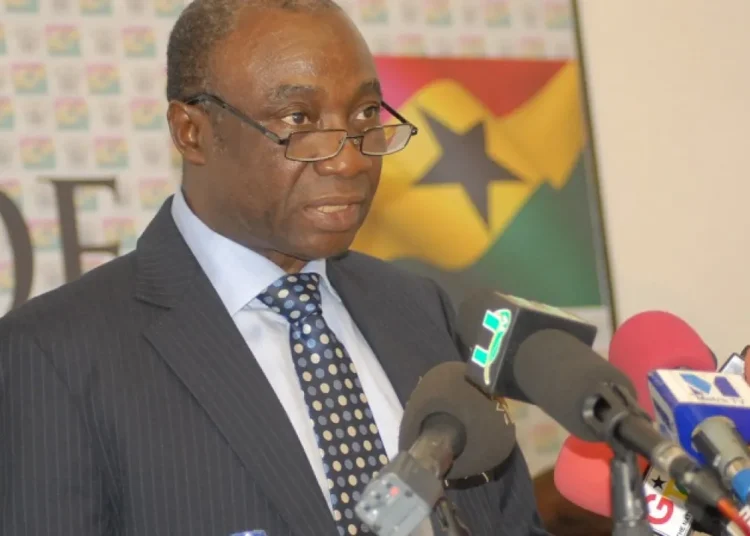
Former Minister of Power Dr Kwabena Donkor has denied any knowledge of the bribery allegations circulating on social media in the wake of the conviction of Asante Kwaku Berko in the United States, and has warned that any publication impugning his reputation will draw immediate legal action. The denial came in a press release issued on his instructions by Cavendish Chambers in Accra and signed by K. T. Hammond, Esq., Head of Chambers.
The statement responds to claims linking Donkor’s name to the case that ended on 6 August 2026 with a federal jury in Brooklyn convicting Berko, a former Goldman Sachs executive director and former Managing Director of Tema Oil Refinery, of paying more than one million dollars in bribes to Ghanaian officials over a power plant deal.
Mr Donkor accepts that he held the relevant ministerial office at the time, but says he never met Berko and never received or discussed any benefit. The chambers said it acted on Donkor’s instructions after his name became attached to the matter across various social media platforms.
“Our client instructs us in very crystal clear language that he has absolutely no knowledge about the allegations linked to him. He completely and emphatically denies any knowledge of a request or demand for any money as alleged”
K. T. Hammond, Esq., Head of Cavendish Chambers i
What Donkor accepts
The release does not dispute the underlying facts about his office or his ministry’s role in the transaction, and it says so directly. “Our client accepts that he was the relevant Minister at the time material. This is a matter of public record,” it reads.

It goes further on the negotiation itself, placing the deal in the context of the electricity crisis that dominated the period. The statement confirms that the State, through the Ministry of Power, negotiated with the Turkish energy company for the generation of electric power in Ghana, and describes the moment as one of national emergency.
“This was at the time when the country was going through the worst phase of what came to be termed as Dumso. It was a time of extreme power emergency when the country experienced extreme load-shedding”.
K. T. Hammond, Esq., Head of Cavendish Chambers
The Istanbul inspection trip
American prosecutors told the Brooklyn court that officials received bribes during an all-expenses-paid trip to Turkey to inspect equipment. The Cavendish Chambers statement addresses a trip to Istanbul, and characterises it as standard procurement practice.
According to the release, a technical team drawn from all the electric power stakeholders in the country travelled to Istanbul to inspect the equipment that was to generate the required electricity in Ghana. “This was and is the regular practice of pre-shipment inspection,” it said.
Five denials, stated point by point
The statement then sets out a series of specific rejections in what it calls very plain language. Mr Donkor states that he has never met Berko in his life, and that he never discussed any personal benefit of any value with Berko or with any other person on the matter.
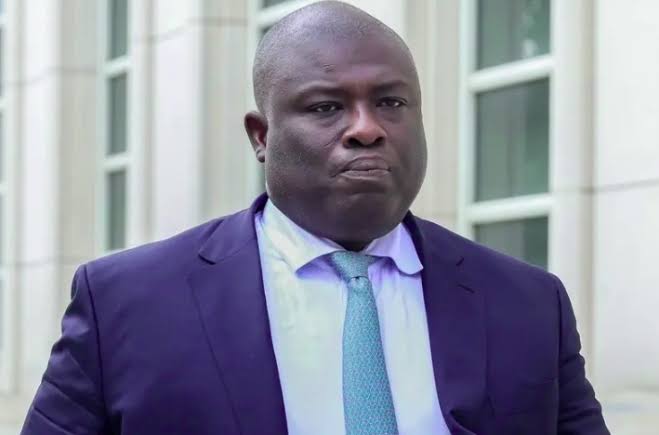
He also denies authorising anyone to hold such discussions for him. The release states that he “never received any money in any denomination or any personal benefit of any value from Mr Asante Berko or any other person.”
The final denial shifts responsibility outward. Anyone who may have made a criminal demand in his name, the statement says, “did so for that person’ or persons’ own benefit.”
Disputing what the evidence shows
Two paragraphs of the release turn to the trial record itself. The chambers said its client does not understand that any evidence was led in the United States trial linking him personally with demanding or receiving money, in cedis or dollars, or anything of value.
The statement also rejects any inference drawn from testimony about intermediaries seeking funds. It says Mr Donkor does not accept that evidence of other persons claiming they required money from their principals for the benefit of a “Senior Ghana Official” or any other title holder amounts to evidence of criminality or wrongdoing against him.
That distinction matters to how the case has been reported in Ghana. Public filings and courtroom accounts in the United States have described bribes reaching a Minister of Power, a senior adviser, members of Parliament, regulators and equipment inspectors, without naming individuals in the documents released so far.
A warning to publishers
The release closes with an instruction aimed squarely at Ghanaian media and social media users. It notifies the general public that any publication or statement of any kind that runs contrary to the position stated, and that seeks to impugn the reputation and integrity of the client, will result in immediate legal proceedings.
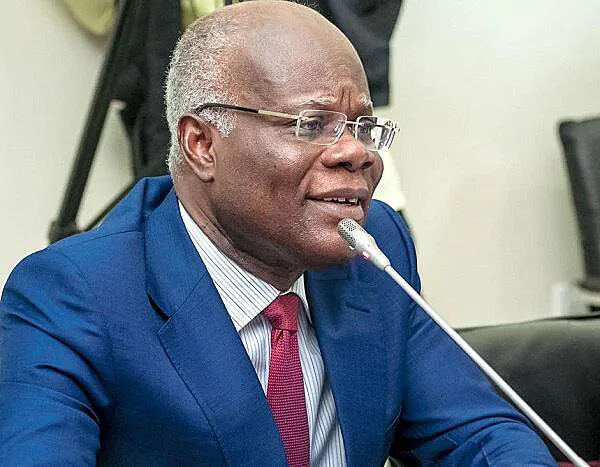
No Ghanaian official has been charged in connection with the scheme. Berko’s conviction, returned on all counts covering conspiracy to violate the Foreign Corrupt Practices Act, violating that Act, and money laundering conspiracy, establishes his own criminal liability rather than the guilt of any Ghanaian named in public commentary.
Deputy Attorney-General Dr Justice Srem Sai has said the Attorney-General is engaging United States authorities over the matter. The Office of the Special Prosecutor has separately confirmed that it supplied investigative and evidentiary assistance to the Federal Bureau of Investigation through Ghana’s mutual legal assistance framework.
Berko faces a maximum of thirty years in prison and will be sentenced on 10 November 2026. Until Ghanaian prosecutors act on the evidence gathered in Brooklyn, the officials described in the American record remain unnamed in any charge sheet at home, and the denials now entering the public domain will stand unchallenged in law.
READ ALSO: “High-life is now globally recognized as a heritage Ghana gave to the world”- Hon. Abla Dzifa Gomashie