
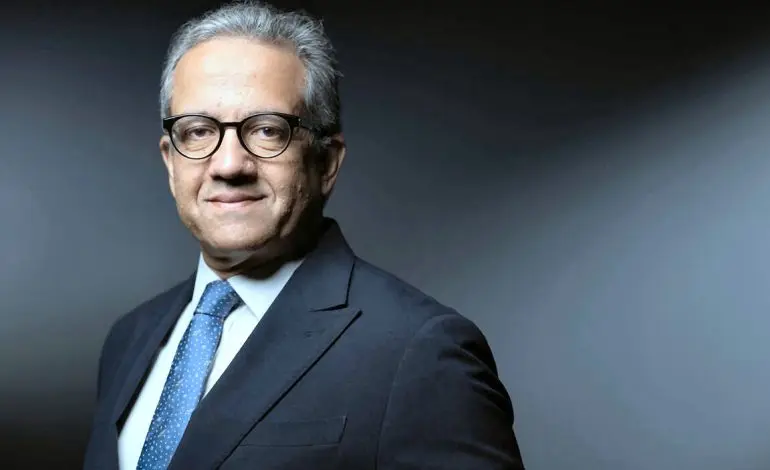
UNESCO has reaffirmed its commitment to Ukraine’s recovery and the protection of its cultural heritage as Director-General Khaled El-Enany makes his first official visit to the country, pledging continued international support for communities and institutions affected by the war.
The ongoing conflict has placed Ukraine’s cultural heritage at a critical juncture, with several historically significant sites continuing to face destruction and damage. One of the affected landmarks is the Kyiv-Pechersk Lavra, a UNESCO World Heritage site that was significantly damaged in a reported strike on 15 June 2026.
The historic monastic complex, which is marking its 975th anniversary, has deep religious and cultural significance for Ukraine and is recognised internationally as part of the World Heritage property “Kyiv: Saint-Sophia Cathedral and Related Monastic Buildings, Kyiv-Pechersk Lavra,”
Addressing a ceremony marking the anniversary, El-Enany pledged that UNESCO would continue mobilising its expertise and international partners to protect and restore the site.
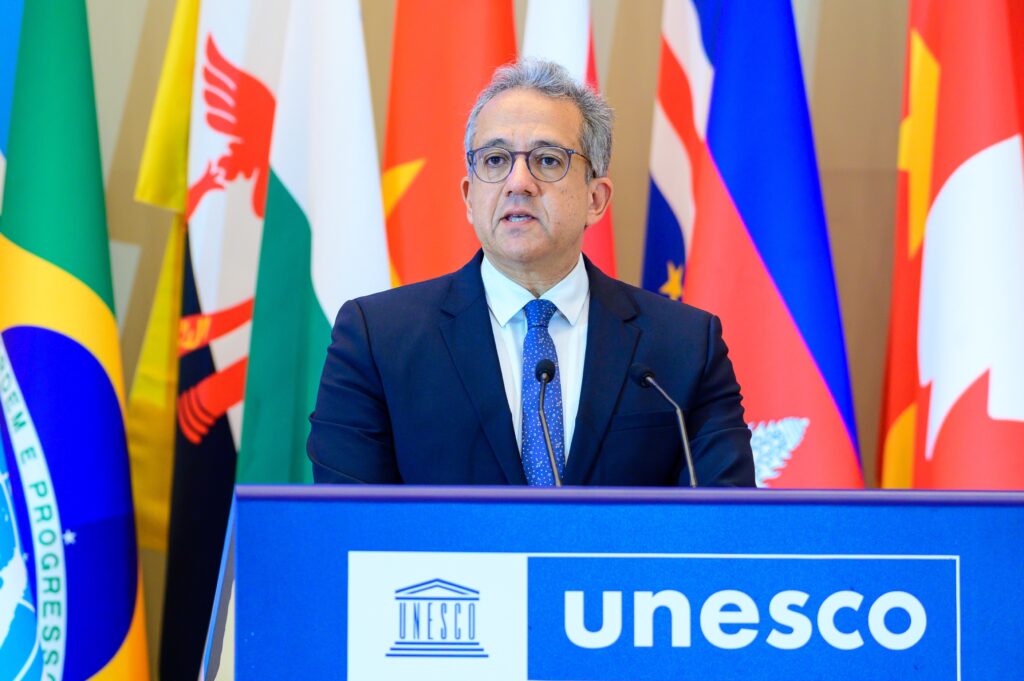
“The Kyiv-Pechersk Lavra carries exceptional importance for the people of Ukraine, and for humanity as a whole. Its protection is a responsibility shared by the international community, and UNESCO will continue mobilizing its expertise and partners to safeguard and restore this extraordinary World Heritage site.”
Khaled El-Enany
The Director-General also visited the Lavra and reviewed ongoing work at the Dormition Cathedral, one of the complex’s most significant structures. The visit provided an opportunity to assess the scale of the damage and the emergency measures already undertaken to prevent further deterioration.
A UNESCO assessment completed in July found extensive damage to the cathedral, including destruction affecting more than 80% of its roof and parts of its upper structures.
Although emergency interventions have helped stabilise the building in the immediate aftermath of the damage, UNESCO experts have identified several urgent measures that must be completed before comprehensive restoration can begin.
These include stabilising the north-eastern dome drum and other damaged architectural elements, securing affected masonry and cladding, and installing temporary protection against exposure to weather.
The organisation said further structural investigations and detailed project designs would also be necessary to prepare for the permanent reconstruction of the roof and the long-term consolidation of the cathedral.
To support the emergency phase, UNESCO has announced USD 100,000 from its Heritage Emergency Fund for urgent stabilisation measures at the Dormition Cathedral.
Switzerland has separately committed USD 732,000 through UNESCO to support the preparation of full design documents for reconstruction of the cathedral’s permanent roof, as well as emergency consolidation works.
Since the escalation of the conflict following Russia’s full-scale invasion in February 2022, UNESCO has mobilised USD 79 million through its partners for Ukraine’s recovery.
UNESCO Exxpands Ukraine Support as War Threatens Key Sectors
UNESCO’s response in Ukraine extends well beyond the preservation of historic buildings, with the organisation working across several sectors to address immediate humanitarian needs while helping create conditions for longer-term recovery.
In education, UNESCO has provided more than 58,000 Chromebooks to teachers and learners and supported the training of more than 77,000 educators in digital pedagogy.
The organisation has also provided psychosocial assistance to more than 170,000 children, highlighting the significant psychological consequences of prolonged conflict and disruption to education.
The safety and resilience of journalists have similarly become an important component of UNESCO’s response. More than 5,100 journalists have received support through safety training, equipment, grants and psychological assistance as media professionals continue to work under the pressures created by the war.
The cultural sector has also received extensive assistance. UNESCO has worked with more than 2,500 Ukrainian cultural professionals and contributed to the rehabilitation of cultural sites while establishing the Lviv Culture Hub to strengthen cultural resilience.
The organisation has also been working with researchers and scientific institutions to reinforce the resilience of Ukraine’s science sector, recognising the importance of maintaining research capacity during the conflict and supporting the country’s eventual reconstruction.
At the Kyiv-Pechersk Lavra, UNESCO is combining emergency conservation measures with advanced documentation techniques. With financial support from the Government of Japan, the organisation is conducting a 3D laser scan and digital survey of the Dormition Cathedral.
The survey is expected to create a precise digital record of the damaged structure, providing technical information that can guide emergency stabilisation, conservation and eventual restoration.
The site has been particularly important to UNESCO’s heritage protection efforts because the Kyiv-Pechersk Lavra has been on the World Heritage List since 1990. Since 2023, the property has also been included on the List of World Heritage in Danger and granted provisional enhanced protection under the 1999 Second Protocol to the 1954 Hague Convention.
The enhanced protection reflects the international significance of the property and the heightened risks facing cultural heritage during armed conflict.
According to UNESCO future work at the Lavra would continue in cooperation with Ukrainian authorities and heritage professionals and would follow international conservation standards aimed at protecting the property’s Outstanding Universal Value.
READ ALSO: MIIF Advances Steps to Counter Mining Sector Cyber Threats