
Ghana’s petroleum story is increasingly becoming a gas story, with the Ghana National Petroleum Corporation’s 2025 results showing that gas commercialisation has overtaken crude oil as the Corporation’s most important source of standalone revenue.
GNPC’s standalone revenue rose 2.92% to US$1.45 billion in 2025, despite weaker crude oil performance.
The decisive shift came from gas, which generated US$952.38 million, representing 65.6% of standalone revenue, up from 62.7% the previous year.
Crude oil revenue, by contrast, fell 5.08% to US$499.42 million.
That change matters beyond GNPC’s balance sheet.
For Ghana, gas sits at the intersection of petroleum revenue, electricity generation and industrial development.
The stronger gas contribution therefore suggests that the commercial value of the country’s petroleum resources is gradually moving beyond the traditional model of extracting crude, lifting barrels and earning revenue from oil sales.
Gas is Reshaping GNPC’s Revenue Base
GNPC’s own account of 2025 points to higher gas sales volumes, improved pricing and an expansion of gas commercialisation activities as the main drivers of the increase.
The Corporation has also been pursuing a broader customer base outside power generation, including industrial gas markets.
“Gas revenue rose to US$952.38 million, accounting for 65.6% of the Corporation’s revenue.”
Kwame Ntow Amoah, Chief Executive Officer, GNPC.
The strategic significance is clear: Ghana needs more value from its gas resources at a time when the power sector continues to depend heavily on gas-fired generation.
Indigenous gas can reduce exposure to imported fuels and provide a more predictable feedstock base for thermal power plants, provided production, processing, transportation and payment systems remain reliable.
The 2025 report shows that domestic gas exports reached an average 336 million standard cubic feet per day, exceeding GNPC’s annual target of 325 MMscf/d.
Natural gas production, meanwhile, reached 273,780 MMscf during the year, although that remained below the 2024 record.
Commercialisation Must Translate into Stronger Energy Security
GNPC is also attempting to make the gas business commercially broader.
A gas sales agreement with Wangkang Ghana Limited is expected to supply about 8 MMscf/d and could generate up to US$1 million in monthly revenue once supply begins.
Discussions have also advanced around gas for a proposed CNG facility in Tema and additional supply for power generation in the Tema Free Zones Enclave.
Another important commercial development was GNPC’s renegotiation of the Jubilee Foundation Volume Gas Sales Agreement.
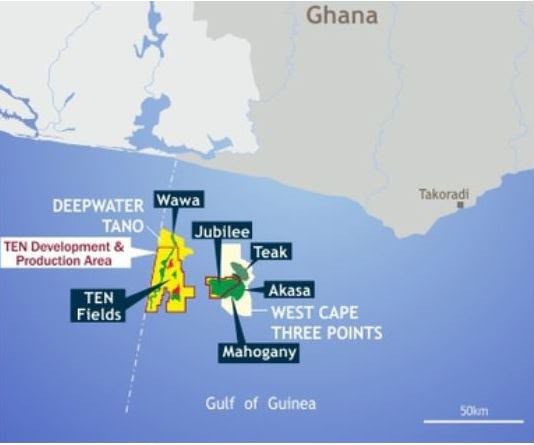
The Corporation says the new arrangement is expected to reduce the gas price to US$2.50/MMBtu, subject to inflation escalation, while increasing contracted volumes from 100 MMscf/d to 130 MMscf/d.
The reduction is linked to the ratification of petroleum agreement extensions.
That is arguably one of the more consequential developments buried in the financial and operational details of the report.
GNPC Faces The Challenge of Turning Growth Into Value
Lower-cost domestic gas can improve the economics of Ghana’s thermal power generation, but the benefit only materialises if gas reaches generators consistently and the electricity value chain can pay for it.
The report itself exposes that tension.
GNPC identifies difficulties with ECG collections as a continuing risk, although it says collections improved through engagement under the Cash Waterfall Mechanism.
The broader financial picture is nevertheless stronger.
GNPC’s group revenue reached US$1.64 billion, a 3.66% increase from 2024.
The important takeaway is that gas is no longer simply an adjunct to Ghana’s oil industry.
It is becoming a central commercial asset in its own right.
The challenge now is to ensure that the growing value of gas translates into cheaper and more reliable energy for power producers and industry, stronger cash flows across the gas value chain and greater resilience for GNPC itself.
If those links remain weak, higher gas revenue could coexist with persistent energy-sector financial stress.
READ ALSO: Cedi Recovery Could Gain Further Ground, Expert Projects as Forex Demand Cools