UN High Commissioner for Human Rights Volker Türk has called for restraint and an immediate de-escalation of tensions in Yemen following a series of deadly attacks that have killed at least 17 people in government-controlled areas since 6 August. Türk urged all parties to protect civilians and avoid further escalation as violence attributed to the Houthi group, formally known as Ansar Allah, continues to raise concerns over the humanitarian situation.
Türk’s warning comes amid a renewed escalation in violence that threatens to further destabilise a country already grappling with years of armed conflict, mass displacement, food insecurity and a severe humanitarian crisis.
According to the United Nations, two additional casualties were reported in opposition-controlled areas in late July, highlighting the continued risks facing civilians across Yemen’s fragmented political and military landscape.
The latest violence has included missile and drone strikes against civilian areas and infrastructure, with attacks reported in Ma’rib and Ta’izz governorates as well as along the strategically important Red Sea corridor.
“I call on all parties to de-escalate tensions and spare the Yemeni people from further misery. The Yemeni people have already suffered way too much from the devastating legacy of years of conflict, displacement and humanitarian crisis.”
Volker Türk
The appeal follows a series of attacks that have caused civilian deaths and injuries while damaging infrastructure considered essential to the country’s fragile economy and humanitarian response.

On 7 August, an Ansar Allah missile struck the Jaw al-Naseem camp for displaced people in Ma’rib, injuring six civilians, including a child.
Two days later, missile and drone attacks struck Al-Mokha port in Ta’izz governorate, killing three port workers and injuring four others.
The UN human rights office is also verifying reports of further attacks on the port on 14 and 15 August that may have resulted in additional casualties.
According to a UN report, fuel storage facilities and a residential compound at the Saudi field hospital in Mokha were among the civilian sites reportedly hit.
The attacks have added pressure to a humanitarian system already struggling to meet the needs of millions of Yemenis.
The violence has also extended to one of the world’s strategically important maritime routes. A separate attack on a cargo ship in the Bab el-Mandeb Strait on 11 August reportedly killed four crew members three Pakistanis and one Indonesian while injuring several others, according to UN human rights spokesperson Shabia Mantoo.
The incident has heightened concerns over the broader regional and international implications of the conflict. The Bab el-Mandeb Strait connects the Red Sea with the Gulf of Aden and serves as a critical passage for international commercial shipping.
Any sustained disruption to maritime traffic through the waterway could have consequences for global trade while further complicating the delivery of humanitarian supplies to Yemen.
UN Warns Renewed Violence Could Deepen Yemen Crisis
Yemen’s latest violence is unfolding against the backdrop of one of the world’s most severe humanitarian emergencies.
The country’s political and security crisis, which erupted in 2011 and developed into a devastating armed conflict, has displaced millions of people, weakened state institutions and left much of the population dependent on humanitarian assistance.
The Houthi group currently controls roughly one-third of Yemen’s territory but holds sway over a majority of the country’s population, including the capital, Sanaa, and the strategic Red Sea port of Hodeidah.
The group exercises de facto authority in the areas under its control, operating its own administration and security services, although it is not internationally recognised as Yemen’s government.
International recognition instead rests with the Saudi-backed Presidential Leadership Council, which is based in Aden.
The divided political landscape has made the search for a lasting settlement increasingly complicated, with rival authorities and armed groups maintaining competing interests while civilians continue to face the consequences of prolonged instability.
The humanitarian situation remains particularly severe. At least 18 million Yemenis are currently food insecure, while around 20 million people are estimated to require humanitarian assistance. Any further damage to ports, fuel facilities, hospitals and other civilian infrastructure could make an already difficult situation considerably worse.
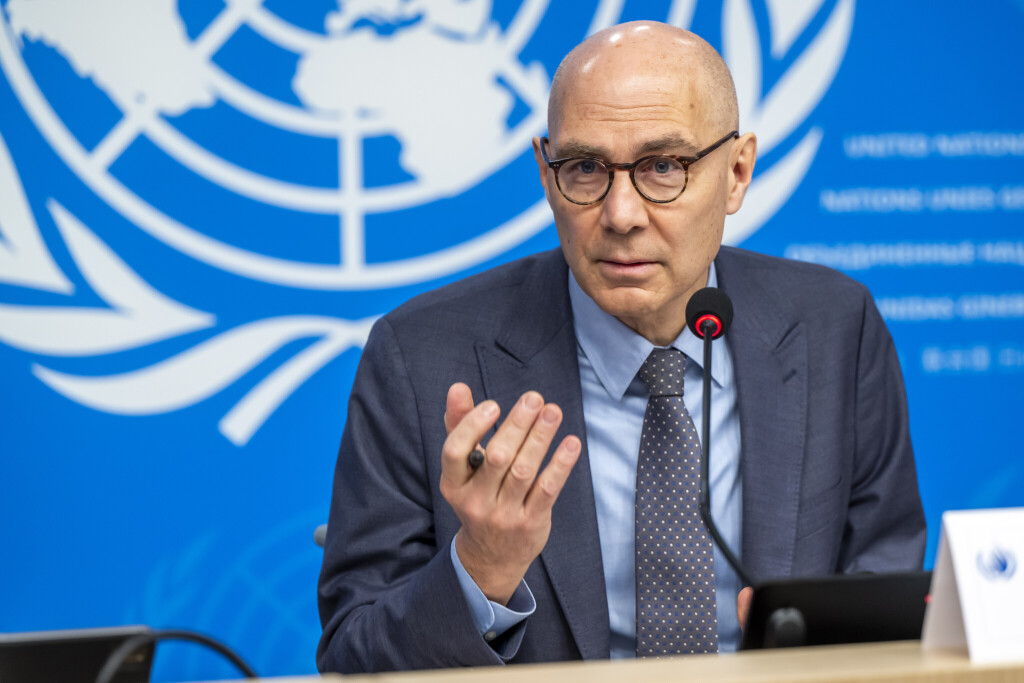
Türk warned that attacks against civilian infrastructure could deepen existing humanitarian needs and increase the pressure on vulnerable communities.
“It is critical that all parties abide by international humanitarian and human rights law. They must refrain from attacks against civilians and civilian objects and take all feasible precautions to avoid civilian deaths and injuries, and damage to civilian objects.”
Volker Türk
The UN Rights Chief stressed that the continued attacks must stop.
Mantoo similarly warned that the latest developments could threaten the relative calm that has existed in parts of Yemen since 2022.
“We urge all parties to halt immediately any actions that risk returning Yemen to full-scale conflict.”
Shabia Mantoo
The warning comes as the United Nations continues to monitor the broader security implications of the Houthi movement’s activities.
UN Special Envoy for Yemen Hans Grundberg recently reported to the Security Council that Houthi attacks against commercial shipping posed a threat to global trade and endangered Yemen’s fragile truce.
The maritime attacks have expanded the consequences of Yemen’s conflict beyond its borders, raising concerns among countries dependent on the Red Sea shipping route while adding another layer to an already complex regional security environment.
Meanwhile, reports indicate that forces of the Yemeni Government carried out nearly 200 strikes against Houthi positions over a 24-hour period, killing and wounding dozens of people and destroying military equipment and weapons depots.
The reported counterattacks have intensified fears that the latest cycle of violence could become self-perpetuating, with attacks triggering retaliation and retaliation creating conditions for further escalation.
READ ALSO: Minority Signals Looming Scandal in GoldBod’s Operation