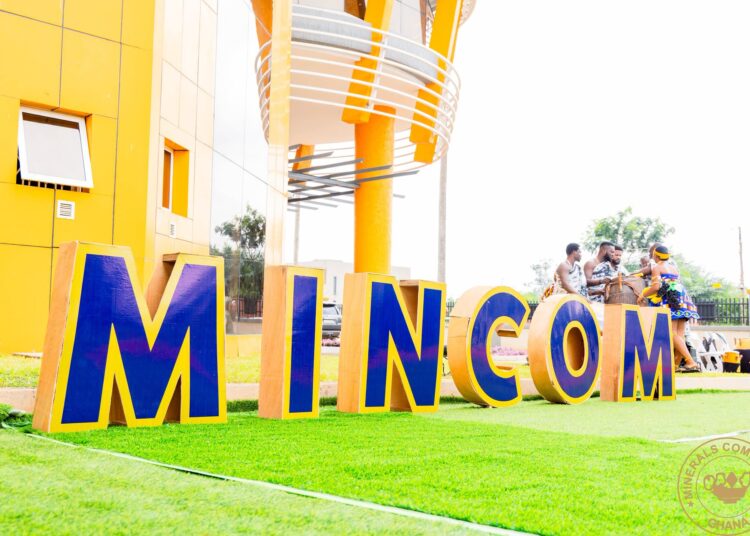
The Minerals Commission (MinCom) has commissioned its new Kumasi Regional Office in the Ashanti Region, marking a significant milestone in its drive to decentralise regulatory services and strengthen minerals governance across Ghana.
As the primary state regulator of the nation’s rich extractive sector, the Commission’s deployment of top-tier infrastructure directly into the heart of the country’s mining belt addresses decades-old logistical challenges that have hampered swift administrative oversight.
Functioning as an integrated modern complex, the landmark installation serves as a central hub designed to consolidate regulatory compliance, permit processing, technical support, and environmental monitoring under a single administrative umbrella.
By establishing this dedicated regional footprint, the regulatory body seeks to transform how state institutions engage with commercial mining conglomerates, artisanal small-scale operations, and host mining communities throughout the country.
“The Chief Executive Officer of the Minerals Commission, Mr. Isaac Andrews Tandoh, stated that the new facility represents a tangible manifestation of a new era in minerals governance, one defined by accessibility, efficiency, transparency and sustainable development. He noted that the office will reduce travel time and associated costs for stakeholders, facilitate faster processing of applications and strengthen regulatory oversight across the Ashanti Region and beyond.”
Minerals Commission
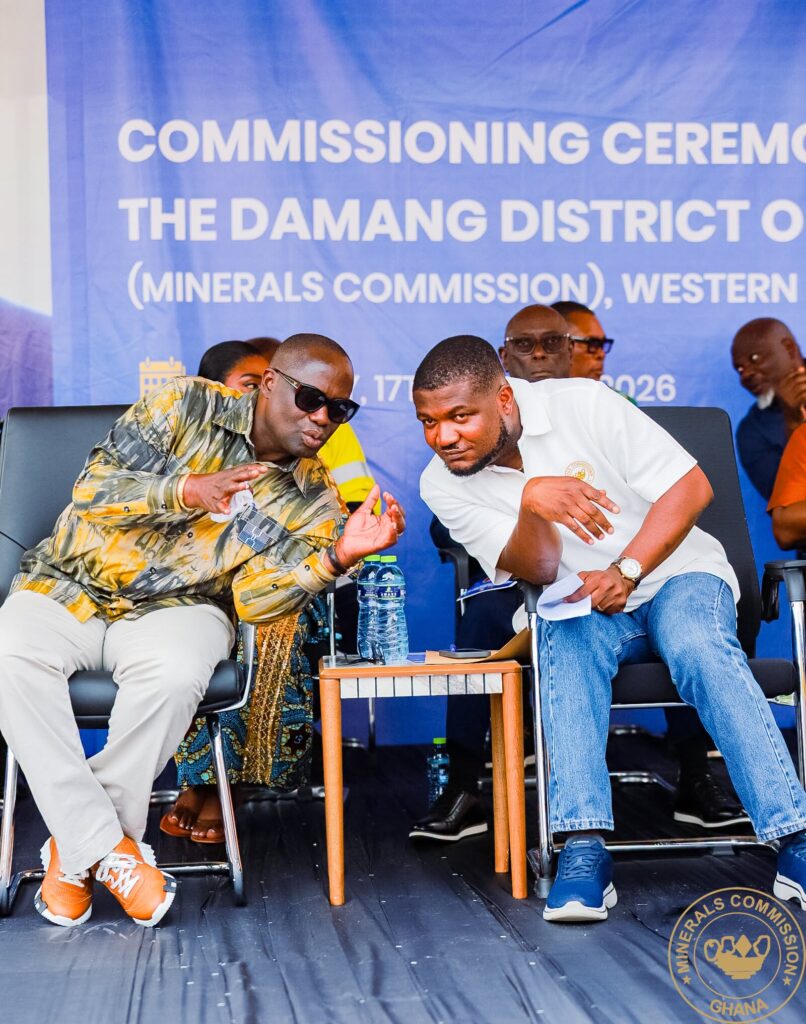
Expanding on this institutional decentralisation drive, the newly inaugurated infrastructure comprises a modern seven-storey office block, a specialized two-storey laboratory, and a dedicated museum and public education facility.
Designed as a comprehensive one-stop centre for minerals administration, the facility will improve access to regulatory services, mineral testing, technical guidance, stakeholder engagement and public education, while also serving as a designated centre for the Inspectorate Division’s licensure examinations.
Beyond consolidating core administrative procedures, the inclusion of cutting-edge analytical testing facilities ensures that mineral assays and technical audits can be conducted locally without reliance on foreign or distant facilities.
The integration of public education infrastructure further signals a proactive approach toward demystifying mining laws, enhancing statutory compliance, and building community trust in regulatory processes across the Ashanti Region and surrounding mining zones.
Decentralising Mineral Governance and Policy Commitment
Government policy surrounding the management of natural resources has increasingly prioritised administrative decentralisation as an essential prerequisite for sustainable sector growth and environmental accountability.
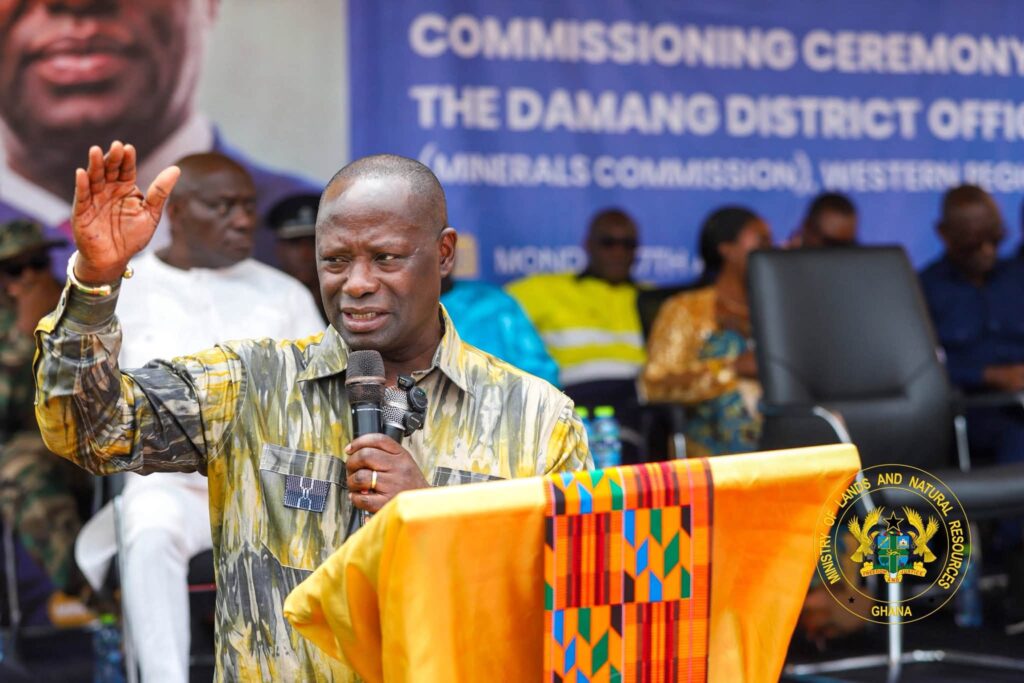
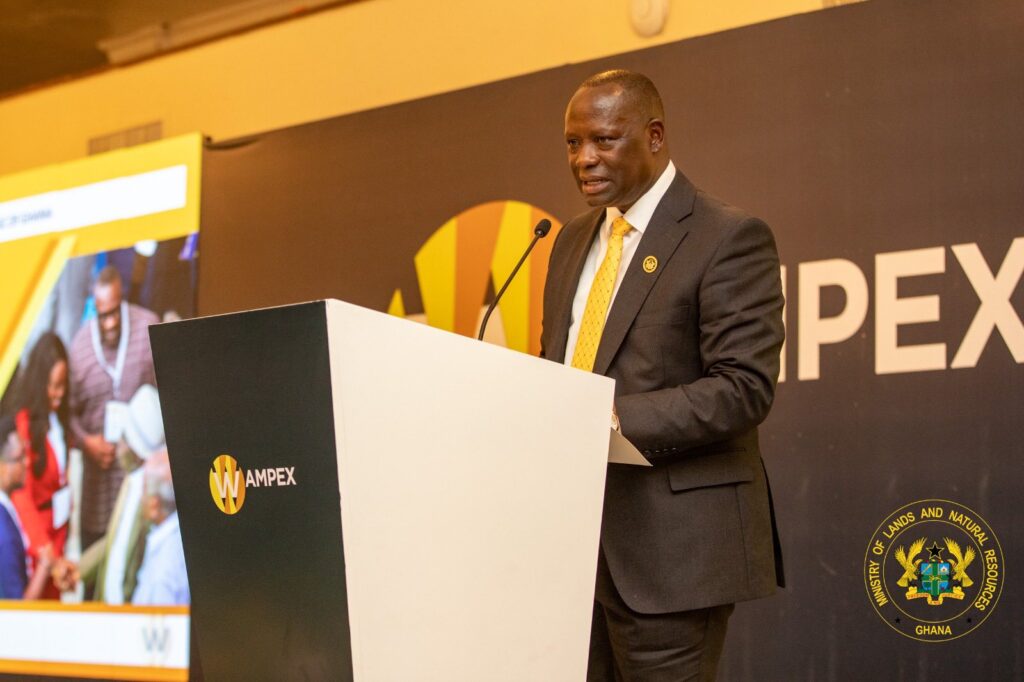
Speaking at the commissioning ceremony, the Deputy Minister for Lands and Natural Resources, Hon. Dr. Yusif Sulemana, reaffirmed Government’s commitment to strengthening and decentralising Ghana’s mineral administration to ensure effective regulation, improved service delivery and responsible management of the country’s mineral resources.

He underscored that effective governance requires regulatory authorities to operate within close physical proximity to active extraction zones rather than remaining centralized in national capitals.
He emphasised the importance of bringing regulatory institutions closer to mining communities and industry stakeholders as part of Government’s broader agenda for sustainable development of the sector.
High-Level Stakeholder Alignment in Ashanti Region
The unveiling of the multi-purpose complex drew substantial institutional representation, reflecting deep collaboration between executive government agencies, traditional governance structures, and private sector players.
The ceremony was graced by the Ashanti Regional Minister, Dr. Frank Amoakohene, representatives of His Royal Majesty Otumfuo Osei Tutu II, members of the Minerals Commission Board, government officials, traditional leaders, mining industry representatives and other distinguished stakeholders.
The presence of traditional authorities underscores the integral role of customary land custodians in natural resource management, land concession allocations, and community conflict resolution.
By aligning modern regulatory enforcement with traditional leadership oversight, the Minerals Commission establishes a unified governance front capable of tackling complex sector issues such as illegal small-scale mining, environmental degradation, and local content compliance.
Strategic Significance of Advanced Extractive Infrastructure
From an extractive industry perspective, the technical and social significance of this modern complex extends far beyond routine administrative expansion. The inclusion of a specialized two-storey laboratory represents a major advancement in local analytical capacity, enabling rapid sample testing, precise mineral valuation, and prompt environmental monitoring that safeguards public health and state revenue.
Furthermore, serving as a designated centre for the Inspectorate Division’s licensure examinations elevates safety standards, technical competency, and professional certification for mine managers and operating personnel across the region.
The inclusion of an interactive museum and public education facility addresses historical information gaps, fostering public awareness around legal mining practices, resource rights, and ecological restoration.
Ultimately, the new regional office reinforces the Commission’s commitment to bringing its services closer to mining companies, small-scale miners, host communities and the general public, while promoting responsible and sustainable mining for national development.
READ ALSO: KiDi and Kwesi Arthur Reunite on Crucified This Thursday