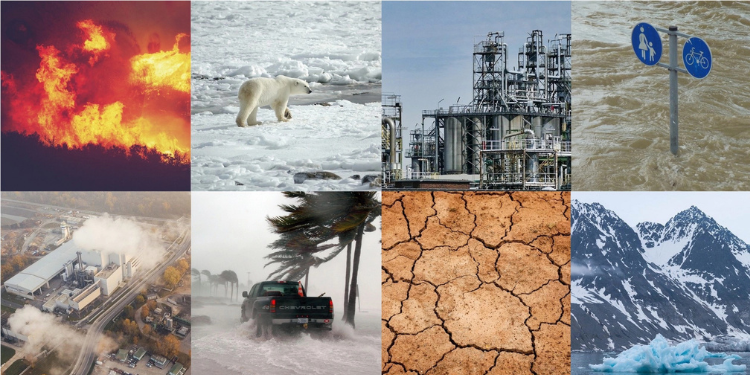
Climate change has continued to leave a devastating mark in 2026, as the first eight months have been defined by record-breaking heat, raging wildfires, persistent drought, and extreme weather across several continents.
According to an assessment by Greenpeace International, the succession of extreme weather events this year reflects the growing impact of climate change, which has been intensified by decades of fossil-fuel burning and environmental destruction.
From western Europe to Southeast Asia and North America, the impacts have already stretched beyond individual weather events, disrupting ecosystems, public health, agriculture and critical infrastructure.
The developments are also unfolding against a backdrop of unusually high global temperatures and record sea-surface temperatures, reinforcing concerns that the world is entering a period of increasingly severe climate extremes.
In Europe, prolonged heat and dry conditions have contributed to exceptionally intense wildfires across several countries. Western Europe experienced its hottest June-July period on record, while the European Union’s wildfire season had already ranked among its four worst by early August.
The consequences have extended beyond areas directly affected by fires. Prolonged drought has placed growing pressure on water supplies, agriculture, transportation and energy systems, while smoke from major wildfires has created serious health risks for populations far from the original fire zones.
The World Meteorological Organization has warned that extreme heat events are becoming increasingly frequent, intense and prolonged as the climate continues to warm. It has pointed to the interaction between higher baseline temperatures, unusually warm seas and dry soils as factors contributing to the severity of recent heatwaves.
In North America, wildfires in Canada generated extensive smoke that spread across parts of the United States, affecting air quality across the country’s northeast and Midwest. Europe, meanwhile, experienced repeated heatwaves that created conditions conducive to large-scale fires.
Asia has faced similarly severe conditions. Japan and South Korea recorded exceptional heat at the beginning of August, while India is confronting a significantly weakened monsoon season.
Indonesia has also been dealing with major wildfires during a prolonged dry season. The fires have blanketed parts of Southeast Asia in acrid smoke, raising concerns over respiratory health and the environmental consequences of forest and land burning.
Africa has not been spared. The continent recorded its warmest July on record, while southern Africa experienced cyclones and widespread flooding earlier in the year.
The succession of contrasting extremes from drought and wildfire to flooding and intense rainfall highlights the increasingly complex nature of climate risks. Different regions can experience radically different consequences from the same broader warming trend.
Scientists have increasingly established links between human-induced warming and the severity of extreme weather.
Research by World Weather Attribution, for example, found that recent heatwaves in Europe and North America were significantly more likely and intense because of human-caused climate change. One study concluded that a comparable western European heatwave would have been around 3.5°C cooler had it occurred 50 years earlier.
Another assessment of the North American heatwave found that the persistent, humid heat would not have occurred in a pre-industrial climate.
The findings add to a growing body of scientific evidence showing that rising concentrations of greenhouse gases are altering the conditions under which extreme weather occurs.
The issue has become particularly urgent as the world approaches another potentially significant climate milestone.
The developing El Niño weather pattern is expected to intensify in the coming months, potentially adding further heat to an already warming planet. Forecasts indicate that the event could become one of the strongest on record, with major implications for rainfall, agriculture and extreme weather across several regions.
Super El Niño Threatens to Intensify Heat, Drought and Food Security Risks
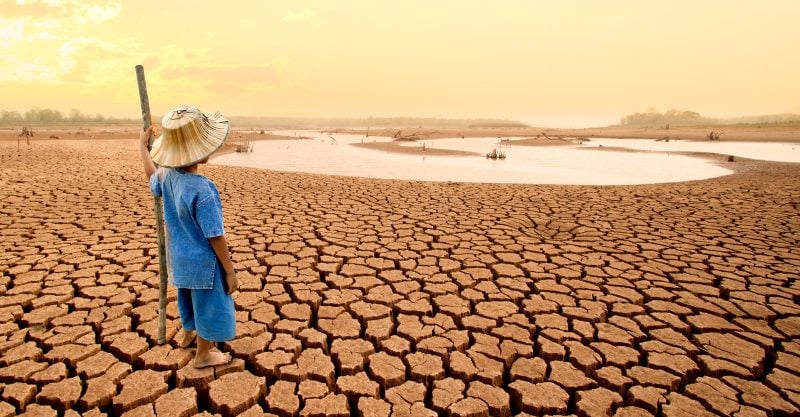
Meanwhile, the emerging El Niño is adding another layer of concern to an already unstable global climate system.
El Niño is a naturally occurring climate phenomenon associated with unusually warm Pacific Ocean temperatures. Although it is a natural cycle, its effects are now unfolding against a much warmer baseline caused by decades of human greenhouse gas emissions.
Greenpeace has warned that the combination could intensify heatwaves and droughts in several parts of the world, while increasing the likelihood of additional extreme weather events. The organisation has described the developing phenomenon as a major concern because it could push global temperatures even higher and exacerbate existing pressure on food and water systems.
The UK Met Office has similarly warned that the developing El Niño could become exceptionally strong and that 2027 could potentially surpass previous temperature records.
The implications extend far beyond temperature records. El Niño can shift rainfall patterns across the globe, creating drought in some regions while increasing the likelihood of heavy rainfall and storms elsewhere. India, for example, is already experiencing a weaker-than-normal monsoon, raising concerns about the effect on agricultural production and rural livelihoods.
Parts of Central America, western Pacific nations and tropical South America could also experience below-normal rainfall, while other regions, including parts of Asia, southern South America, the southern United States and the Horn of Africa, could face heavier rainfall and storms.
The agricultural consequences could be severe. Reduced rainfall can damage crops, increase livestock losses and place additional pressure on households already struggling with high food prices and limited incomes. In vulnerable communities, prolonged drought can also contribute to migration as people move in search of water, food and economic opportunities.
The risks are particularly significant for developing countries, where limited infrastructure and weaker social protection systems can make communities less capable of absorbing repeated climate shocks.
Meanwhile, Europe is already experiencing the effects of prolonged drought. Water levels in several of the continent’s major rivers, including the Loire, Po, Rhine and Danube, have reached exceptionally low levels. The decline has created problems for agriculture, river transport, ecosystems and energy generation.
The energy implications have been especially striking. Nuclear power plants that depend on river water for cooling have faced operational challenges as water levels decline. Romania was forced to shut down its Cernavodă nuclear facility, while Hungary’s Paks nuclear plant significantly reduced its output.
The developments demonstrate how extreme heat and drought can affect interconnected systems, creating consequences that extend well beyond the immediate environmental crisis.
READ ALSO: EU Launches Third European Film Festival in Accra Next October