Ghana, Chile, and Australia have officially partnered to launch an international research project titled the Political Minerals Governance Transition, aimed at exploring how African arts, folklore, and indigenous knowledge systems can shape inclusive, transparent, and sustainable governance frameworks for critical minerals.
Launched in Accra by researchers from King’s College London, the University of Ghana, and partner institutions across the three participating nations, the study seeks to deepen the understanding of how local communities, traditional authorities, governments, and civil society organisations conceptualize justice in resource extraction.
As the global transition toward net-zero carbon emissions accelerates, the demand for critical minerals like lithium, cobalt, and graphite continues to surge, underscoring an urgent imperative for governance systems that authentically reflect the values, environmental priorities, and social aspirations of resource-rich host communities.
“Critical minerals are very important in the transition to net-zero emissions, but justice is another matter altogether. The main challenge is that we do not have a common understanding of what justice is. In many African societies, folktales, proverbs and storytelling traditions have long served as mechanisms for teaching responsible leadership, accountability and collective ownership of resources.”
Dr. Clement Sefa-Nyarko, Project Lead
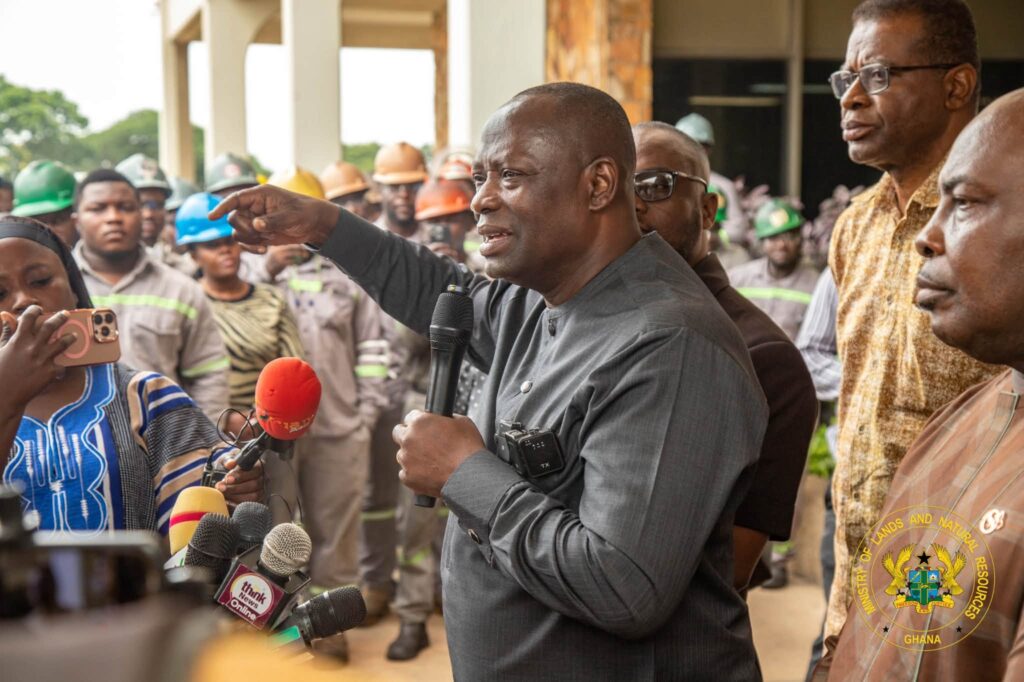
Dr. Clement Sefa-Nyarko, Project Lead, highlighted during the launch that while national governments often prioritize economic management, foreign investment, and state-level energy transition goals, host communities remain deeply concerned with fundamental issues such as land rights, cultural heritage, and environmental stewardship.
To bridge this structural divide, the study utilizes hermeneutical ethnography a specialized research methodology that analyzes how communities express core principles of accountability, environmental responsibility, and collective ownership through storytelling, proverbs, music, visual arts, and folklore.
By documenting community songs, oral histories, murals, drawings, and local performances, the research team aims to extract enduring socio-ethical principles from these cultural media.
These insights will subsequently be integrated into co-creation policy workshops involving traditional leaders, state institutions, and civil society actors, fostering shared ownership over the resulting mineral governance frameworks.
Bridging the Policy-Community Divide Through Indigenous Knowledge
Historically, African minerals governance has suffered from a persistent disconnect between top-down regulatory frameworks and the lived realities of indigenous communities.
State policies predominantly frame resource management through financial yields, export duties, and macro-investment terms, frequently sidelining localized ecological and cultural values.
By incorporating African arts and folklore into formal policy discourse, the research project introduces a mechanism to humanize resource governance.
Proverbs and traditional storytelling are not merely artistic expressions; they serve as informal legal and ethical codes that have governed land usage, community consultation, and environmental preservation across generations.
Integrating these cultural expressions into governance models provides policymakers with actionable socio-cultural indicators. When community perspectives on land stewardship and social accountability are articulated through familiar cultural mediums, state negotiators and mining corporations gain clearer parameters for community consent.
This approach helps align international investor expectations with local definitions of fairness, minimizing social resistance, operational disruptions, and legal disputes that frequently stall major extractive projects across the continent.
Industrialization and Shared Prosperity Beyond Raw Exports
Speaking on the economic stakes of the study, Prof. Samuel Ntewusu, Director of the Institute of African Studies (IAS) at the University of Ghana, emphasized that critical minerals must serve as a direct catalyst for domestic industrialization rather than reinforcing historical patterns of raw material exploitation.
Ghana’s national Energy Transition Framework explicitly identifies strategic minerals, such as lithium and graphite, as foundational assets for developing localized battery manufacturing and electric vehicle (EV) supply chains.
Achieving this structural shift requires a comprehensive minerals governance model that balances economic growth and foreign direct investment with strict environmental protection, public transparency, active community participation, and intergenerational equity.

Culturally grounded governance frameworks ensure that local populations transition from passive observers of resource extraction to active equity stakeholders.
By embedding traditional values into resource policies, African nations can enforce localized processing mandates, value-addition requirements, and equitable revenue-sharing mechanisms.
Establishing public trust through transparent, culturally resonant decision-making structures equips host countries to leverage their critical mineral wealth for long-term industrialization, local capacity building, and economic diversification.
Transforming Africa’s Minerals Sector and Equity Outcomes
The broader implications of this trilateral research project extend across the entire African extractive landscape.
Traditionally, the governance of transition minerals has prioritized global supply chain security over local socio-economic welfare.
By demonstrating how indigenous knowledge and artistic expressions can inform legal and operational standards, this study offers a viable blueprint to reshape how mineral contracts, environmental impact assessments, and community benefit agreements are negotiated across Africa.
READ ALSO: Bruno Fernandes Voted PFA Player’s Player of the Year, Semenyo Makes Team of the Year